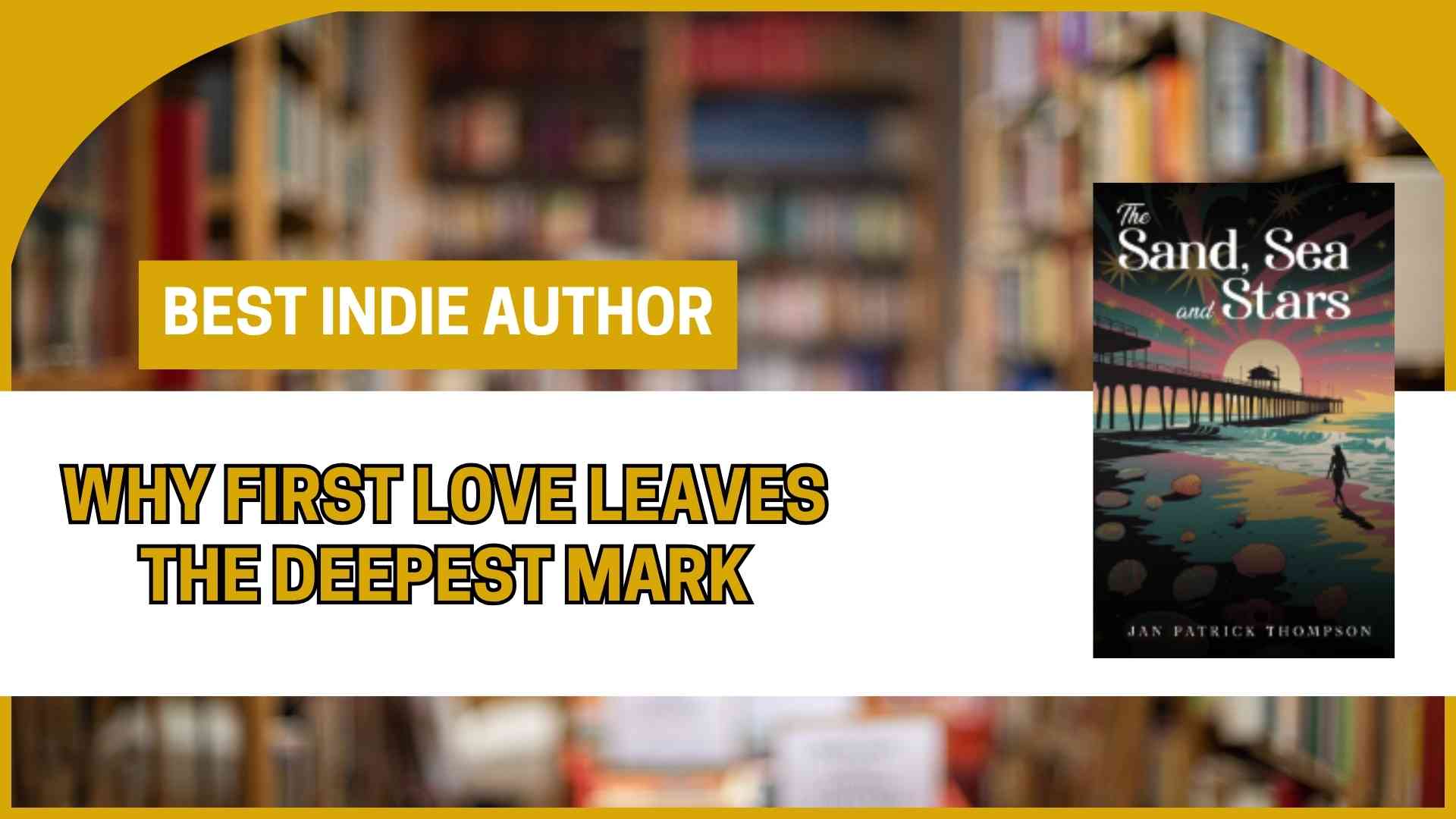
There is something about first love that refuses to fade. Long after the seasons change, long after youth gives way to responsibility, that first awakening of the heart lingers with unusual clarity. As I wrote The Sand, Sea, and Stars, I found myself returning to a simple truth: first love hurts not because it is fragile, but because it is formative.
When Ava and R.J. meet on the beaches of 1969 San Clemente, they are standing at the edge of more than the Pacific Ocean. They are standing at the edge of adulthood. Their connection unfolds beneath warm sunsets and starlit skies, framed by the steady rhythm of the sea. Everything feels infinite. Possibility stretches outward like the horizon.
First love often arrives at a moment when we are still discovering who we are. It does not attach itself to a completed identity. It helps shape one. For Ava, her dreams of fashion design are beginning to take form. For R.J., a sense of duty and service quietly grows within him. Their affection becomes intertwined with ambition, purpose, and self discovery. When love and identity develop together, any challenge to that love feels personal and profound.
The late 1960s were not a simple time. National unrest, cultural shifts, and the reality of military service cast long shadows even across small coastal towns. I wanted to explore how young love endures when confronted by forces larger than itself. First love hurts most deeply when it meets circumstance beyond its control. Distance, obligation, and time test the sincerity of those early promises.
The sea in the novel symbolizes movement and uncertainty. Tides rise and fall without asking permission. The sand records every step, yet no footprint lasts forever. And above it all, the stars remain constant. These elements reflect the journey of first love. It begins in brightness. It encounters shifting ground. It searches for something steady.
What makes first love unforgettable is its vulnerability. There is no comparison, no emotional rehearsal. It is the first time the heart opens fully, without armor. When pain comes, it feels overwhelming because the heart has never been broken before. Yet that same openness allows for depth. Without risk, there is no meaning.
In The Sand, Sea, and Stars, I did not want first love to feel disposable or fleeting. I wanted it to feel foundational. Even when tested, even when stretched across years and responsibilities, it retains its original spark. The innocence of that first summer matures into something steadier. Devotion replaces infatuation. Commitment replaces uncertainty.
We often say first love hurts the most. I believe it also teaches the most. It introduces us to sacrifice. It shows us the value of loyalty. It reveals what we are willing to protect. For Ava and R.J., that early connection beneath the California sky becomes a compass guiding decades of shared life.
The sand may shift. The sea may surge. Years may pass beneath countless stars. But first love leaves its imprint because it is the moment we first discover how deeply we can feel. That discovery, even when painful, becomes part of who we are.
And perhaps that is why we remember it so vividly.
Visit my Profile: https://www.facebook.com/JanPatrickThompson/