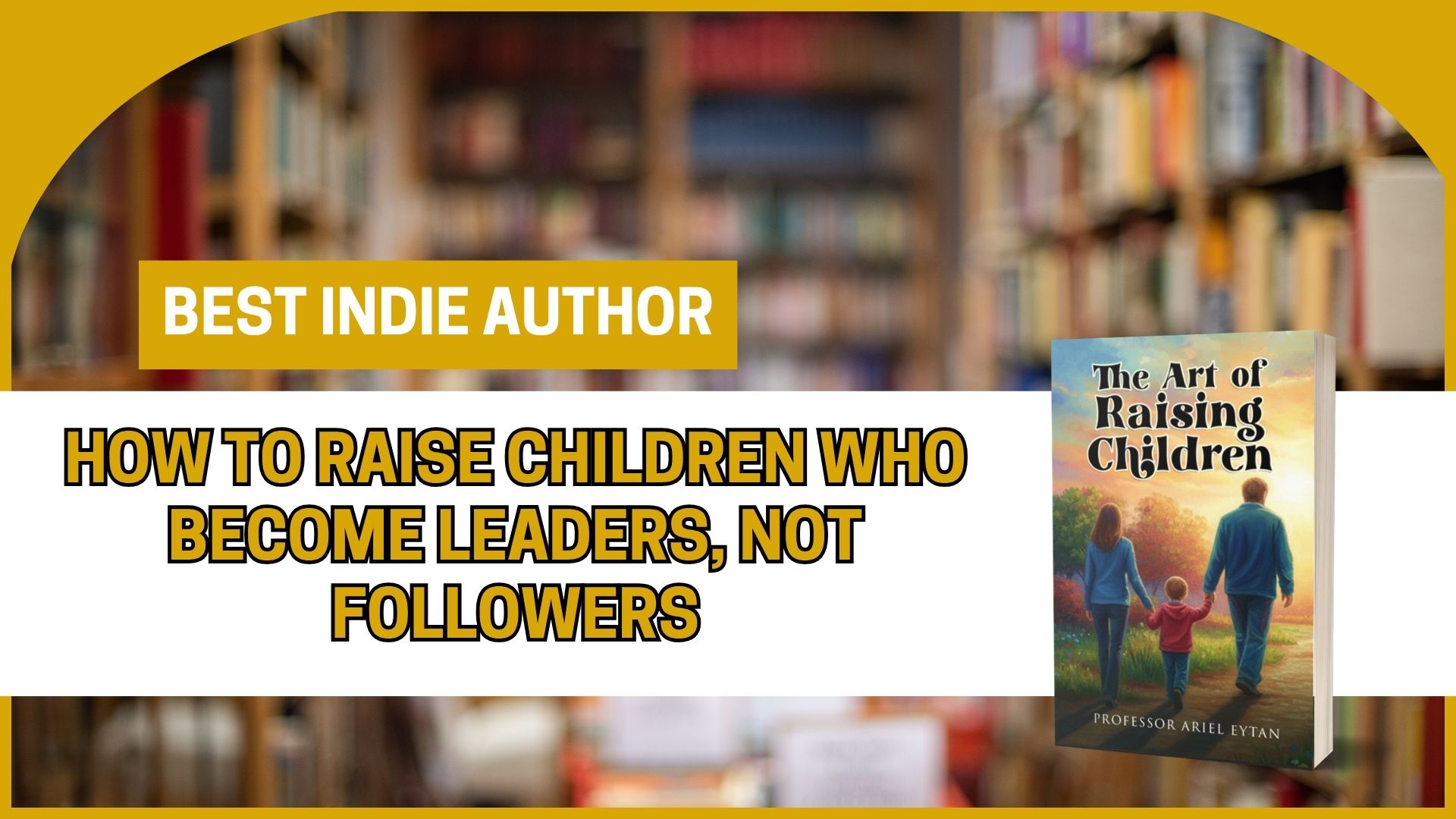
In today’s fast-changing world, parents are increasingly concerned not only with raising successful children but with raising children who can think independently, take responsibility and eventually grow into leaders rather than passive followers. The question of how leadership is formed in childhood is at the heart of The Art of Raising Children by Professor Ariel Eytan, a thought-provoking guide that blends cultural wisdom, real-life experience and practical parenting strategies into a clear framework for modern families.
Professor Eytan approaches leadership not as a title or position, but as a mindset shaped over time through values, environment and consistent guidance. In the book, he emphasizes that leadership begins long before adulthood. It is formed in everyday moments, such as how children are taught to think, how they respond to challenges, how they communicate with others and how they are encouraged to understand responsibility. Rather than waiting for children to “grow into leaders,” the book encourages parents to actively nurture leadership qualities from early childhood.
One of the central ideas explored is the importance of a growth-oriented mindset. Children who believe that their abilities can improve through effort are more likely to take initiative and less likely to fear failure. Professor Eytan illustrates this through personal experiences with his own children, showing how challenges were reframed as opportunities for learning rather than obstacles. This shift in thinking helps children develop confidence and independence, two essential traits of future leaders. Instead of avoiding difficulties, they begin to approach them with curiosity and resilience.
Communication is another cornerstone of leadership development discussed in the book. Leaders are not defined only by decision-making, but by their ability to express ideas clearly and listen with empathy. Children who are encouraged to articulate their thoughts, ask questions and engage in respectful dialogue gradually develop the confidence to influence others. Professor Eytan highlights that this skill is deeply connected to emotional intelligence, which allows children to understand not only their own emotions but also those of the people around them. This emotional awareness becomes a powerful leadership tool in both personal and professional life.
The book also emphasizes the importance of responsibility and service. Leadership, as presented by Professor Eytan, is not about authority or control but about contribution. When children are given responsibilities at home, in school or within their communities, they begin to understand the value of accountability. They learn that their actions have consequences and that their involvement can make a meaningful difference. This sense of responsibility shifts a child’s identity from passive participation to active engagement, a key transition from follower to leader.
Another important dimension explored is the role of cultural values in shaping leadership. Drawing from Jewish cultural principles, Professor Eytan explains how traditions that emphasize education, discipline, perseverance and community support create a strong foundation for leadership development. These values are not presented as exclusive, but as universal principles that can be adapted across cultures. The book highlights that East Asian societies, for example, already place strong emphasis on education and discipline, making them naturally aligned with many of these leadership-building practices.
However, leadership also requires adaptability. The book repeatedly stresses that there is no single model for raising leaders. Children are shaped by their environments, personalities and cultural contexts. Therefore, effective parenting requires flexibility and awareness. Parents must observe, listen and adjust their approach based on what helps each child grow best. This individualized approach ensures that leadership development feels natural rather than forced.
Family and community also play a crucial role in this journey. According to Professor Eytan, children become leaders when they feel supported by strong networks of trust, mentorship and encouragement. When they see adults modeling responsibility, empathy and integrity, they internalize these behaviors. Leadership is therefore not taught in isolation but absorbed through lived experience and consistent example.
Ultimately, The Art of Raising Children presents leadership as a lifelong process rooted in values, mindset and practice. It challenges parents to rethink traditional ideas of success and instead focus on raising children who are confident, thoughtful and capable of guiding others with integrity. By combining cultural wisdom with practical parenting tools, Professor Ariel Eytan offers a compelling vision: a generation of children who do not simply follow paths laid before them, but who create new paths for others to follow.
Book Is Coming Soon On Amazon.