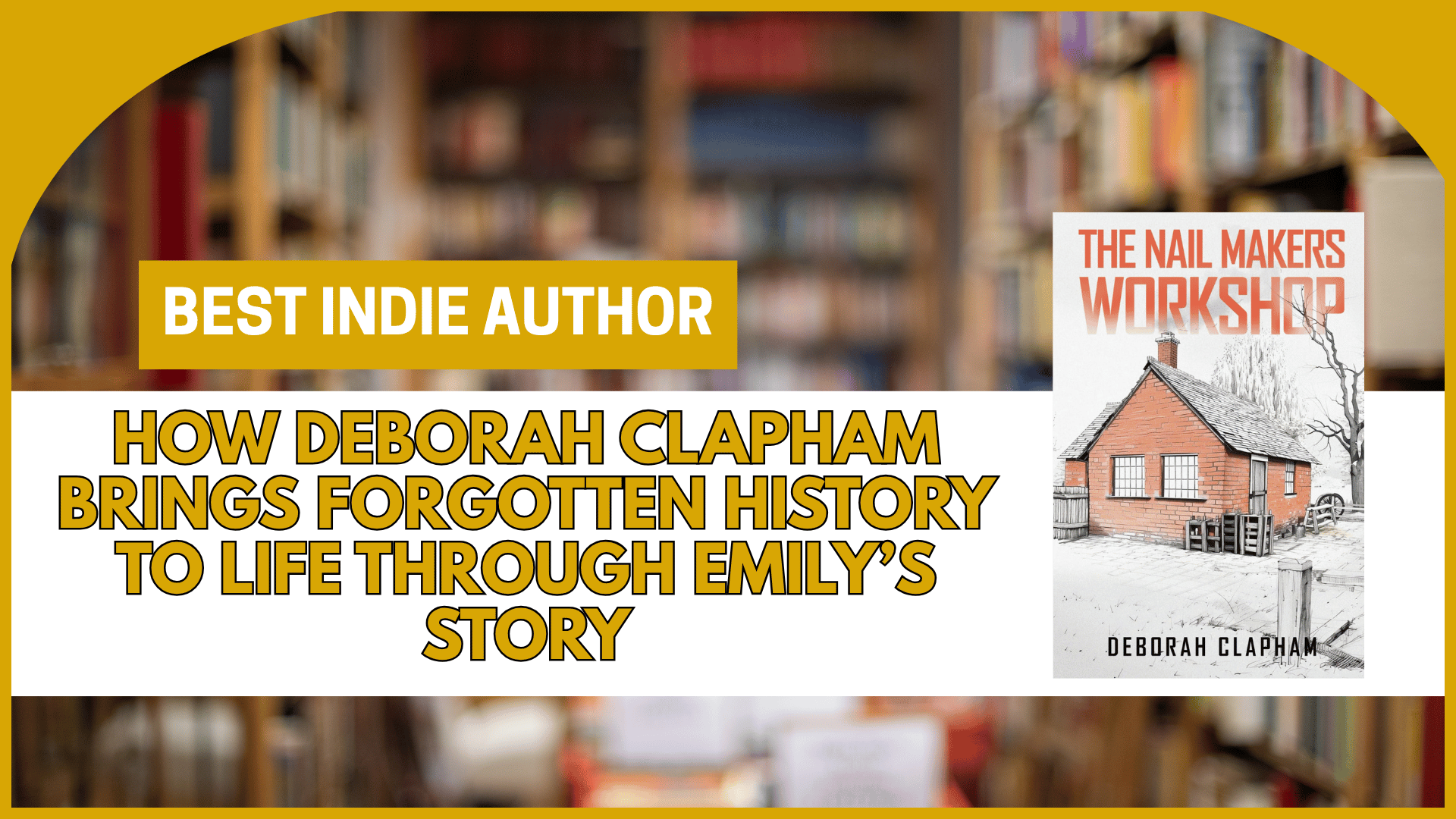
History is often remembered in grand events, towering figures and sweeping political change, but what about the lives of ordinary people? In “Emily’s Adventures: The Nail Makers Workshop”, Deborah Clapham brings the forgotten corners of 19th-century Worcestershire to vivid life, inviting readers to step into a world rarely explored in historical fiction. Through the eyes of young Emily, readers experience the daily realities, challenges and quiet heroism of families whose lives were shaped by industry, labour and resilience.
At the heart of the story is Emily herself, a curious, observant girl living in a family of nail makers. Through her voice, Deborah Clapham captures both the wonder and the hardships of childhood in an era defined by industrial labour. Emily’s adventures begin with small, relatable moments, like the thrill of sneaking apples from an orchard, yet these moments are framed against the harsh backdrop of her family’s work in the nail-making workshop. Readers immediately feel the tension between childhood innocence and the adult responsibilities imposed by necessity, a tension Deborah Clapham portrays with subtlety and authenticity.
One of the most striking aspects of Deborah Clapham’s storytelling is her attention to historical detail. She doesn’t just tell readers that Emily’s father makes nails; she shows them exactly how it happens. From lighting the hearth fire to heating iron rods until they glow red, shaping nails with the Oliver and hammering them into precise forms, every step is depicted with painstaking accuracy. Readers can almost hear the rhythmic pounding of the hammer, smell the smoke and soot and see the tiny, dimly lit workshop where families laboured together. This immersive detail transforms the story from simple fiction into a living history lesson.
Deborah Clapham also shines a light on the social realities of the time, particularly the exploitative Tommy Shop system. Through Emily’s observations, readers learn how families like hers were trapped in cycles of debt and poverty, with wages often paid in tokens rather than money and goods sold at inflated prices in company-controlled stores. The role of the fogger, an unscrupulous middleman who manipulated scales and payments, is explained in a way that is accessible to young readers but still conveys the injustice and complexity of the system. By showing history from the perspective of those who lived it, Deborah Clapham ensures that readers not only understand these systems but also feel their impact emotionally.
Yet Deborah Clapham’s narrative is not solely about hardship. It is also about resilience, dignity and the human spirit. Emily’s family may be poor, but they are proud and hardworking. They endure long hours of labour, physical discomfort and economic injustice with determination, teaching young readers important lessons about perseverance and strength. Emily’s own journey learning to read and write while contributing to her family’s survival becomes a symbol of hope and progress, showing that even in the harshest circumstances, growth and opportunity are possible.
Another unique element of Deborah Clapham’s work is her ability to educate while entertaining. Readers learn about the variety of nails made in the 1800s, from hob nails for boots to tenterhooks for textiles and the tools and techniques required to produce them. These details enrich the story, creating a tangible connection to the past while keeping the narrative engaging. History is not presented as abstract facts but as a lived experience, brought to life through Emily’s perspective.
Deborah Clapham’s writing also honors the unsung laborer’s of the Industrial Revolution. By focusing on ordinary families instead of prominent figures, she restores humanity to a period often reduced to statistics and dates. Emily’s story becomes a bridge to the past, allowing readers to empathize with real human experiences of work, family and survival.
In the end, “Emily’s Adventures: The Nail Makers Workshop” is more than historical fiction; it is a celebration of lives that history almost forgot. Deborah Clapham’s careful research, rich sensory detail and emotionally compelling storytelling combine to create a book that is educational, moving and unforgettable. Readers of all ages will be transported to a soot-smudged workshop, feel the rhythm of the hammer and witness the quiet courage of a family determined to endure.
Through Emily’s story, Deborah Clapham proves that history is not just to be studied, it is to be felt, experienced and remembered. This is a tale that brings the past to life, illuminating the resilience of ordinary people and the extraordinary stories hidden in the everyday lives of long-ago generations. “Emily’s Adventures: The Nail Makers Workshop” is a must-read for anyone who wants to see history through the eyes of those who lived it.
Amazon Book Link : https://www.amazon.co.uk/dp/B0G63Y8Q6B/