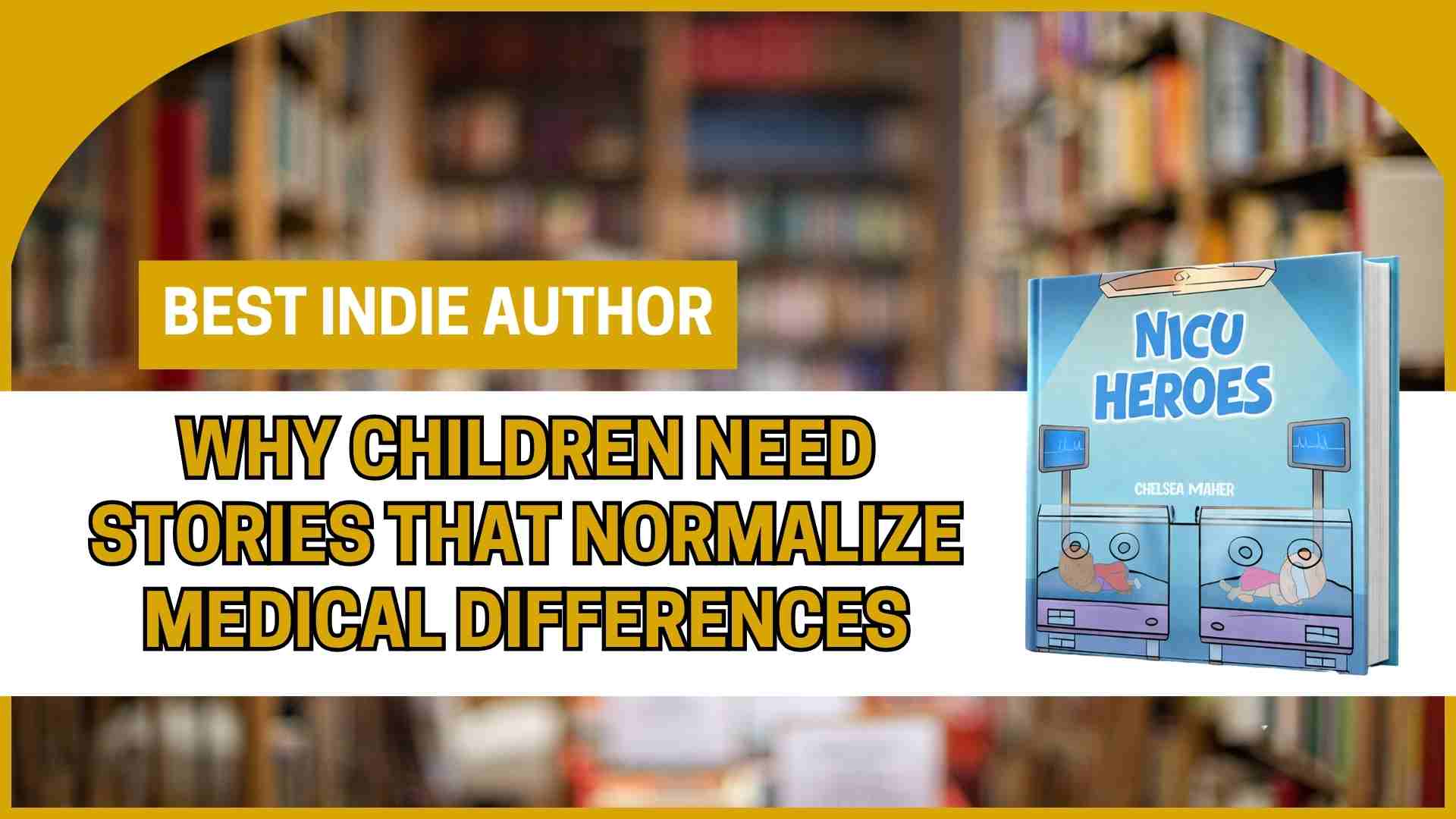
Children understand the world through what they see, hear, and experience. Stories play a central role in shaping that understanding. When certain realities are absent from those stories, children can begin to see them as unusual or even frightening. Medical differences are one of the most overlooked areas in children’s literature, yet they are part of many families’ daily lives. Including them in stories is not just important, it is necessary.
For a child living with a medical condition, representation is deeply personal. When they do not see themselves reflected in books, it can create a sense of isolation. They may begin to feel different in a way that is difficult to explain. Stories that normalize medical differences help shift that perspective. They show children that their experiences are valid and that they are not alone. This simple recognition can have a lasting impact on confidence and self-acceptance.
For children who do not have medical challenges, these stories are equally valuable. They build understanding from an early age. When a child learns about differences through a story, it removes the fear of the unknown. Instead of reacting with confusion or discomfort, they respond with curiosity and empathy. This early exposure shapes how they interact with others as they grow, creating more inclusive environments in schools, communities, and friendships.
Another important aspect is how these stories present the difference itself. When medical conditions are framed only as problems, it can reinforce negative perceptions. Children may begin to associate difference with limitation. On the other hand, when stories highlight strength, resilience, and individuality, they change the narrative. They show that challenges can coexist with courage and growth. This balanced view helps children understand that a medical condition does not define a person’s worth or potential.
Parents often face the difficult task of explaining medical conditions in a way that their child can understand. Medical language can be complex, and emotions can make those conversations even harder. Stories provide a natural entry point. They offer a shared experience that both parent and child can engage with. Through characters and situations, children begin to grasp concepts that might otherwise feel overwhelming. This makes communication easier and more meaningful.
These stories also support emotional development. Children are still learning how to process feelings, especially those connected to fear, uncertainty, or change. A well told story creates space for those emotions. It allows children to see how characters respond, cope, and grow. This not only helps them understand their own feelings but also gives them tools to manage them.
The impact extends beyond the immediate reader. When teachers, caregivers, and peers share these stories, they create a culture of awareness and acceptance. Classrooms become more inclusive. Conversations become more open. Children learn that differences are a natural part of life, not something to avoid or misunderstand.
In a world that is increasingly focused on inclusion, children’s literature has a responsibility to reflect real experiences. Medical differences are part of that reality. By bringing these stories into the spotlight, authors and educators can help shape a generation that is more compassionate, informed, and accepting.
Stories that normalize medical differences do more than educate. They affirm, connect, and empower. They remind every child that their story matters and that being different is not something to hide, but something to understand and respect.
Read this book, available on Amazon: https://www.amazon.com/dp/B0GP9G4QM2