Workplace safety once focused mainly on visible dangers: dust, fumes, heat, noise, machinery, and harmful substances. These risks still matter, but the modern workplace now carries a new kind of hazard, one that affects the mind as much as the body.
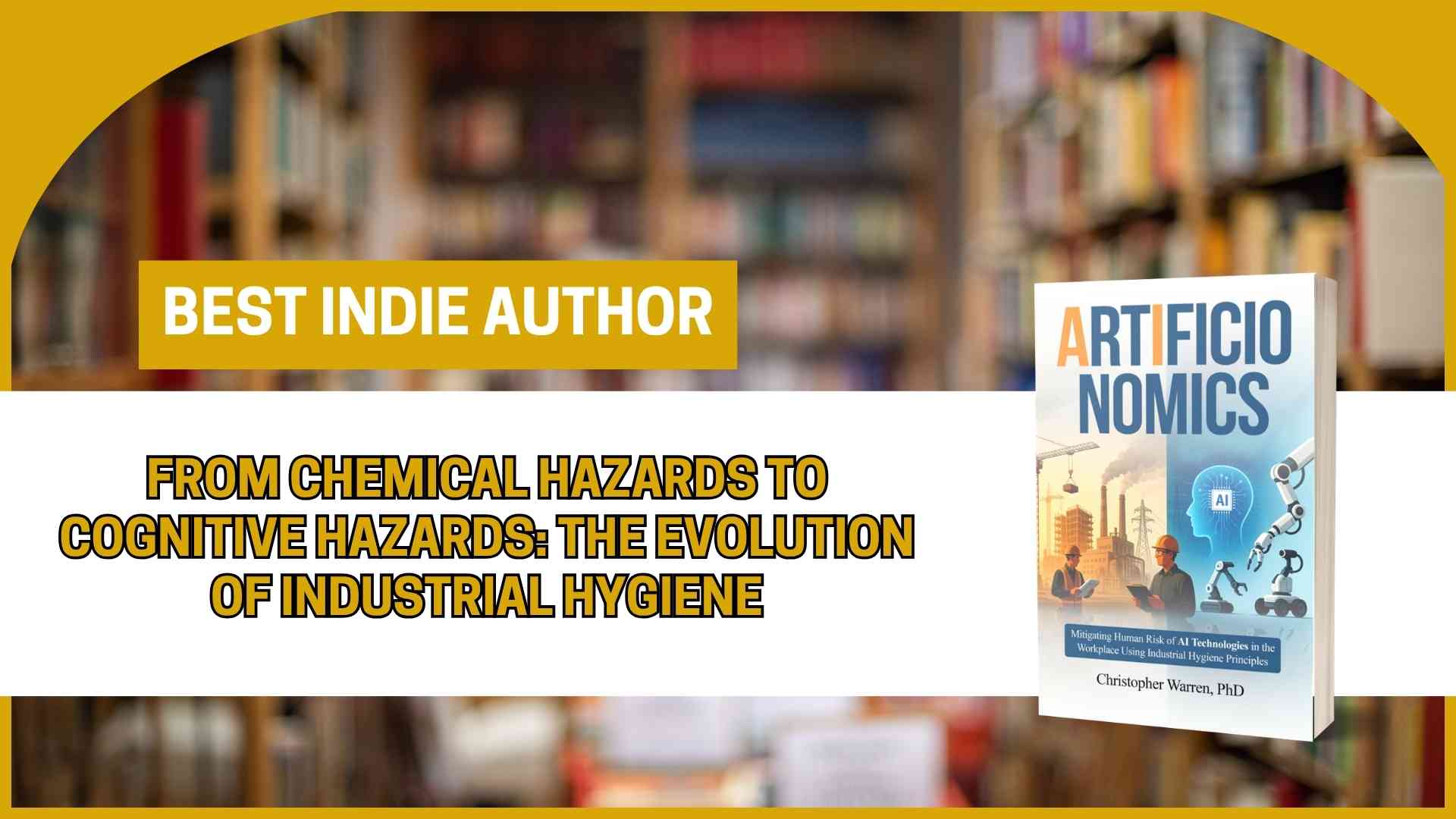
In Artificionomics: Mitigating Human Risk of AI Technologies in the Workplace, Christopher Warren, PhD, explains how industrial hygiene must evolve for a world shaped by intelligent systems, robotics, digital monitoring, and automated decision tools.
The old question was simple: what is harming the worker physically? The new question is broader: what is affecting the worker mentally, emotionally, ethically, and socially?
Employees today may face cognitive overload, constant tracking, reduced autonomy, decision fatigue, privacy concerns, and stress from working beside machines that influence pace and performance. These pressures may not be as visible as chemical exposure, but they can still damage health, trust, morale, and productivity.
Christopher Warren introduces Artificionomics as the framework needed for this shift. It applies the proven industrial hygiene process of identifying, evaluating, and controlling hazards to the hidden risks of modern technology. This means organizations must assess not only physical conditions, but also emotional strain, workload pressure, fairness, transparency, and human dignity. ]
The book is especially important for safety professionals, executives, and policymakers who want innovation without harm. It shows that progress should never come at the cost of worker wellbeing. Strong safety programs must now protect concentration, judgement, confidence, and psychological resilience, not only lungs, skin, hearing, and muscles.
Artificionomics does not argue against technology. It argues for responsible adoption. Warren gives leaders the structure they need to bring new systems into the workplace while keeping people protected, respected, and central to every decision.
As hazards become less visible, industrial hygiene must become more human centred. Christopher Warren’s book offers a timely roadmap for that future.
Get your Copy Now on Amazon: https://www.amazon.com/dp/B0GFY4RL6B.