
Have you noticed something strange with your teen lately? Perhaps they are quiet after coming from school or isolate themselves from you more often? If you are familiar with such behavior and are unsure of what is wrong, chances are that your teen or child may be suffering from bullying.
While you might think it is okay, or that time will heal their wounds, you need to know that not all bullying is loud or obvious. Some of it hides behind laughter, jokes, or comments framed as harmless teasing that might not look so obvious but are bullying and can be discriminating. And because it does not look aggressive, it is often dismissed or ignored. This subtle bullying can cause real harm over time. Thus, it’s beneficial to be aware of it and to learn how to identify and react to it as a crucial first step in safeguarding your emotional health.
Recognizing the Pattern
Subtle bullying often repeats itself. A single joke may seem harmless, but when the same person targets the same traits again and again, it becomes a pattern. Pay attention to how these interactions make you feel. Discomfort, embarrassment, or dread are signals worth listening to.
Trust Your Reaction
If something feels wrong, it likely is. You do not need proof or agreement from others to validate your experience. Many people stay silent because they fear being labeled sensitive. Respecting your emotional response is not a weakness. It is awareness.
Set Clear Boundaries
A calm and direct response can be effective. Statements like “I do not find that funny” or “Please do not joke about that” set boundaries without escalation. You do not owe anyone laughter or approval. Boundaries are not about controlling others. They are about protecting yourself.
Avoid Playing Along
Laughing along to avoid conflict may seem easier in the moment, but it often invites more of the same behavior. Silence, a neutral response, or changing the subject can signal that the behavior is not welcome.
Seek Support
Talking to someone you trust can help you gain perspective and confidence. Whether it is a friend, teacher, or colleague, support reduces isolation. In group settings, allies can interrupt harmful patterns simply by changing the tone or redirecting the conversation.
Document When Necessary
If subtle bullying happens in school or work environments, keeping a record of repeated incidents can be helpful. This is especially important if the behavior escalates or affects your performance or mental health.
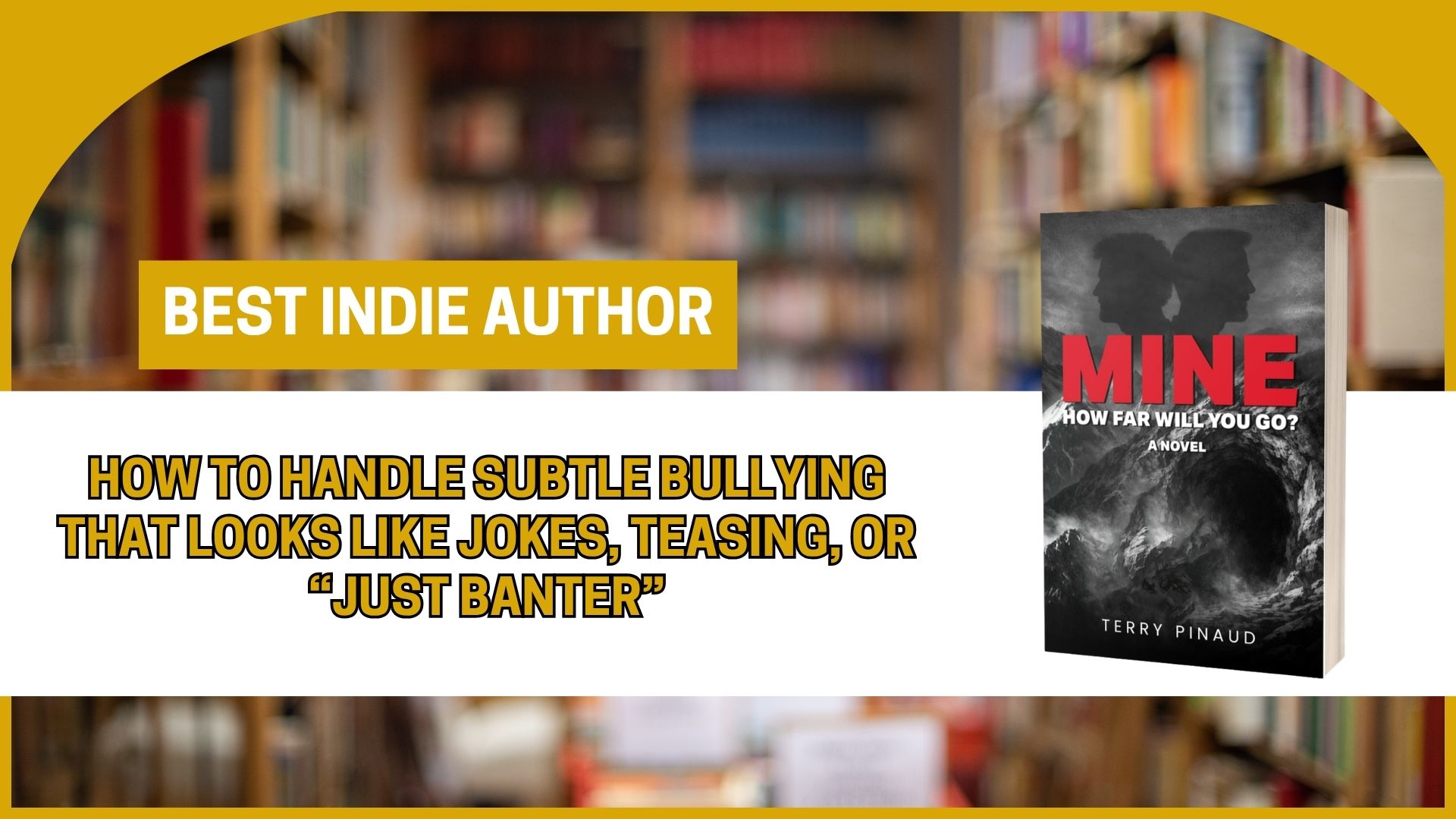
Still, if you are unsure and want more understanding about this subject, Mine by Terry Pinaud offers a grounded look at social pressure, teasing, and the damage caused by words that are meant to be dismissed. The story shows how subtle cruelty can shape behavior and self-perception, making it a meaningful read for anyone navigating similar situations, with an element of thrill, anticipation, and an coming-of-age of an age story that will please to teens and adults equally.


