
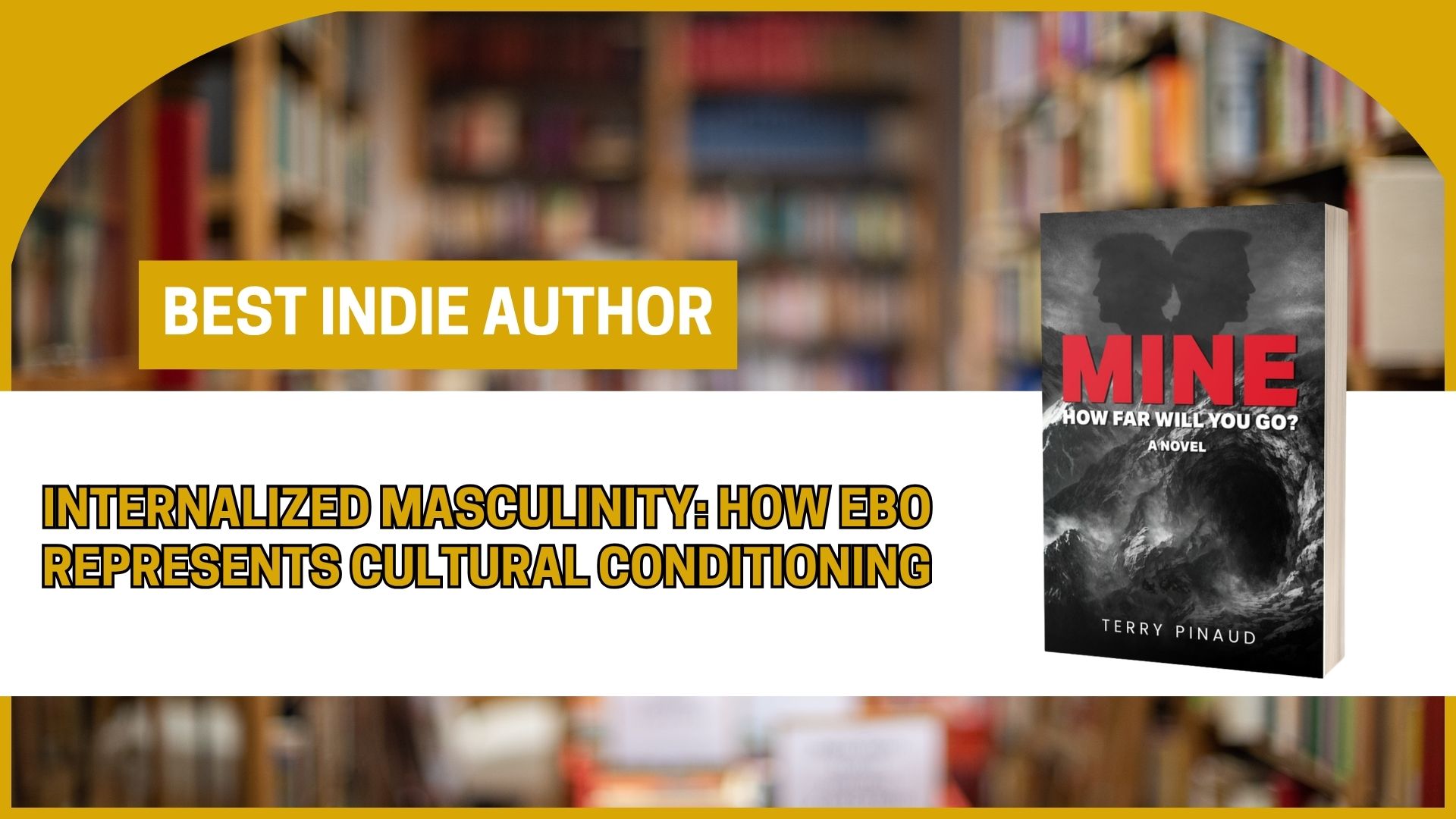
In the book Mine by Terry Pinaud, masculinity is not merely a personality trait. It is a performance shaped by war, politics, family pressure, and cultural expectation. No character embodies that performance more vividly than Ebo Sartis.
Ebo is loud where his brother Eldin is reflective. He is aggressive where Eldin hesitates. He curses, postures, competes, and seeks validation through dominance. At first glance, he appears to be the archetypal alpha male teenager, brash, athletic, fearless. Yet beneath that exterior lies something more revealing. Ebo is not simply confident. He is conditioned.
Internalized masculinity forms when cultural expectations become self policing instincts. Boys learn early what earns approval and what invites ridicule. Strength is praised. Sensitivity is mocked. Sexual conquest signals status. Vulnerability signals weakness. In a nation shaped by militarism and nationalist rhetoric, those messages are amplified. The war outside the home mirrors the battles inside it.
Ebo absorbs this framework without question. He aligns himself with power. He idolizes the military advance. He speaks of dominance as though it is destiny. His language is coarse, deliberately provocative. He equates masculinity with aggression and control. Even at the dinner table, his words reinforce a hierarchy in which emotion has no place.
What makes Ebo compelling is that his behavior is not random cruelty. It is rehearsal. He is performing the script handed to him by society. When he mocks Eldin for sensitivity, he is defending the boundaries that protect his own identity. If masculinity is fragile, it must be guarded. Ridicule becomes armor.
His antagonism toward Eldin is especially telling. Eldin’s introspection unsettles him. His brother’s restraint and quiet intensity challenge the narrow template of what a man should be. Instead of curiosity, Ebo responds with contempt. That contempt is not only about sibling rivalry. It is fear of deviation.
Terry Pinaud uses Ebo to illustrate how cultural conditioning thrives in environments where dissent is dangerous. In a country where the state dictates morality and nationalism defines worth, boys like Ebo become enforcers long before they are adults. They internalize the ideology so completely that it feels personal. The state does not need to punish difference when peers will do it first.
Yet Ebo is not presented as a villain. He is a product of the same system that confines Eldin. His bravado masks insecurity. His obsession with strength suggests a constant need to prove himself. Even his fascination with danger, motorcycles, risk, bravado, reads as an attempt to affirm his place in the masculine hierarchy.
In Mine, the tension between the brothers exposes a larger cultural conflict. Eldin represents emotional complexity and quiet resistance. Ebo represents conformity and performance. Their dynamic asks a powerful question: How much of masculinity is choice, and how much is inheritance?
By portraying Ebo with nuance rather than caricature, Terry Pinaud invites readers to examine the forces that shape male identity. Internalized masculinity is not born in isolation. It is taught, reinforced, rewarded, and feared into place.
Through Ebo, Mine reveals that the most powerful conditioning is the kind we no longer recognize as conditioning at all.


