Many of us have been there when the traditional approach to enterprise security was built on a mountain of text files, which consist of endless lines of logs telling us what happened and not the crux of the problem or the gaps in the systems. Despite the abundance of logs, the complex measures and material left us completely in the dark about why or who was behind it. As a result, security teams became digital archaeologists, and they were required to dig through petabytes of historical data only to find out if an alert was an active breach or just another benign script error. In short, such a traditional approach needs a serious rework and something to make it work and generate actual results.
But the tables have turned rapidly…. Today, the conversation around Security Information and Event Management (SIEM) has fundamentally shifted to using data to generate actionable intelligence and robust security. Modern SIEM platforms act less like passive storage vaults and more like central nervous systems for corporate defense, which ingest millions of multi-source events per second, correlate anomalies in real time, and transform raw syntax into contextual narratives.
To understand this paradigm shift, we have to look at how security posture has transformed from a static shield into a dynamic, fluid defense. Where traditional SIEMs forced analysts to manually connect the dots, such as a failed login here, an unexpected firewall modification there, and a sudden outbound data transfer across the globe- it left us with little to discuss and leaves us clueless. But with modern platforms, it gave us the leverage of cross-correlative logic and behavioral analytics to tie these seemingly unrelated anomalies together into a single, cohesive threat story. Instead of drowning in alerts, analysts using SIEMs are presented with a clear threat timeline, and they can better determine who entered the network, where they moved, and what they touched.
Yet, this technological leap demands a cultural shift within organizations, as tools do not secure networks. People do. When we shift from logs to intelligence, we elevate the role of the security analyst from a glorified log-reader to a strategic threat hunter. We stop asking, “Did we collect the log?” and start asking, “What does this pattern tell us about our adversary’s next move?” By embracing this forward-looking posture, organizations stop playing catch-up with attackers and start anticipating threats before the first alarm bell rings.
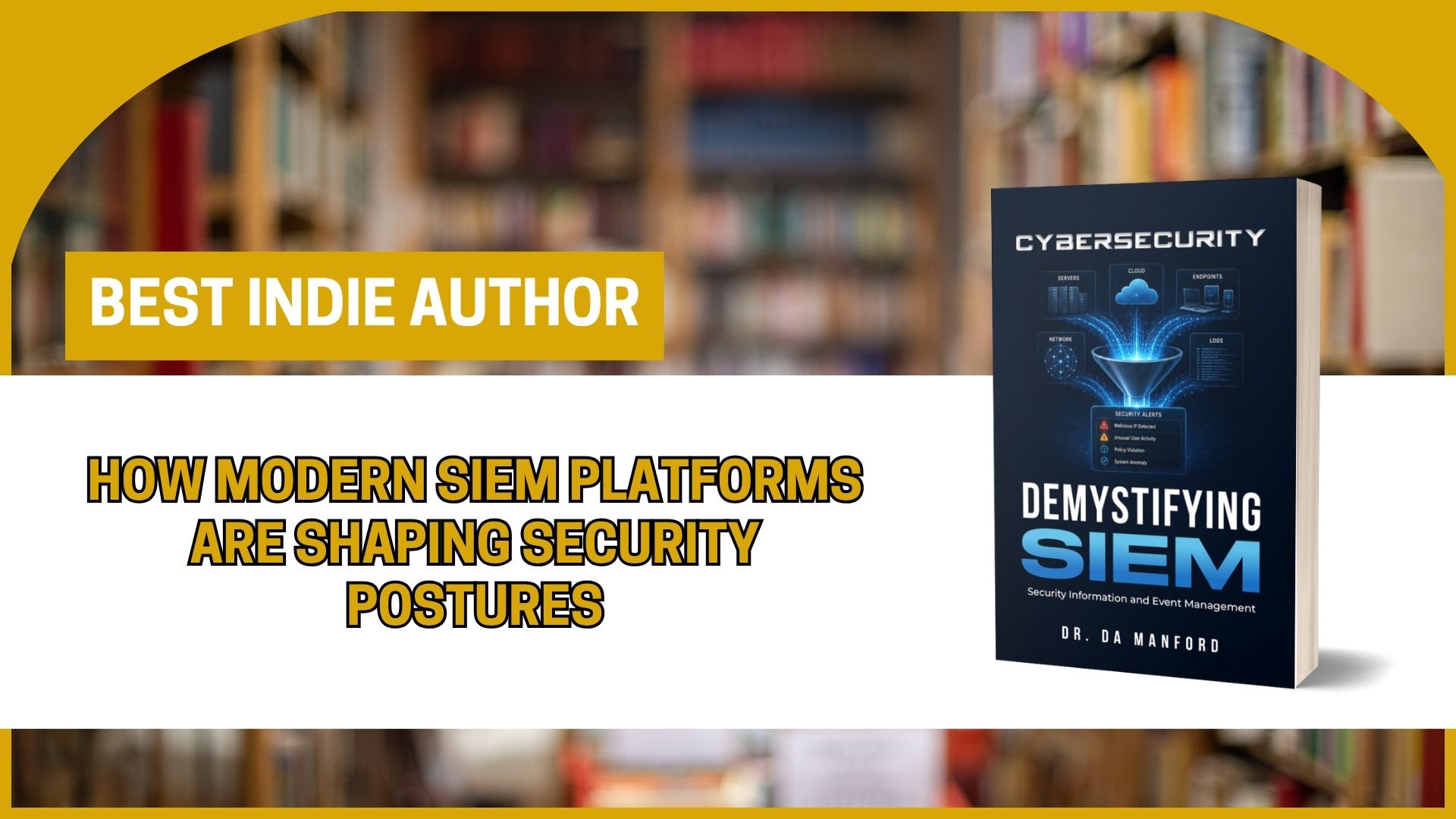
Demystifying SIEM by Dr. David A. Manford provides a comprehensive, structured guide to understanding Security Information and Event Management (SIEM) in real-time. This book presents this subject as a critical, evolving capability that bridges technology, operations, and organizational strategy. By systematically deconstructing core architectural principles, log collection methodologies, detection mechanisms, and the intricate dynamics of Security Operations Centers (SOCs), while emphasizing that sustainable success depends heavily on data quality, continuous rule tuning, and human expertise, it navigates the modern threat landscape. Moreover, the book also addresses inherent challenges such as alert fatigue and cost management and explores the transformative integration of modern advancements like SOAR, XDR, and artificial intelligence. In a nutshell, it reframes SIEM as a dynamic, evolving capability that sits at the intersection of technology, operations, and strategy. It acknowledges both the challenges organizations face in implementing SIEM effectively and the immense value it can deliver when approached with clarity and intent.
Read the book on Amazon: https://a.co/d/09kt91XG