Most leaders are aware that to be an ‘effective’ leader they need to stay calm, think things through, listen, be empathetic and keep their head when faced with challenging situations.
However, when the going gets tough, they may not always be able to do this.
They can get very defensive if challenged, a seasoned executive might make an impulsive decision after being under pressure for a long time and a caring manager can become very impatient. This does not mean they are lacking in knowledge or experience. It can be a sign that their internal resources are becoming depleted.
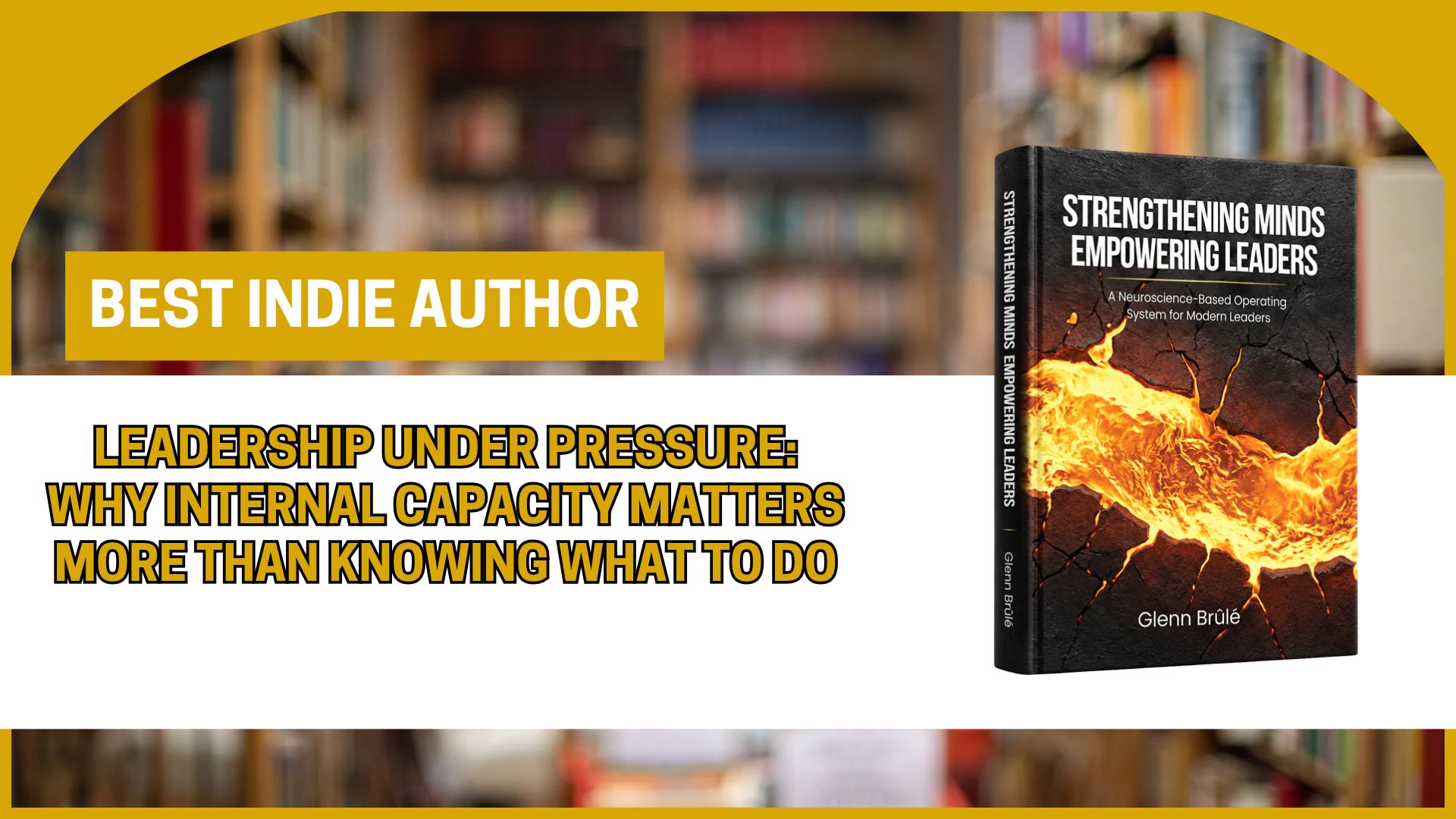
In Strengthening Minds. Empowering Leaders. Glenn Brûlé looks at this by using a principle called Internal Capacity Before External Performance. As a leader you have these skills because they are outwardly showing you have developed some internal processes to regulate your emotions, maintain focus, gain perspective, build relationships and navigate uncertainty.
During the book the concept of the Five Pillar Spine® is introduced. This shows you there are 5 key areas that help us become intentional leaders. These are self regulation, focus and Attention Integrity, empathy and Perspective Taking, Influence Through Connection and Conflict Capacity. They all connect to each other so if one is lacking it can affect the others.
This is where pressure comes into play. The research throughout this book will show you how stress can impact your attention span, memory, emotional control and executive functions. When there are high pressures within a situation, leaders can struggle to utilise important behaviours. They often experience reduced attention spans, quicker emotional responses and fall into old habits.
This means that you cannot develop your leadership skills at the point in time when you need them most. You should develop your emotional control, so that you can handle conflict. Develop your attention span, so that you can cope with distractions. Practice empathy, so that you can have difficult conversations. Improve your ability to manage disagreement.
The Five Pillar Spine can be seen as a preparation tool. It enables leaders to build up the internal elements that will allow them to behave effectively under pressure. Like a musician prepares for a performance, or a pilot prepares for any emergencies they may have to deal with, leaders will benefit from practising the skills required many times. This will build up their capabilities.
It is an ongoing process. By reflecting leaders will be able to see patterns in how they respond. Deliberate practice, feedback and repetition will help to build these patterns. The aim isn’t just to fix a problem that has occurred but to understand the process behind the response and build more capability to overcome the next challenge.
As Glenn Brûlé outlines in Strengthening Minds. Empowering Leaders, the pressure doesn’t generate leaders. It reveals the internal system which has already been developing. Ultimately leaders become more effective by building up their internal capacity. So that they’re able to do what they know they need to do.
Ultimately it takes more than knowing, wanting and doing to be an effective leader. To build your internal capacity will provide a strong base to allow you to make thoughtful decisions, sustain meaningful relationships and intentionally respond to situations.
Get the book on Amazon: https://www.amazon.com/dp/B0HK4YBJHR