For students and readers of political science, few twentieth-century leaders offer a more fascinating case study in ideology, revolution, leadership and political communication than Fidel Castro. His influence extended far beyond Cuba, shaping debates about socialism, sovereignty, anti-imperialism, nationalism and revolutionary movements across the world.
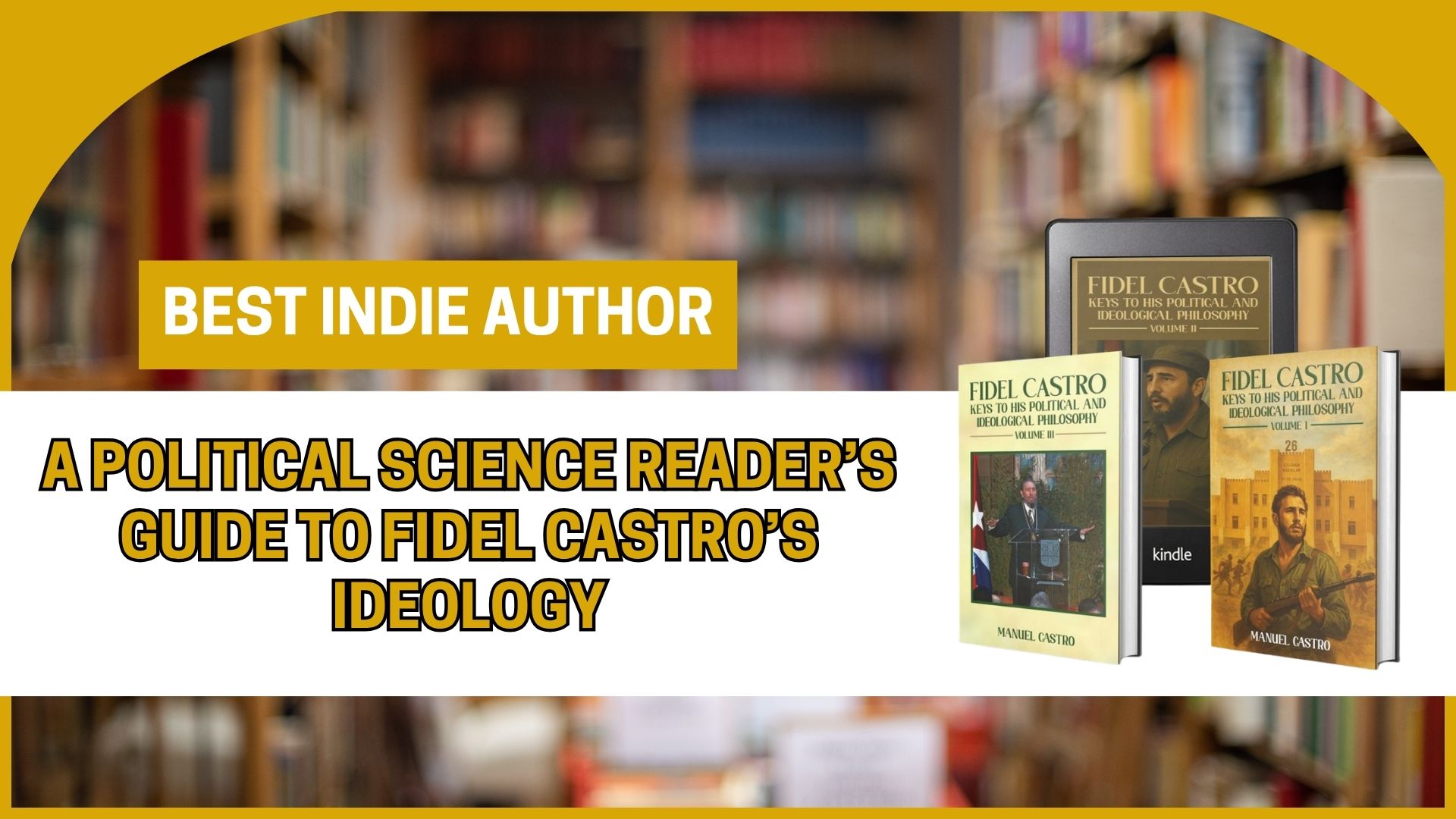
Yet understanding Fidel Castro requires more than studying historical headlines or political controversies. It requires examining the ideas, strategies and philosophical principles that guided his leadership for decades. That is precisely what makes Fidel Castro: Keys to His Political and Ideological Philosophy (Volume I), Fidel Castro: Keys to His Political and Ideological Philosophy (Volume II) and Fidel Castro: Keys to His Political and Ideological Philosophy (Volume III) by Manuel A. Castro such valuable resources for political science readers.
This extensive trilogy goes beyond biography and historical narrative. Manuel Castro presents a structured exploration of Fidel Castro’s political ideology through speeches, thematic analysis, historical context and conceptual organization. The result is a comprehensive intellectual guide to one of the most influential and controversial political figures of the modern era.
One of the trilogy’s greatest strengths is its academic relevance. Political science students often study concepts such as nationalism, socialism, political legitimacy, mass mobilization, revolutionary leadership and ideological conflict in abstract theoretical terms. These books demonstrate how those concepts operated in real political circumstances through Fidel Castro’s leadership and revolutionary strategy.
The trilogy carefully examines how Fidel used ideology as both a governing framework and a political instrument. Readers gain insight into how revolutionary movements build public support, maintain unity and create long-term political identity. Fidel consistently viewed political consciousness as essential to national survival, emphasizing education, civic participation and collective purpose throughout his speeches.
Another major theme explored in the books is sovereignty. Fidel Castro repeatedly argued that nations must defend their political independence, economic control and cultural identity against foreign domination. These discussions remain highly relevant in modern political science, especially in debates surrounding globalization, economic dependency and international power structures.
The books also provide a remarkable study of political communication. Fidel Castro’s speeches became central tools of ideological education and mass mobilization. Manuel Castro analyzes how Fidel blended history, philosophy, economics and emotional rhetoric to shape public opinion and strengthen revolutionary legitimacy.
For readers studying political discourse, propaganda or leadership communication, the trilogy offers valuable insight into how language can influence political behavior and national identity. Fidel’s ability to transform political ideas into persuasive narratives remains one of the defining characteristics of his leadership.
Another compelling aspect of the trilogy is its international perspective. Fidel Castro was not simply a Cuban leader; he became a significant voice in global Cold War politics and revolutionary movements throughout Latin America, Africa and the developing world. The books explore his positions on imperialism, colonialism, economic inequality, international solidarity and global power imbalances, helping readers understand why Fidel Castro became such an influential figure in international political debate.
What makes Fidel Castro: Keys to His Political and Ideological Philosophy especially useful for political science readers is its thematic organization. Topics including revolution, democracy, ethics, education, nationalism, globalization, culture, media, human rights and leadership are explored systematically across the three volumes. This structure allows readers to analyze Fidel Castro’s worldview from multiple academic and intellectual perspectives.
Importantly, the trilogy encourages critical engagement rather than simplistic judgment. Readers are invited to examine how ideology functions within political systems and how revolutionary leaders use communication, historical memory and collective identity to sustain political movements over time.
For students, educators, researchers and anyone interested in political theory and revolutionary history, Manuel Castro’s trilogy provides a thought-provoking and deeply researched guide to understanding Fidel Castro’s ideology. It offers readers an opportunity to study the intersection of power, ideas, leadership and revolution through the lens of one of the twentieth century’s most enduring political figures.