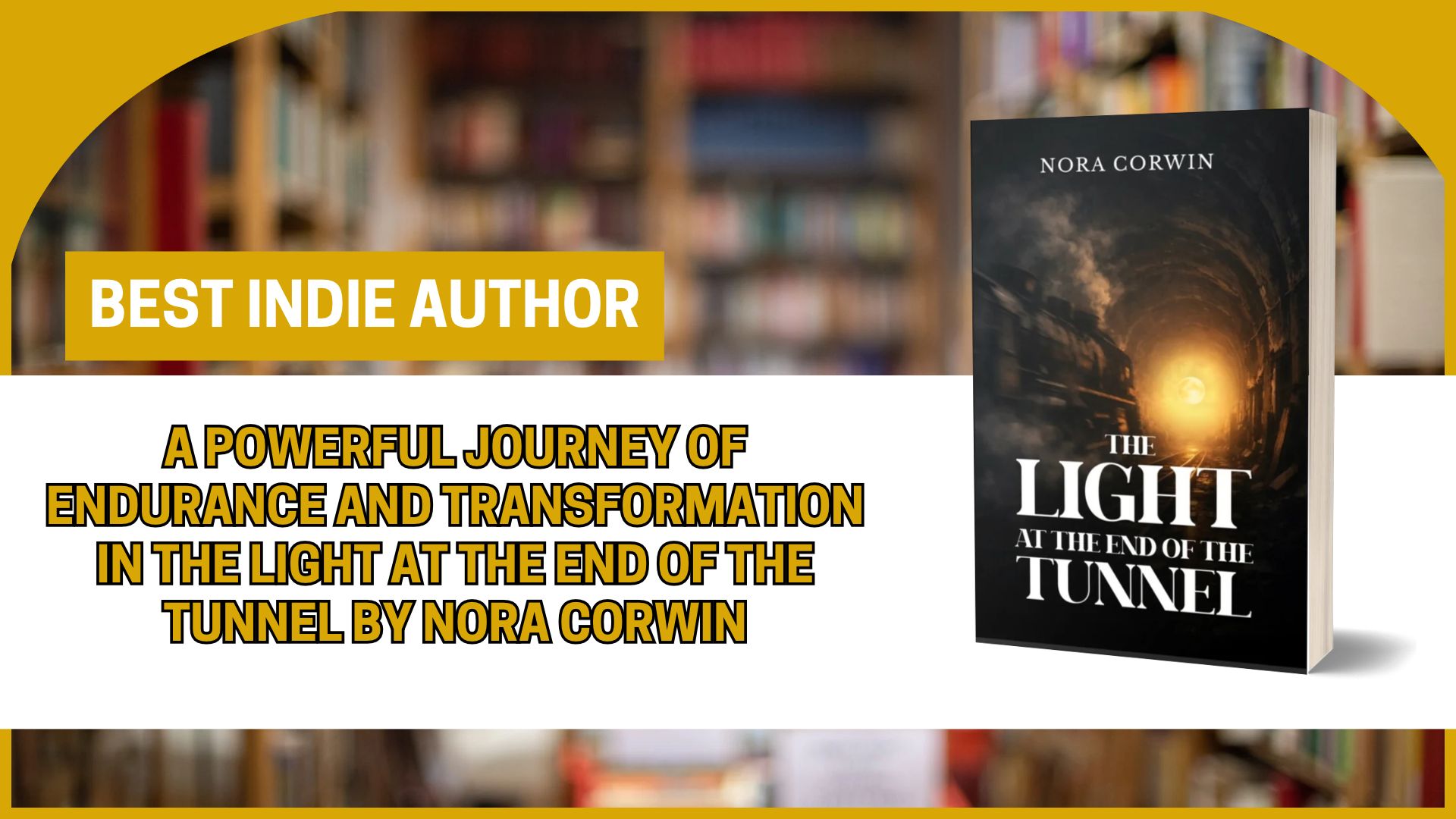
Some lives are not defined by a single moment of transformation, but by a long passage through darkness, uncertainty and resilience. Nora Corwin’s memoir The Light at the End of the Tunnel is one such story, a deeply personal account of survival, endurance and ultimately, becoming.
Through the symbolic arc of “the tunnel, the storm and the sunrise,” Corwin invites readers into a life shaped by caregiving burdens, emotional trauma, illness, loss and the gradual, hard-won discovery of selfhood in later life. This is not simply a memoir of hardship. It is a story of becoming whole after fragmentation.
The Tunnel: Childhood, Responsibility and Early Loss of Self
The “tunnel” in Corwin’s life begins early. As a child, she is thrust into responsibility far beyond her years, caring for a chronically ill mother while navigating a home life that demanded emotional maturity instead of innocence. While other children experienced freedom and play, she learned discipline, duty and sacrifice.
This early conditioning profoundly shaped her identity. She became someone who served, who managed and who endured. But in the process, she quietly lost connection to her own desires, dreams and emotional needs. The tunnel, in this sense, represents a life lived in forward motion without pause for self-discovery.
The Storm: Marriage, Trauma and Survival Mode
If childhood was the tunnel, adulthood becomes the storm.
Corwin’s memoir candidly explores a turbulent marriage marked by instability, emotional abuse and psychological strain. As a mother of three and a working nurse, she found herself balancing professional responsibility with personal survival. The emotional toll was immense, yet she continued forward, anchored by her children and a deep sense of duty.
The storm intensifies with illness, exhaustion and the realities of single motherhood. Yet even in this chaos, Corwin never stops functioning. She works, raises her children and cares for others, embodying a quiet, relentless form of strength that often goes unrecognized in survival narratives.
What makes The Light at the End of the Tunnel so compelling is its honesty about this phase of life. Corwin does not romanticize endurance. Instead, she reveals the cost: emotional fatigue, identity loss and the gradual erosion of self.
The Turning Point: Illness, Retirement and Identity Collapse
Later in life, illness and retirement bring a stillness Corwin had never known. Stripped of structure and purpose, she enters a period of deep reflection and disorientation. The roles that once defined her nurse, caregiver and mother in crisis no longer provide the same identity anchor.
This phase of life is often overlooked in society: the emotional aftermath of retirement, the burnout of caregiving and long-term survival mode. Corwin captures it with striking clarity. Who are we when we are no longer needed in the same way? What remains when the storm finally quiets?
The Sunrise: Reinvention, Purpose and Becoming
The “sunrise” in Corwin’s story is not sudden or dramatic. It emerges slowly, through intentional choices and quiet acts of renewal.
She returns to part-time work in a meaningful capacity, reconnects with family and finds purpose in helping others again, but this time from a place of balance rather than depletion. Volunteering, structured routines and renewed connection to loved ones become pathways back to herself.
Most importantly, Corwin begins to redefine identity not as something lost or regained, but as something continuously built.
A Memoir of Becoming
At its core, The Light at the End of the Tunnel is not just about surviving hardship; it is about becoming through it. The tunnel represents origin and limitation. The storm represents struggle and transformation. The sunrise represents acceptance, clarity and peace.
Corwin’s journey reminds readers that becoming is not a single event; it is a lifelong process shaped by everything we endure and everything we choose to rebuild afterward.
For anyone who has experienced caregiving exhaustion, trauma, illness, identity loss or major life transitions, this memoir offers something deeply meaningful: the understanding that even after long seasons of darkness, renewal is still possible.
In the end, Nora Corwin’s story is not just about what she survived. It is about who she became because of it.
Read the Book on Amazon: https://a.co/d/0cuPKNFi