What does it really mean to resist?
Is it about standing up to power? Challenging dominant systems? Or redefining what independence looks like in a world shaped by global influence?
Few figures have been as closely associated with the idea of resistance as Fidel Castro. But to understand his impact, you have to look beyond borders. Castro wasn’t just a national leader; his ideas traveled, sparked conversations and influenced movements far beyond Cuba.
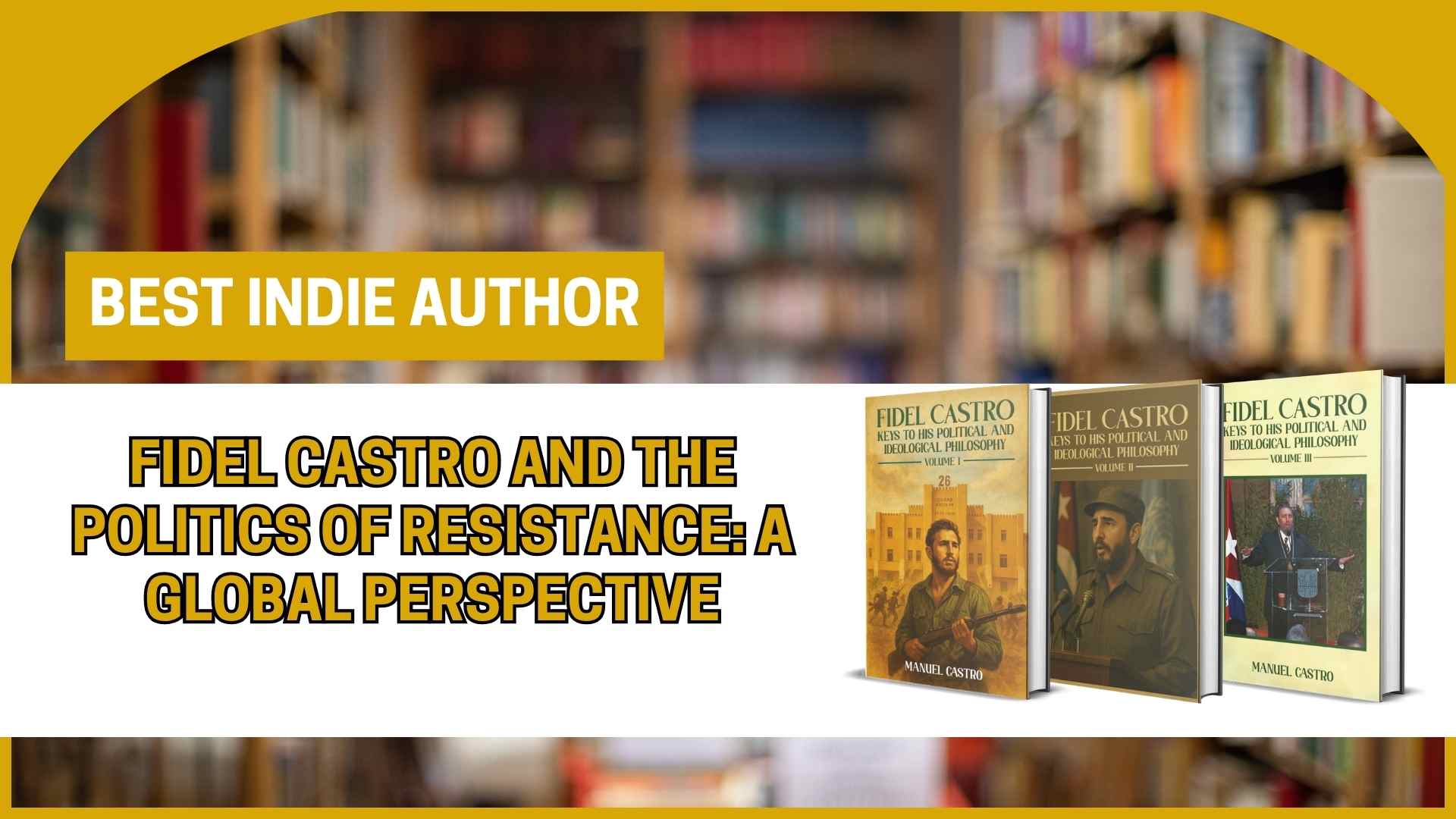
That’s exactly what makes Fidel Castro: Keys to His Political and Ideological Philosophy(Volumes I, II and III) by Manuel Castro such a fascinating read. This three-part series doesn’t just explore Castro’s role in one country; it unpacks how his ideas became part of a much larger, global dialogue on resistance.
Let’s start with the foundation.
Castro’s political philosophy was deeply rooted in concepts like sovereignty, social justice and anti-imperialism. But these weren’t just abstract ideals. As Volume I reveals, they were shaped by real historical conditions and lived experiences. This grounding made his message relatable not only to Cubans but also to people in other regions facing similar struggles.
And that’s where things get interesting.
Once an idea resonates beyond its original context, it begins to evolve.
Across Latin America, Africa and even parts of Asia, elements of Castro’s rhetoric and ideology began to appear in local movements. Not as exact copies, but as adaptations. Leaders and activists took what resonated and reshaped it to fit their own realities. Manuel Castro’s analysis shows how this process worked, how a core set of ideas could remain intact while still being flexible enough to travel across cultures and political systems.
Volume II dives deeper into this global reach.
It highlights how Castro’s speeches, policies and public image contributed to a broader narrative of resistance. He became, in many ways, a symbol representing the possibility of standing up to larger powers. Whether one agrees with his methods or not, that symbolic role played a significant part in how his ideas spread.
But here’s the key point: global influence doesn’t mean universal agreement.
Castro’s legacy has always been debated and that debate is part of what keeps it relevant. Some view his approach as a powerful example of resistance; others see it as a product of a specific time and place, not easily transferable to today’s world.
Volume III takes on this complexity head-on.
It explores how Castro’s ideas hold up in a modern, interconnected world. Are they still applicable? Or do they belong to a different era? The answer, as Manuel Castro presents it, isn’t black and white. Some aspects feel timeless, like the emphasis on sovereignty and self-determination, while others are more closely tied to historical context.
And that’s what makes this trilogy so compelling.
It doesn’t try to simplify Castro’s legacy into a single narrative. Instead, it shows how the politics of resistance are constantly evolving. What worked in one place or time might need to be reimagined in another. And yet, the core questions about power, independence and justice remain strikingly similar.
So when you look at Castro from a global perspective, you start to see something bigger than one leader or one revolution.
You see a set of ideas that moved across borders, sparked debate and continue to influence how people think about resistance today.
If you are curious about how political ideas travel and why some endure long after their origins, Fidel Castro: Keys to His Political and Ideological Philosophy offers a rich, thought-provoking exploration.
Because in the end, resistance isn’t just a moment in history.
It’s an ongoing conversation.
And Castro’s voice is still part of it.