Most people would have positive intentions to improve how they communicate, listen, make decisions, support their team and stay calm during challenging times as a leader. But it can be hard to keep these intentions in mind with busy deadlines, competing priorities and pressures of daily life. Often it is the small things which make the difference between someone wanting to improve as a leader and actually improving.
Leadership skills will not be developed by one inspirational session or conversation. It will be developed by doing things consistently and creating new habits.
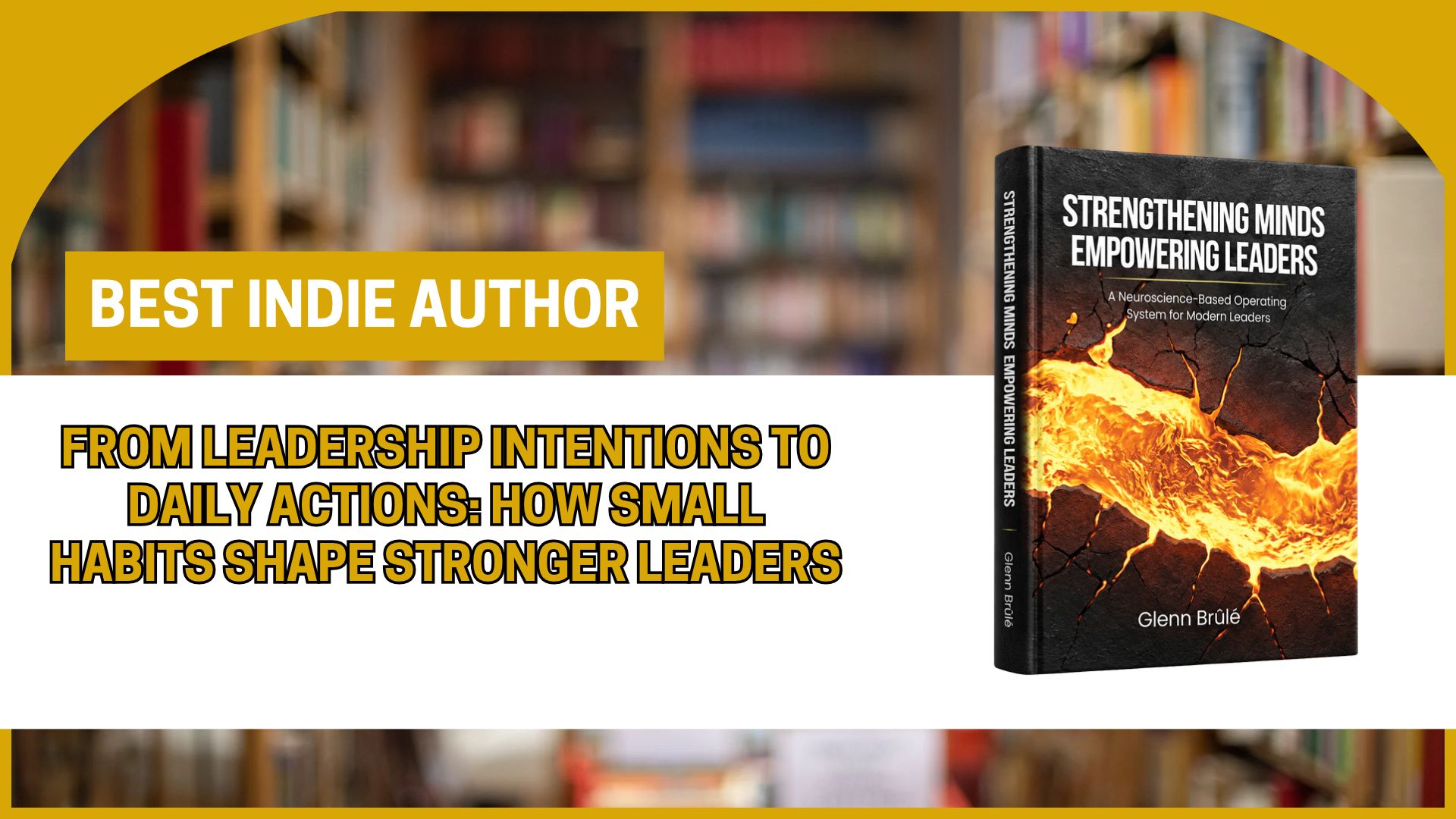
Glenn Brûlé explains how neuroplasticity plays into this in his book ‘Strengthening Minds, Empowering Leaders’. The brain will not change unless we actually practice it. We need to experience new learning, reflect on it, practice it and reinforce it. This applies to leadership too. Its important to understand that we should do things differently but how we can be consistent with it.
Imagine you want to become a better listener as a leader. You attend a workshop on communication to learn some helpful techniques. However, your actual development comes from practicing these techniques in your next team meeting. Trying to not interrupt, waiting for the other person to finish talking, asking them a follow up question and really considering their point of view. Practicing little actions like these will help make your intention into a consistent leadership behaviour.
This can be applied to emotional intelligence, accountability, coaching and decision making. If you want to get better at managing your emotions you could practice taking a step back when having a difficult conversation. To become a better coach ask lots of questions rather than jumping straight in with solutions. And if you want to increase accountability within your management then be consistent with clarifying expectations and following up.
Whilst these actions seem small, developing habits will help. As Glenn Brûlé outlines in his blog about the Leadership Development Flywheel® when practicing something take some time to reflect and learn so that you can make adjustments. This gives you an opportunity to improve each time. Leaders can concentrate on making one meaningful change and building the habit.
Reflection is very important within leadership. After a challenging experience, leaders can reflect on what happened during the situation, their reaction and the impact they had. This helps them to understand how they can improve and what they can change next time. It helps leaders understand the difference between intent and impact, therefore making every experience an opportunity for development.
In Strengthening Minds, Empowering Leaders Glenn Brûlé focuses on the importance of continuing learning after initial learning has occurred. This enables growth to be sustained through feedback, coaching, deliberate practice and continual reinforcement. This means that leadership development is not an occasional occurrence but a continuous process that is supported by intentional habits.
Start small! Focus on doing one specific behaviour that will help you grow into the type of leader you want to be. Make a conscious effort to practice this behaviour, reflect on how you are doing and adapt if needed.
Great leadership grows from small, often unnoticeable actions. Being patient in conversation, keeping your promises, asking thoughtful questions and making more considered decisions. As time goes on these actions will create meaningful patterns. You will become the type of leader you want to be by practicing behaviours with intention.
Get the book on Amazon: https://www.amazon.com/dp/B0HK4YBJHR