Politics is not shaped by policy alone. It is shaped by perception, and perception is often influenced by the stories people consume. While news and analysis provide information, books offer something deeper. They create context, build emotional connection, and frame complex issues in ways that stay with readers long after the final page.
Fiction, particularly political fiction, plays a significant role in this process. It does not simply present facts. It interprets them. Through characters, conflicts, and consequences, it transforms abstract systems into lived experiences. Readers begin to understand not just what is happening in the political sphere, but why it matters and how it affects individuals and societies.
One of the most powerful aspects of books is their ability to simplify complexity without losing depth. Political structures, international relations, and economic systems can be difficult to follow in traditional formats. Books reorganize these elements into narratives. They connect causes to outcomes, decisions to consequences, and leaders to the people impacted by their choices. This clarity allows readers to engage more confidently with political ideas.
Books also have the ability to highlight perspectives that might otherwise be overlooked. They can explore the motivations behind political actions, the tensions between different groups, and the unintended consequences of policy decisions. In doing so, they encourage readers to think critically rather than accept surface level interpretations.
In recent years, political thrillers have become particularly influential in shaping perception. These works often draw directly from real world trends, presenting scenarios that feel immediate and relevant. They explore issues such as national identity, global alliances, security threats, and internal division. By placing these elements within a narrative framework, they allow readers to examine possible futures as well as current realities.
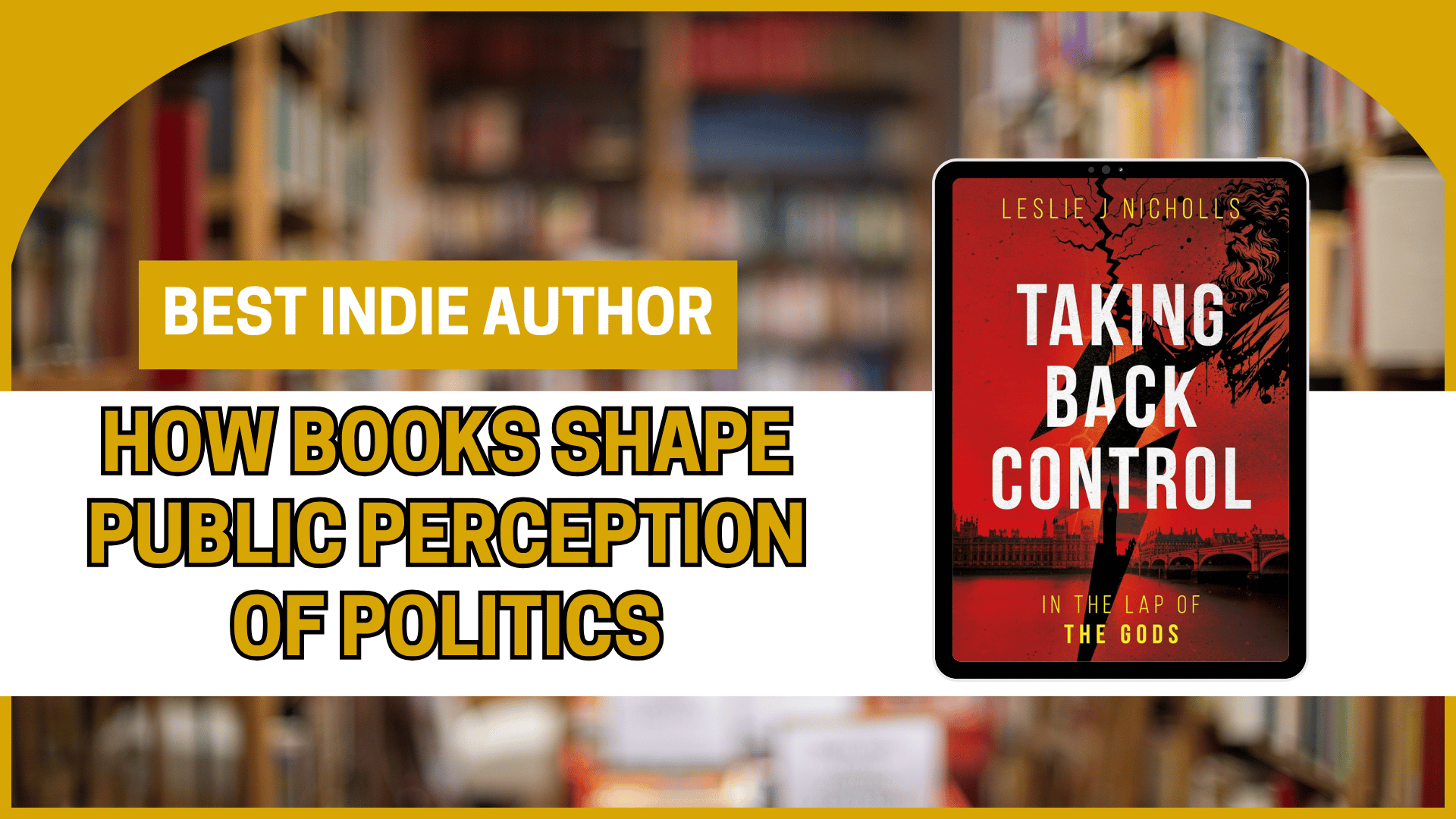
Leslie J Nicholls’ work stands as a strong example of this influence. Through The Disunited Kingdom series and his other novels, he presents a vision of political and social transformation that closely aligns with ongoing global developments. His stories delve into shifting power structures, economic strain, and the growing tension between nations and within societies.
What makes his writing impactful is its realism. The scenarios he presents are not distant or exaggerated. They feel plausible, grounded in patterns that readers recognize from their own world. This creates a powerful effect. Readers begin to see current events through the lens of the narrative, connecting fiction with reality in a way that deepens their understanding.
There is also a reflective element to this influence. Books encourage readers to question assumptions, to consider alternative viewpoints, and to explore the consequences of different choices. This process fosters a more engaged and informed audience, one that is better equipped to navigate an increasingly complex political landscape.
As the world continues to evolve, the role of books in shaping perception is likely to grow. In an environment where information is abundant but often fragmented, stories provide coherence. They bring together disparate elements and present them in a way that is both accessible and meaningful.
In this context, the work of Leslie J Nicholls is particularly relevant. His novels offer more than unique plots. They provide insight into the forces shaping modern politics and the potential directions those forces may take. For readers seeking to understand the world beyond headlines, his books offer a perspective that is both engaging and thought provoking.
Books have always influenced how people see the world. In the realm of politics, that influence is becoming increasingly significant. Through narrative, emotion, and insight, they are helping to shape not just what people know, but how they think.
Explore the full story here: https://www.amazon.com/dp/B0G4F2KTJC.