The modern workplace is no longer driven by human judgment alone. Intelligent systems now analyze data, identify patterns, and generate recommendations at a speed no individual can match. This shift has created a fundamental question that organizations can no longer ignore: when it comes to critical decisions, who should have the final say?
At first glance, the answer may seem obvious. Systems process vast amounts of information, reduce error, and offer consistency. In environments where speed and accuracy are essential, relying on automated recommendations appears efficient and logical. Decisions that once took hours or days can now be made in seconds.
Human decision-making carries qualities that systems cannot replicate. Context, ethical reasoning, emotional awareness, and the ability to interpret nuance all play a critical role in complex situations. While systems can identify patterns, they do not understand meaning in the way humans do. They do not weigh consequences beyond the data they are trained on. This creates a gap between what can be calculated and what should be decided.
In structured environments with clear rules and predictable outcomes, systems can provide strong guidance. They excel at identifying trends, flagging anomalies, and offering data-backed recommendations. In these cases, human involvement may focus more on oversight than direct intervention.
However, in situations that involve uncertainty, ethics, or human impact, the role of human judgment becomes essential. Decisions related to people, safety, or long-term consequences require more than data. They require interpretation, responsibility, and accountability. When these elements are removed, decisions may become technically correct but practically flawed.
There is also the issue of over-reliance. As systems become more advanced, there is a tendency to trust their output without question. This can lead to a gradual decline in critical thinking. When individuals begin to defer automatically to recommendations, the ability to challenge or question those recommendations weakens. Over time, this creates a dependency that reduces both confidence and capability.
At the same time, rejecting system input entirely is not a solution. Ignoring valuable insights can lead to missed opportunities and inefficient processes. The goal is not to choose one over the other, but to define how they work together.
A balanced approach places systems as decision-support tools rather than decision-makers. They provide analysis, highlight risks, and suggest actions. Humans evaluate these inputs, apply context, and make the final call. This structure preserves efficiency while maintaining accountability.
Clear boundaries are essential in this model. Organizations must define which decisions can be guided by systems and which require human approval. Without these boundaries, confusion arises, and responsibility becomes unclear. Employees may hesitate to act, unsure whether to follow the recommendation or trust their own judgment.
Trust also plays a significant role. For employees to work effectively alongside intelligent systems, they must understand how decisions are generated. Transparency in how recommendations are formed allows individuals to engage with the system rather than blindly follow it. When people can see the reasoning behind outputs, they are more likely to use them effectively.
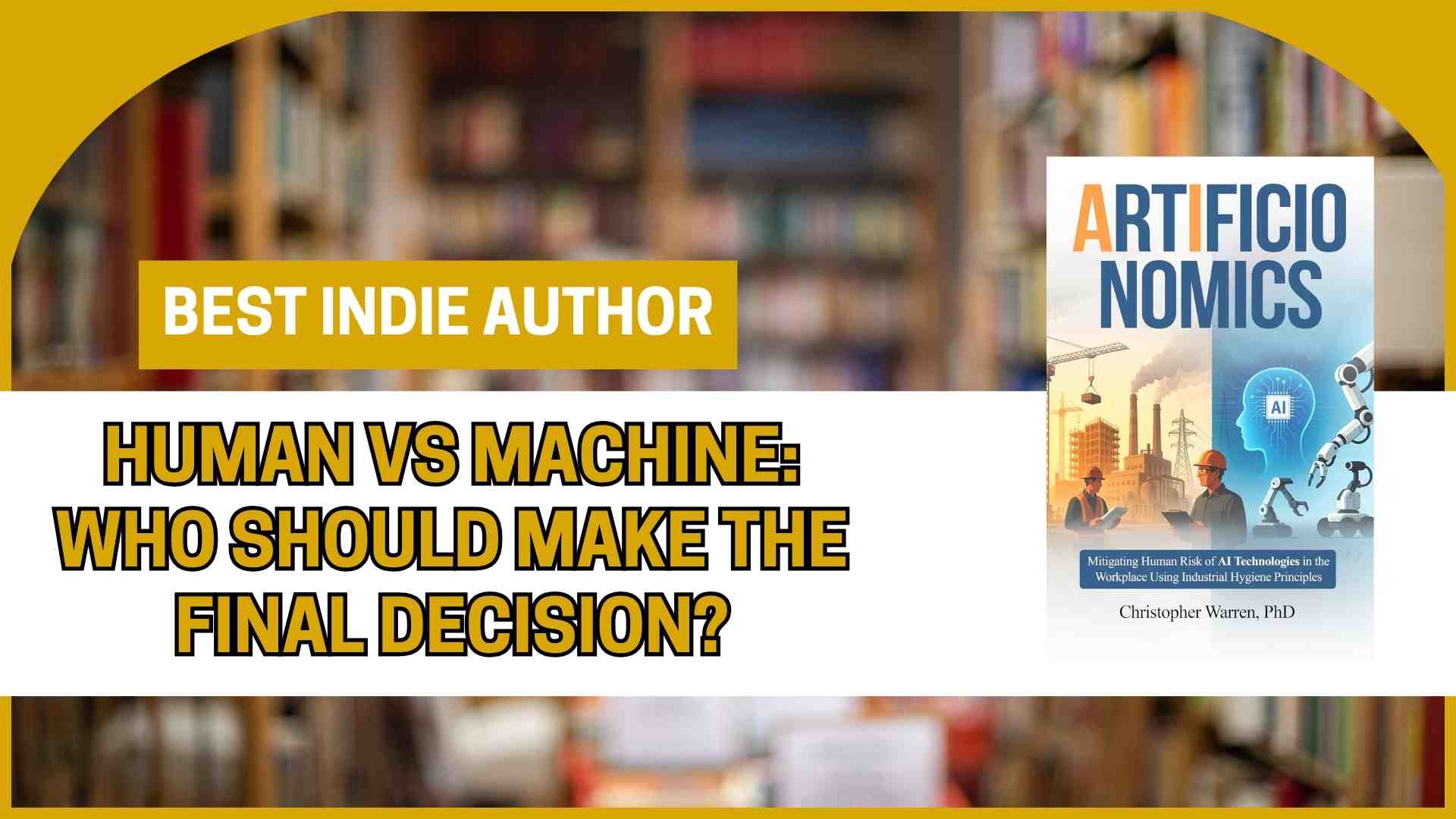
This evolving relationship is explored in Artificionomics: Mitigating Human Risk of AI Technologies in the Workplace by Christopher Warren, PhD. The book presents a framework that addresses not only how decisions are made, but how they affect the people involved. It emphasizes the importance of maintaining human oversight while integrating advanced systems into everyday operations.
The question is not whether systems should influence decisions. They already do. The real question is how much control they should have. The answer lies in balance. Systems can guide, analyze, and inform.Humans must decide, interpret, and take responsibility.The final decision should not belong to one or the other.It should be the result of both, working together with clear roles and defined limits.
Get your Copy Now on Amazon: https://www.amazon.com/dp/B0GFY4RL6B