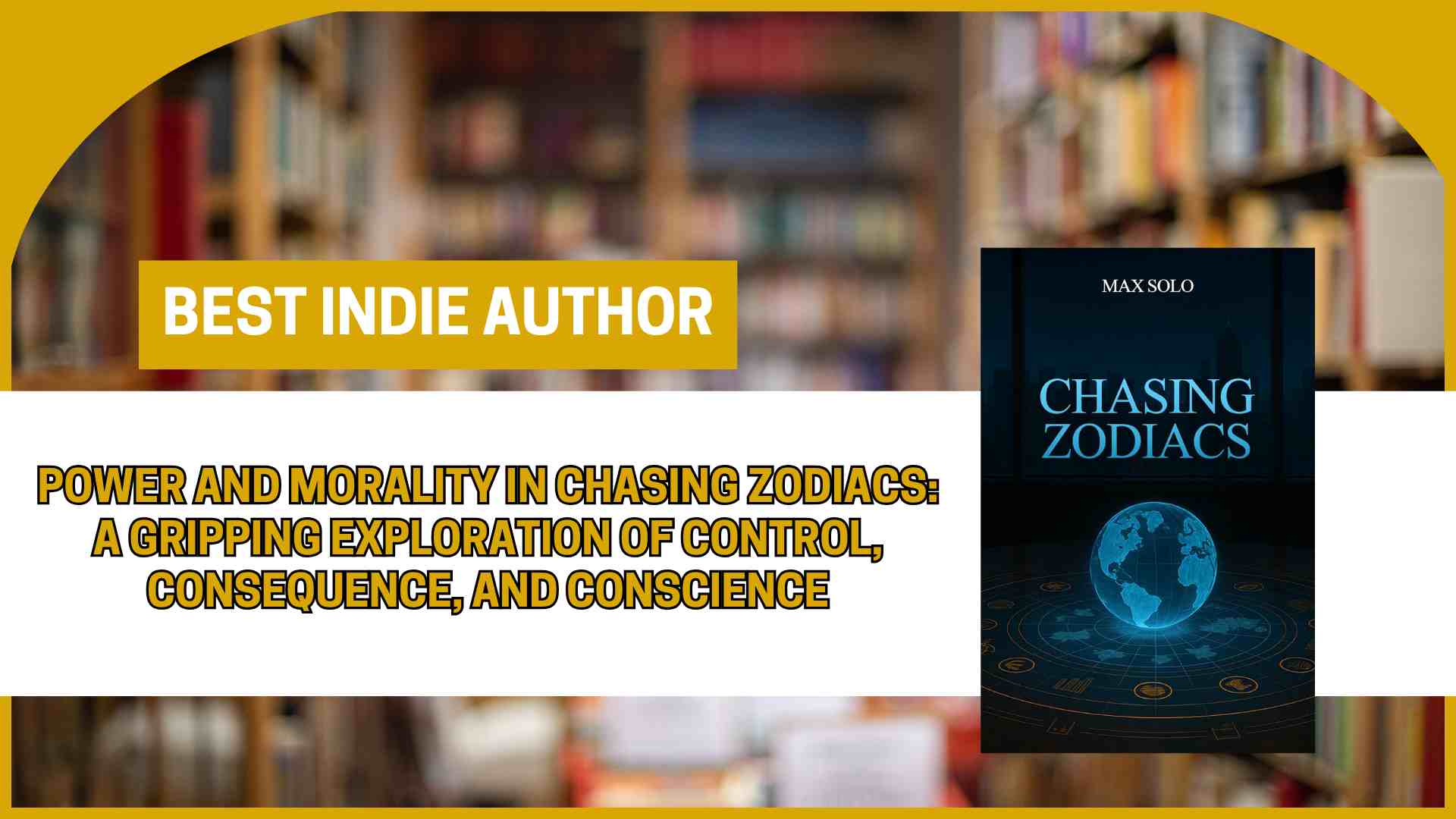
Chasing Zodiacs: To Repair the Soul of Humanity by Max Solo presents a world where power is not simply held, it is engineered, concealed, and weaponised. At its core, the narrative dissects the uneasy relationship between authority and ethics, placing its characters in a landscape where decisions are rarely clean and morality is constantly negotiated rather than upheld.
Power in this story operates on multiple levels. It is intellectual, financial, political, and deeply psychological. The individuals at the centre of the Zodiac Programme represent a rare echelon of influence, where wealth and intelligence grant access to systems that shape global outcomes. Yet this power is not portrayed as liberating. Instead, it is isolating, restrictive, and burdened with expectation. Each character exists within a framework that demands loyalty, secrecy, and detachment from ordinary human connections. The absence of family ties and personal attachments is not incidental, it is a requirement. Power here demands sacrifice, and the cost is profoundly human.
Morality, in contrast, is fluid and often compromised. The narrative does not present clear distinctions between right and wrong. Instead, it explores how individuals justify their actions within the confines of survival, ambition, and duty. Characters operate in morally grey spaces where the ends frequently overshadow the means. Decisions are made with calculated precision, yet they carry emotional and ethical consequences that linger beneath the surface. This tension creates a compelling dynamic, forcing readers to question whether morality can truly exist in environments defined by secrecy and control.
Max Solo, as the central figure, embodies this conflict. Their role as an investigator places him at the intersection of truth and manipulation. Recovering from physical and psychological trauma, they navigate a reality where uncovering information is both a professional obligation and a personal burden. Their journey reflects the struggle to maintain a sense of moral integrity while engaging with systems that thrive on ambiguity. The act of compiling the report on the Zodiac Programme becomes more than a task, it becomes a confrontation with the very nature of power itself.
The supporting characters further enrich this thematic exploration. Figures such as Kirill Volkov demonstrate how leadership within such systems requires a delicate balance between control and vulnerability. His meticulous planning and calculated interactions reveal a man who understands the stakes of power, yet is acutely aware of its fragility. The delegates, each representing different cultural and professional backgrounds, illustrate how power manifests uniquely across individuals while still adhering to the same underlying principles of dominance and survival.
What makes Chasing Zodiacs particularly compelling is its refusal to offer easy answers. The narrative does not attempt to redeem its characters or condemn them outright. Instead, it invites readers to engage with the complexities of human behaviour in extreme circumstances. It challenges the notion that power can be exercised without ethical compromise and suggests that morality, when placed under pressure, often adapts rather than resists.
This layered approach elevates the book beyond a conventional thriller. It becomes a study of human nature, examining how individuals navigate systems that demand both brilliance and brutality. The tension between power and morality drives the story forward, creating a narrative that is as thought provoking as it is intense.
For readers seeking a story that combines high stakes intrigue with deep psychological insight, Chasing Zodiacs: To Repair the Soul of Humanity offers a powerful and unforgettable experience. It is not just a tale of hidden networks and global influence, but a reflection on what it truly means to hold power and the moral cost that inevitably follows.
Grab this book, available on Amazon: https://www.amazon.com/dp/B0FVGF9G9D/.