Public health is often treated as a technical domain, focused on hospitals, medicine, and infrastructure. In socialist systems, however, it is understood as something far broader. It becomes a question of justice, rooted in the belief that access to healthcare is not a privilege but a fundamental human right tied directly to dignity and equality.
This perspective begins with a shift in priorities. Instead of viewing healthcare as a service driven by market demand, socialist systems frame it as a collective responsibility. The health of each individual is seen as inseparable from the health of society as a whole. This approach removes the barriers created by income, geography, or social status, ensuring that care is accessible to all rather than limited to those who can afford it.
Prevention plays a central role within this framework. Public health is not only about treating illness but about reducing the conditions that cause it. This includes investments in education, sanitation, nutrition, and housing. By addressing these foundational factors, socialist systems aim to reduce the overall burden on healthcare institutions while improving quality of life across the population. The focus shifts from reaction to anticipation.
Equity is another defining element. Social justice in healthcare requires that resources be distributed according to need rather than profit. This often leads to targeted programs for vulnerable groups, including rural communities, children, and the elderly. The objective is not uniform distribution but fair distribution, recognizing that different segments of the population face different challenges.
The role of the state becomes central in coordinating these efforts. A unified system allows for consistent standards, integrated services, and long term planning. This coordination enables rapid responses to public health challenges, whether they involve disease outbreaks or broader social issues. It also reduces fragmentation, ensuring that care is continuous and comprehensive rather than isolated.
Education strengthens this model further. When citizens are informed about health practices and prevention, they become active participants rather than passive recipients. Public awareness campaigns, community programs, and accessible information create a culture where health is understood as a shared responsibility. This collective mindset reinforces the effectiveness of the system.
There is also a strong connection between healthcare and social policies. Employment, environmental conditions, and access to basic services all influence health outcomes. Socialist systems tend to merge these areas, recognizing that medical care alone cannot address the full spectrum of public health challenges. This holistic approach aligns healthcare with wider efforts to reduce inequality.
Challenges remain, particularly in resource supply and efficiency. Providing universal access requires sustained investment and careful management. However, the guiding principle remains consistent: healthcare is a social good. This principle shapes decisions at every level, from policy design to implementation.
The relationship between public health and social justice ultimately reflects a broader vision of society. It is a vision where well-being is not determined by economic position, and where collective progress is measured by the quality of life experienced by all members of the community.
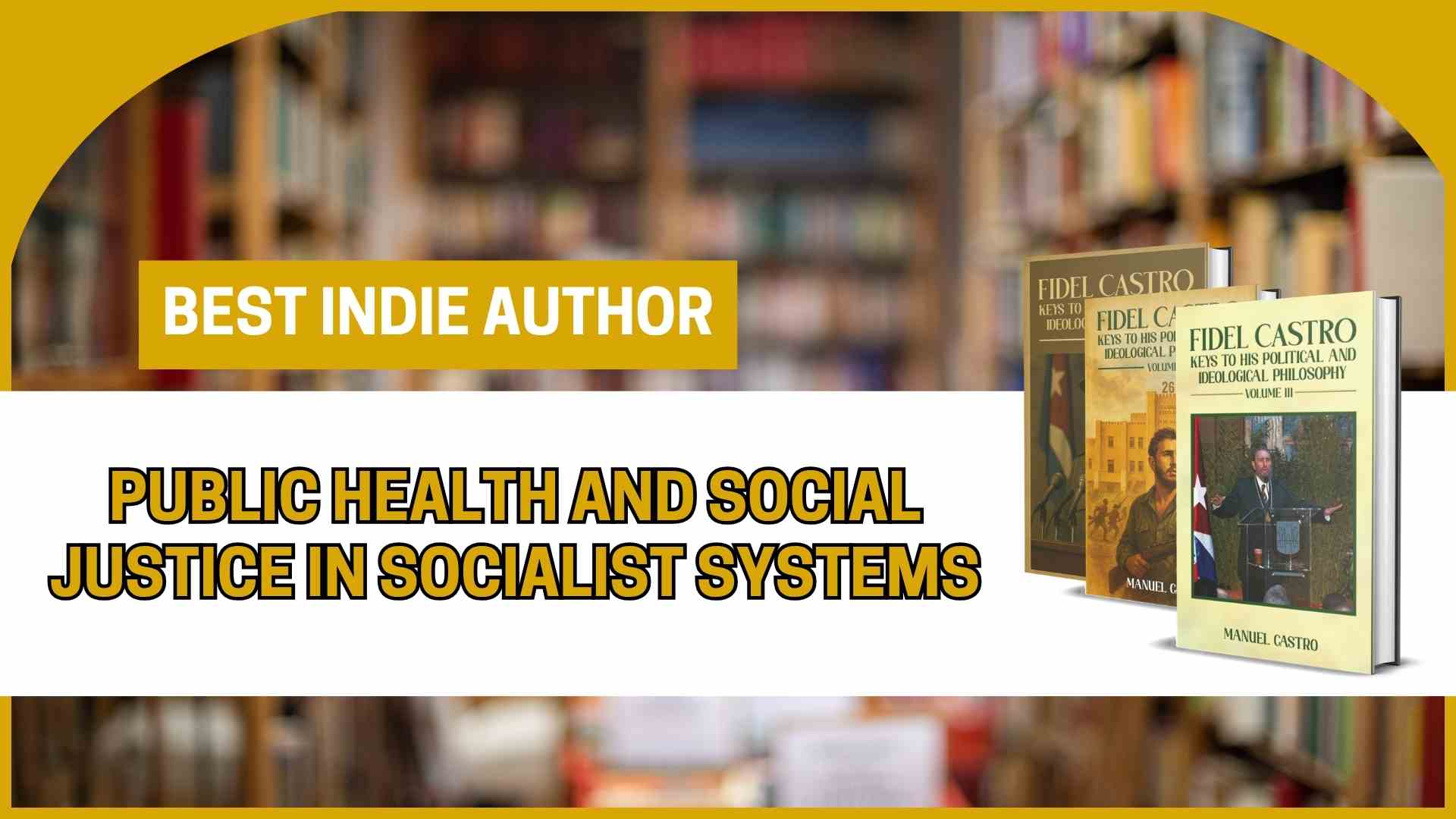
For readers seeking a deeper understanding of how these ideas are developed and applied, Fidel Castro: Keys to His Political and Ideological Philosophy by Manuel A. Castro offers a detailed examination. The book explores the intersection of health, equality, and social responsibility, providing insight into how public health becomes a central pillar of a system designed to prioritize human development over economic gain.
Head to Amazon to purchase your copy: https://www.amazon.com/dp/197213454X