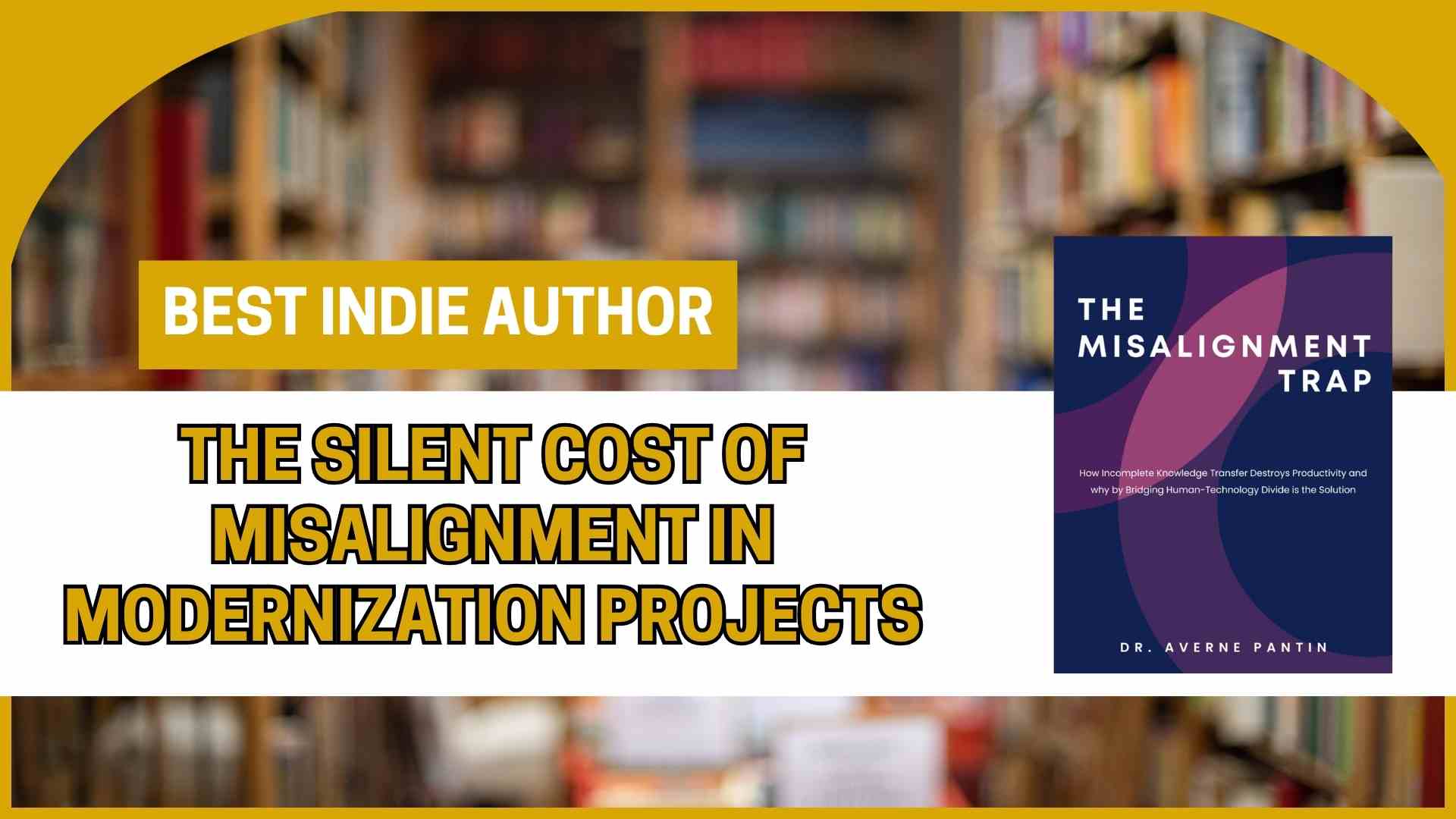
Modernization projects are often celebrated as the key to progress, bringing new technologies and processes that promise to transform organizations. However, the true cost of these projects is not always immediately visible. Beneath the surface of new systems and hardware lies a hidden cost that many organizations fail to recognize until it is too late. This is the cost of misalignment the gradual breakdown that occurs when technology is adopted faster than the people who must use it are prepared to understand and operate it.
Misalignment in modernization projects typically emerges not as a sudden crisis but as a slow erosion of efficiency. It begins with enthusiasm and the rush to implement new systems, but without a sufficient investment in training, knowledge transfer, and leadership continuity, the gap between technology and human understanding widens. This disconnect creates a fragile foundation, where technology may appear to be functioning, but its true potential remains unfulfilled.
The first sign of misalignment is often seen in the struggle to maintain operational performance. As new systems are introduced, employees may face difficulties in adapting to unfamiliar tools and processes. The lack of comprehensive training and the absence of a feedback loop for addressing these challenges lead to confusion and inefficiency. What follows is a spike in maintenance costs, as workers compensate for the lack of knowledge by relying on manual workarounds or patching up problems rather than resolving them at the root.
The hidden cost here is not just financial but also human. As employees navigate these technological gaps, they experience frustration, fatigue, and a loss of confidence in the systems they are expected to manage. This psychological toll often leads to disengagement, as workers begin to view technology as an obstacle rather than an enabler. Instead of innovation and progress, the organization experiences a stagnation of ideas and productivity. The workforce becomes disconnected from the technology they use, resulting in a lack of ownership and a passive approach to problem-solving.
Moreover, misalignment can lead to a broader cultural impact within the organization. As performance deteriorates and issues go unaddressed, frustration builds, and the culture shifts from one of collaboration and growth to one of survival and coping. Employees begin to accept inefficiency as the norm, and over time, this mindset becomes institutionalized. The organization normalizes underperformance, where slow progress and technological failures become an accepted part of daily operations, and the drive for improvement fades into the background.
One of the most damaging consequences of misalignment is that it often goes unnoticed until it becomes deeply embedded within the organization’s operations. By the time leadership acknowledges the problem, the effects are widespread and difficult to reverse. The longer the misalignment persists, the greater the cost in terms of lost productivity, employee morale, and even customer satisfaction. In some cases, it may even lead to a full-scale organizational breakdown, where systems are no longer capable of performing their intended functions, and the only solution is a complete overhaul at a much higher cost than if the issues had been addressed from the outset.
The silent cost of misalignment is also reflected in missed opportunities. Organizations that fail to fully absorb the potential of new technology often find themselves lagging behind competitors who have successfully aligned their people with their systems. Instead of leveraging technology for strategic advantage, misaligned organizations struggle to keep pace, watching as others innovate and grow while they remain stuck in a cycle of underperformance.
To avoid these hidden costs, organizations must approach modernization with a clear understanding of the human element involved. Technology cannot simply be installed and left to function on its own; it requires an ongoing commitment to learning, adaptation, and leadership stability. By recognizing the importance of aligning technology with human capacity from the start, organizations can mitigate the silent costs of misalignment and ensure that their modernization projects lead to lasting success and meaningful transformation.
Get Your Copy On Amazon https://www.amazon.com/dp/1970749768/.