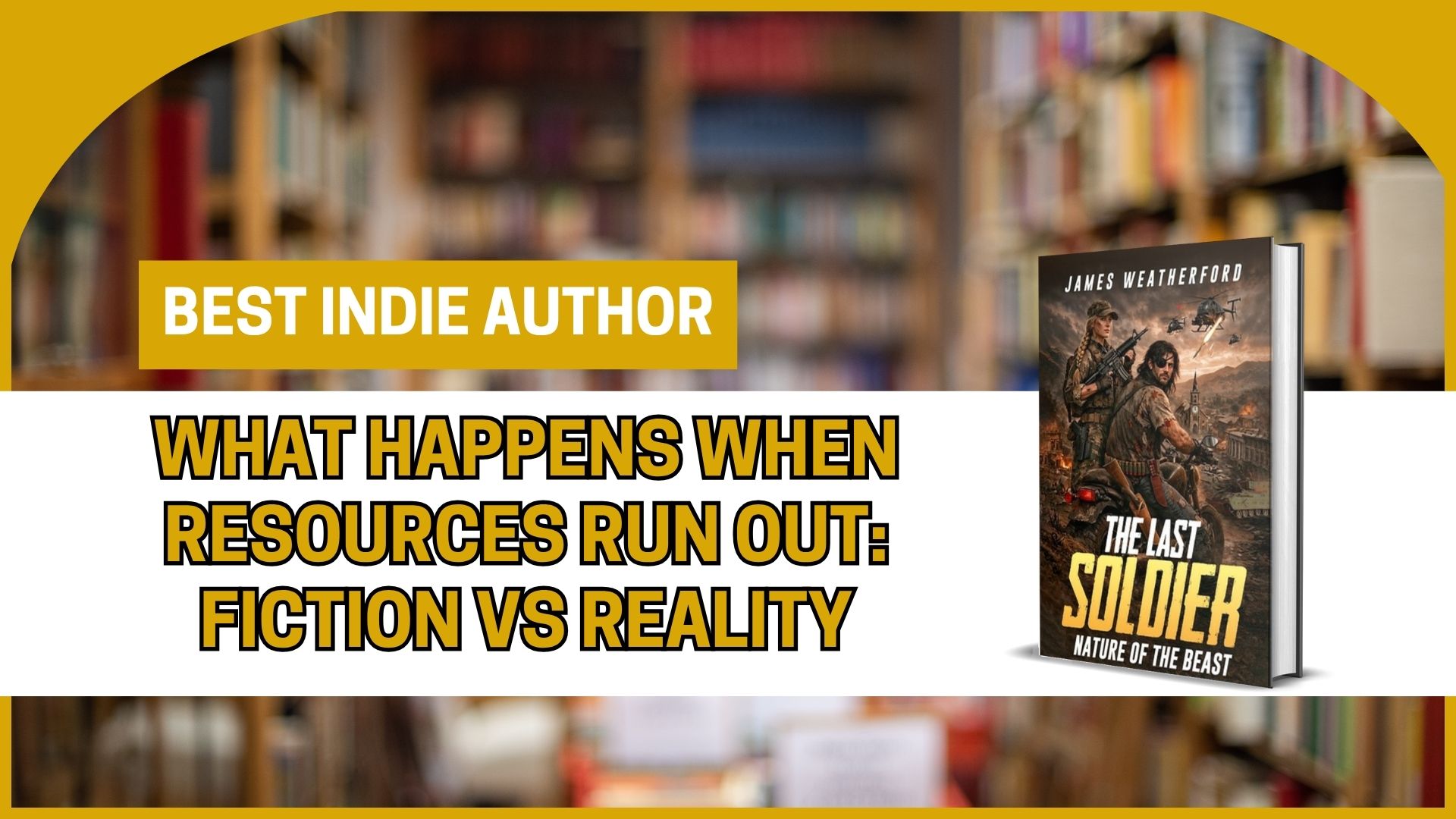
Scarcity is not a distant concept. It is a pressure that builds silently, often unnoticed until systems begin to collapse. When resources run out, the shift is not just physical. It molds behavior, power structures, and the very cloth of society. The Last Soldier: Nature of the Beast by James Weatherford explores this breakdown with unsettling precision, drawing a line that feels dangerously close to reality.
In fiction, the collapse often begins with a single trigger. In this case, it is not war or disaster, but success. A medical breakthrough removes disease and extends life, leading to rapid population growth. At first, this appears to be progress. But as numbers rise, the strain on resources intensifies. Food production cannot keep up. Infrastructure falters. The imbalance grows until it becomes impossible to ignore.
Reality follows a similar pattern, though often more gradually. Resource depletion rarely happens overnight. It is the result of consumption outpacing replenishment. Whether it is water, energy, or food, the warning signs appear long before collapse. Rising costs, shortages, and distribution challenges signal that systems are under stress. The difference is that in reality, these signals are often debated, delayed, or dismissed until the problem becomes urgent.
In the novel, once scarcity reaches a critical point, control becomes the solution. Governments centralize food production and distribution. People are relocated to controlled zones. Movement is restricted. These measures are designed to maintain order, but they also reshape society. Freedom is reduced to ensure survival.
This reflects a real world dilemma. When resources become limited, management becomes essential. Rationing, regulation, and prioritization are common responses. The challenge lies in how these measures are implemented. Efficiency can preserve life, but it can also concentrate power. The balance between necessity and overreach becomes difficult to maintain.
Another key similarity lies in human behavior. In both fiction and reality, scarcity changes priorities. Cooperation can give way to competition. Trust becomes fragile. In The Last Soldier, individuals and groups begin to act in their own interest, sometimes at the expense of others. This shift is not portrayed as sudden or extreme. It evolves from the pressure of survival.
In reality, history shows comparable patterns. During times of shortage, black markets emerge, social tensions rise, and conflict becomes more likely. Scarcity does not create these tendencies, but it amplifies them. It exposes underlying weaknesses in systems and relationships.
The scale of collapse is where fiction often accelerates what reality stretches over time. In the novel, entire systems reorganize rapidly. Martial law is imposed. Populations are forced into new structures. In reality, such changes tend to occur in stages, influenced by politics, economics, and public response. However, the direction remains consistent. As resources tighten, control increases.
The novel also highlights the psychological impact of scarcity. Living in a system where every necessity is controlled changes how people think and act. Hope narrows. Long term planning becomes difficult. Survival dominates decision making. These effects are not limited to fiction. In real world situations of prolonged shortage, similar patterns emerge. Stress increases, resilience is tested, and social cohesion weakens.
The Last Soldier: Nature of the Beast presents a world where that tipping point has already been reached. It shows what happens when imbalance is allowed to grow unchecked. The story feels real because it is built on principles that already exist. Consumption, growth, and limitation are not fictional concepts.
Fiction compresses the process, making the consequences immediate and visible. Reality unfolds more slowly, giving the impression that there is always time to adjust. But the underlying dynamics remain the same. When demand exceeds supply for long enough, systems must adapt or fail.