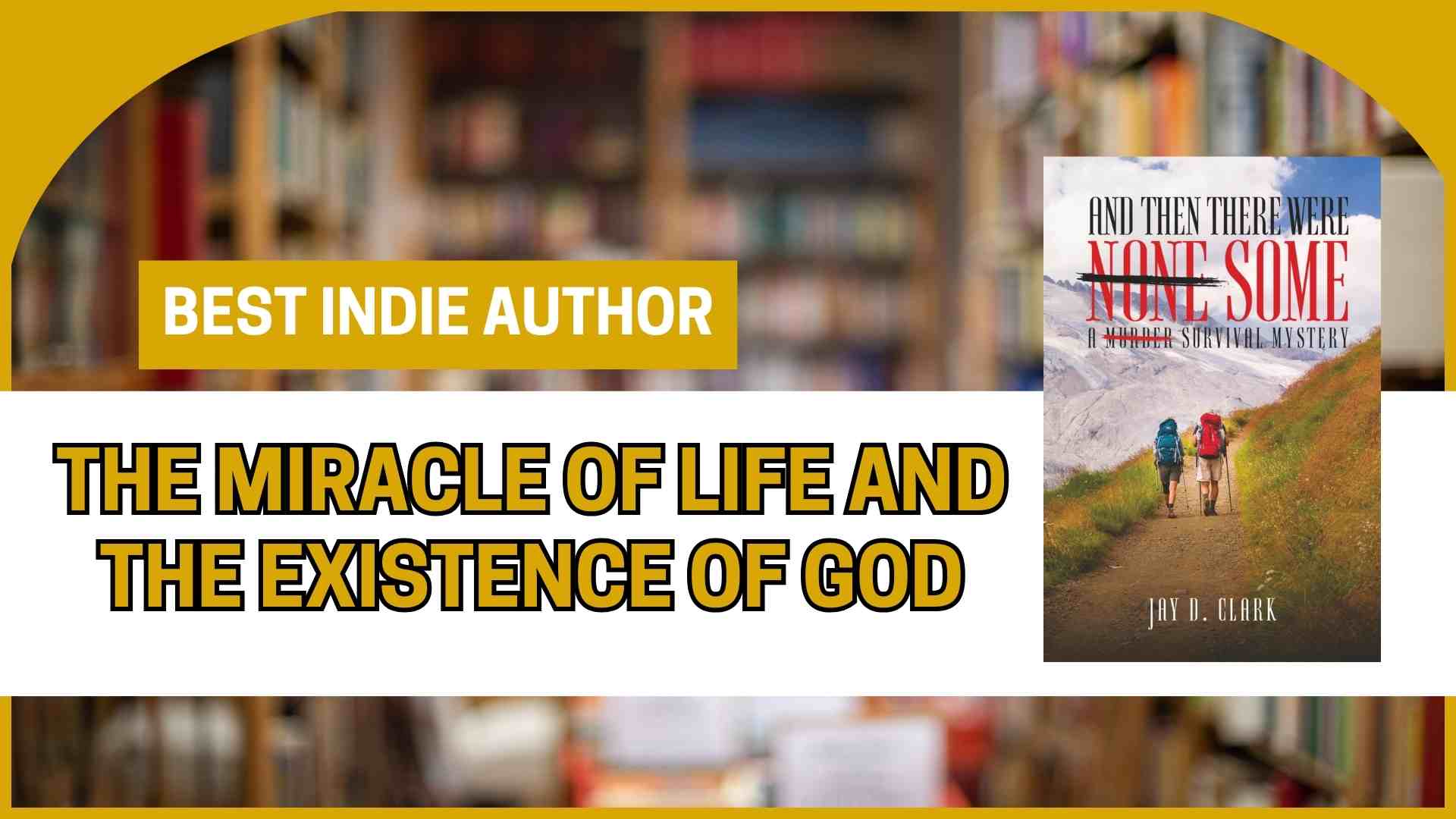
What if your very existence is part of a mystery waiting to be solved? Every day you wake up, breathe air, interact with people, and live in a world filled with order and design. But have you ever stopped to ask what all of it means? Is it random, or does it point to something greater? In this regard, Jay D. Clark’s And Then There Were Some invites us to step into the role of a spiritual detective, using the skills of reasoning and evidence to solve life’s greatest mystery.
Clark draws inspiration from Agatha Christie’s And Then There Were None, where guests trapped on an island struggle to discover the identity of their hidden host. In life, we find ourselves in a similar position. We are placed in a world we did not create, governed by laws we did not write, and surrounded by mysteries that seem to invite us to ask deeper questions. Could it be that life itself is a clue?
One of the tools Clark highlights is abductive reasoning, which is the same reasoning detectives use. Unlike deduction, which proves something with certainty, or induction, which predicts based on repeated patterns, abduction asks: What is the best explanation for the evidence we have? A simple example is his wet car analogy. If you walk outside and see that your car is wet, what caused it? Rain? A sprinkler? Someone washing it? You weigh the evidence and conclude the most reasonable cause.
When applied to life, abductive reasoning becomes powerful. Why is the universe so finely tuned for life? Why does DNA carry such precise coded instructions? Why do human beings seek meaning, justice, and truth? Naturalism, the view that only physical matter exists, often struggles to answer these questions in a way that satisfies both logic and experience. Theism, however, provides a stronger explanation: there is a host behind it all, a Creator who left us clues.
Clark encourages us to see the laws of physics as fingerprints left on the scene. The reliability of ancient scriptures becomes testimony preserved through history. The inner longing for purpose and morality becomes a witness within us. Each piece of evidence, when considered separately, is interesting. But when combined, the case becomes compelling.
What makes Clark’s book stand out is that it doesn’t ask for blind belief. Instead, it asks us to look at the facts with the eyes of a detective. Just like in Christie’s mystery, where survival depended on interpreting clues correctly, our spiritual survival depends on whether we take the evidence around us seriously.
So what if your life is a clue? What if the way you think, the love you give and receive, and the universe you inhabit are all pointing you toward a deeper truth? Clark’s And Then There Were Some suggests that the greatest truth of your life may still be waiting to be discovered. So, are you ready to follow the evidence that would lead to God and His greatness?
For those searching for truth in a skeptical world, Clark’s book is the roadmap to survival, which explores the compatibility of science and faith, particularly Christianity, through an evidence-based approach.
Get your copy on Amazon: https://www.amazon.com/dp/1917505191/.