What happens when the pursuit of power becomes more important than fairness, honesty, and human dignity? It is a question that reaches beyond politics and government, touching workplaces, communities, and everyday relationships. Power can provide opportunities to serve others, but when personal ambition overshadows responsibility, the consequences can affect people who have little influence over the decisions being made.
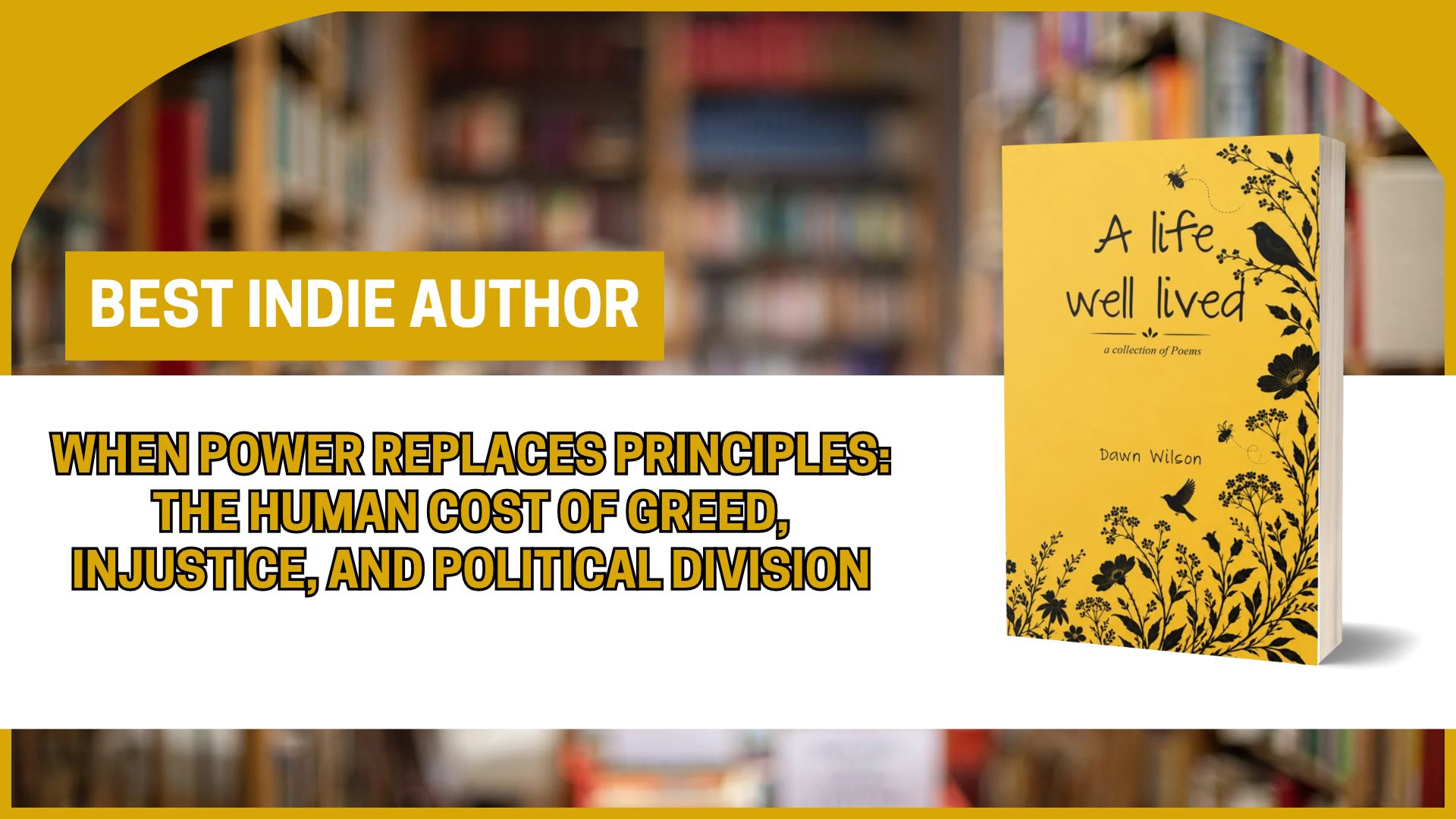
In A Life Well Lived, Dawn Wilson reflects on these concerns through poetry that questions political influence, moral responsibility, inequality, and humanity’s treatment of one another. Her observations encourage readers to consider how easily principles can become compromised when wealth, status, or authority take priority over fairness.
The tension between power and integrity becomes particularly clear when individuals face pressure to abandon their convictions. People may find themselves choosing between doing what they believe is right and protecting their position, relationships, or personal interests. Such decisions are rarely comfortable, especially when those holding authority appear unwilling to consider opposing perspectives.
In her poem “Morals,” Wilson raises questions about justice, greed, democratic rights, and the difficulty of maintaining personal principles when confronted by powerful interests. The poem captures the frustration of witnessing values being challenged by influence and self-interest.
This concern extends into the political sphere, where public trust depends partly on whether institutions are perceived as accountable and fair. When citizens begin questioning the relationship between elected representatives, influential individuals, and those affected by public decisions, political disagreement can become deeply personal.
In A Life Well Lived, the poem “Democracy” expresses distrust of political hypocrisy, lobbying, and influence operating beyond public scrutiny. Rather than offering a detailed political solution, its criticism invites reflection on accountability and the responsibilities that accompany authority.
Yet political division is not confined to institutions. It can influence friendships, families, and communities. Differences of opinion become particularly damaging when individuals stop listening to one another or begin treating disagreement as a reason for hostility.
Dawn Wilson explores the human consequences of intolerance in poems such as “Slaying” and “Inhumanity,” questioning how differences in beliefs and religion can become excuses for violence. These reflections emphasise the importance of recognising shared humanity even when people hold conflicting convictions.
Greed also raises questions about humanity’s relationship with the natural world. In “This Land Is Mine, Mine, MINE,” the idea of ownership becomes a challenge to human arrogance. The poem contrasts possessive attitudes toward land with nature’s existence beyond an individual’s lifetime.
Together, these themes suggest that responsibility should accompany every form of influence, whether political, social, economic, or personal.
Addressing division begins with examining our own behaviour. Do we defend fairness only when it benefits us? Are we willing to question decisions made by people we support? Can we disagree without abandoning respect?
Such questions do not provide easy solutions, but they create opportunities for greater awareness and more thoughtful participation in society.
Ultimately, power and principles need not be opposing forces. Authority can coexist with integrity when those exercising it remain conscious of their responsibilities toward others.
A society’s values are revealed not merely by what its people claim to believe, but by what they are willing to protect when fairness, dignity, and personal interests come into conflict.