Technology was once a tool meant to serve humanity. Today, in both real life and fiction, it often feels like the roles have reversed. Machines predict what we buy, algorithms shape what we believe, and data decides how we are seen. This growing dependence has turned technology into something more than a system. It has become a belief. In Chasing Zodiacs by Max Solo, that belief is taken to its extreme, showing what happens when technology no longer serves people but defines them.
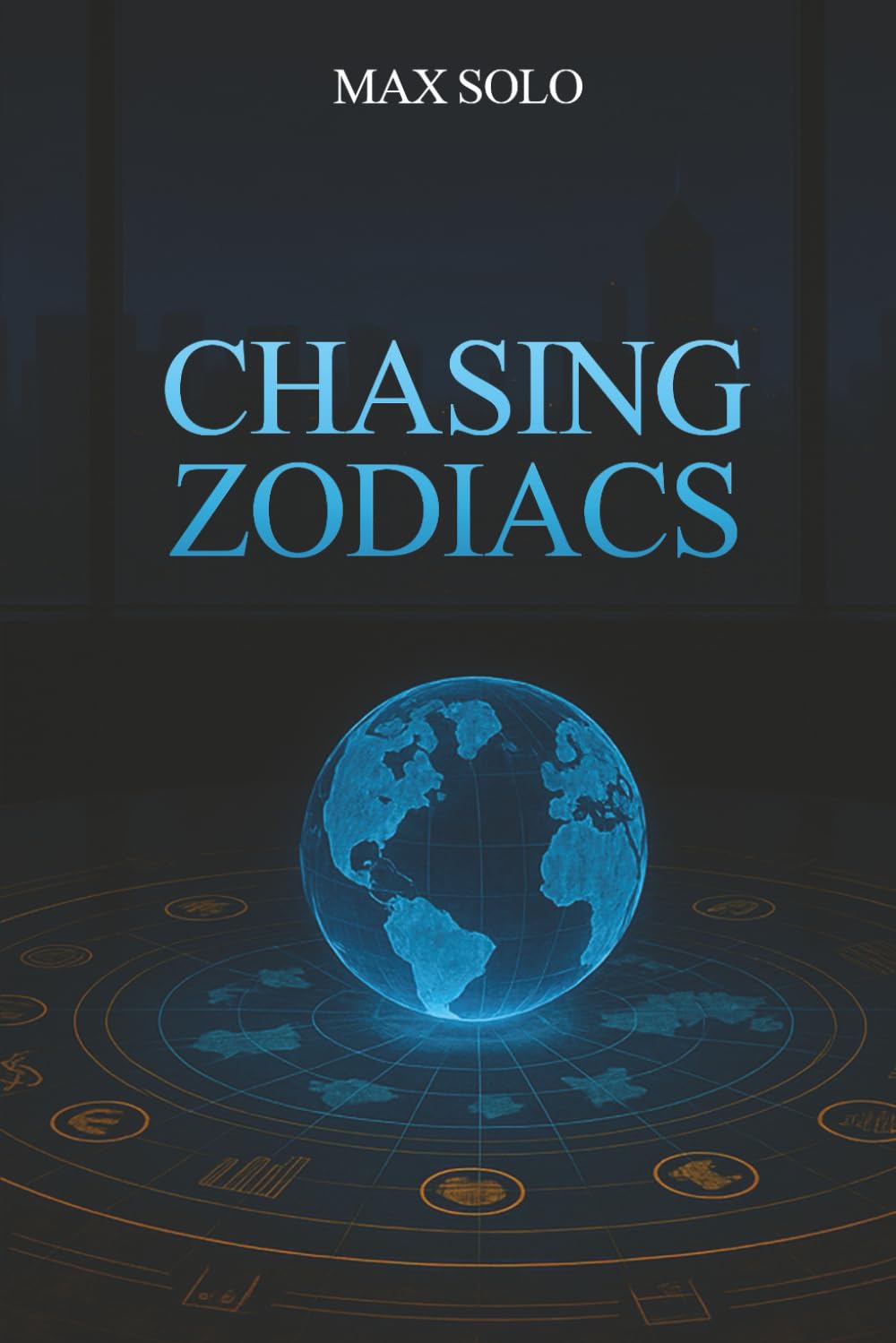
The novel’s world is ruled by an organisation that controls human trafficking under the name “Human Asset Management.” At its core, it is a network built on data, manipulation, and fear, a chilling reflection of how systems can transform into faiths of control. In this sense, Chasing Zodiacs speaks to a timeless moral question: what happens when we replace human judgment with artificial order? When algorithms write the ethical code of a society, technology becomes theology.
Modern fiction has long warned about this shift. George Orwell’s “1984” imagined a world where surveillance replaced God. Isaac Asimov’s “I, Robot”examined how human ethics could be bent by artificial logic. Max Solo adds a new layer to this discussion by connecting technology to organised corruption and spiritual decay. In Chasing Zodiacs, machines are not the villains. People are. The technology merely amplifies their hunger for control and disguises it as progress.
This idea feels more real than ever. Consider how facial recognition tracks millions daily or how predictive analytics are used to monitor human behaviour. These systems may not be evil by design, but they echo the book’s moral tension: when does innovation cross into intrusion? When does convenience start to cost freedom? Fiction like Chasing Zodiacs forces us to ask these questions before we stop noticing that we’ve stopped asking them at all.
The ethical weight of technology lies not in its code but in its creators. In the novel, the characters wrestle with conscience, secrecy, and the illusion of control. Some see themselves as saviours, others as survivors. Together, they reveal the same paradox we face today: that progress can both free and enslave, depending on who writes the rules.
By combining conspiracy, politics, and philosophy, Chasing Zodiacs turns technological control into a spiritual crisis. The story warns that the greatest danger is not machines overtaking humanity. It is humanity surrendering its soul to the machine.
Modern readers are drawn to thrillers like this not only for suspense but for meaning. We crave stories that help us navigate the moral fog of our own time. Chasing Zodiacsinvites us to question the systems we trust and to remember that even in an age of artificial intelligence, the human conscience remains the most powerful form of intelligence we have.
For anyone intrigued by how power, technology, and morality intertwine, Chasing Zodiacs by Max Solo is more than a thriller. It is a reminder that the future will be shaped not by machines, but by the values we choose to program into them.
Grab this book now, available on Amazon: https://www.amazon.com/dp/B0FVGF9G9D/.