Survival is often treated as proof that a system worked. If someone is still alive and a crisis did not end in death, the outcome is labeled acceptable, and attention shifts elsewhere. Justice, however, asks a different question. It asks what was lost, who was harmed, and whether responsibility truly ended when disaster was narrowly avoided.
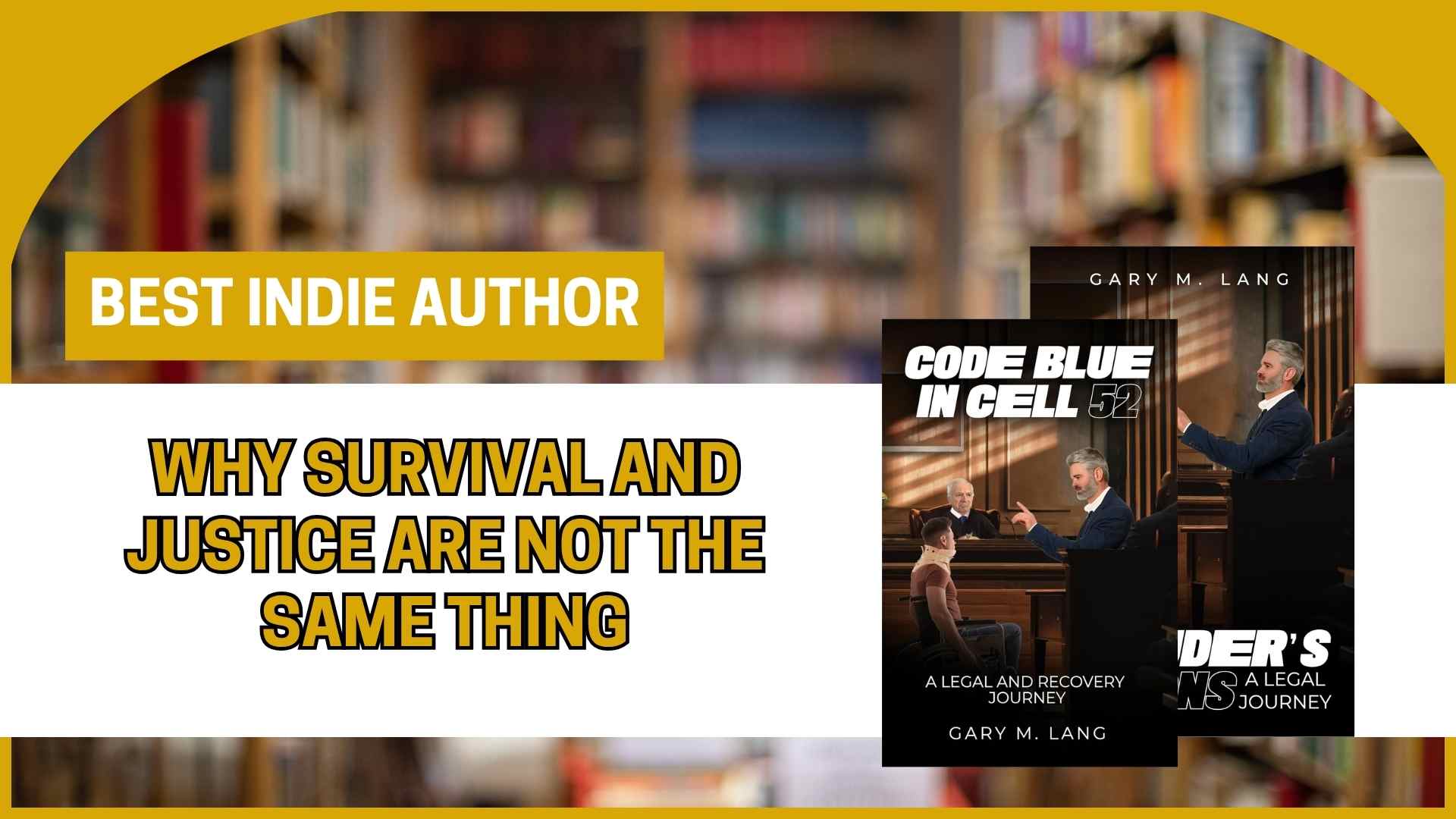
This distinction runs through both The Intruder’s Visions: A Legal Journey and Code Blue in Cell 52: A Legal and Recovery Journey by Gary M. Lang. In different ways, both books show how survival can coexist with deep injustice, and how systems often mistake endurance for resolution.
Survival Without Repair
In Code Blue in Cell 52, the real crisis begins after the emergency lights fade. Official responses are completed, files are closed, and responsibility narrows. What remains is a young man whose future no longer resembles the life he once had, and a system that has little language for loss that does not end in death.
However, survival leaves behind a different reality. The young man’s body lives on, but his mind and identity are fundamentally altered. His future is permanently changed. Justice does not automatically follow survival. There is no restoration of what was lost, and accountability remains limited. The book forces readers to confront how often survival becomes a stopping point rather than a starting one.
When Legal Survival Masks Moral Failure
In The Intruder’s Visions, survival takes a quieter form. Legal cases conclude. Estates are settled. Liability is addressed. On paper, the system functions as designed.
Yet the novel shows how legal survival can hide moral gaps. A medical malpractice case may end within the bounds of the law, but unanswered questions linger. A family may survive loss financially, but emotional damage remains. The attorney handling these cases must live with outcomes that feel legally correct but morally incomplete. Justice, in this context, is constrained by what can be proven rather than what was experienced.
What Is Lost After Survival
Both books emphasize what disappears after survival is achieved. In Code Blue in Cell 52, a young life loses its possibility. Independence, clarity, and future choice vanish, even though death was avoided. In The Intruder’s Visions, dignity, trust, and connection erode quietly beneath legal resolutions.
These losses rarely appear in official outcomes. Survival statistics do not measure emotional collapse, fractured identity, or long-term consequences. Justice requires attention to these invisible costs, not just to the absence of the worst case scenario.
Systems Built to Move On
A common thread in both novels is how systems are designed to move forward quickly. Once survival is confirmed or a case is closed, momentum favors closure rather than reflection. Responsibility narrows. Questions become inconvenient.
Gary M. Lang illustrates how justice often depends on individuals who refuse to accept survival as enough. Attorneys who continue asking questions. Counselors who see people, not cases. Journalists who resist silence. Justice emerges not from survival alone, but from sustained attention.
Redefining Justice Beyond Survival
These stories challenge readers to rethink what justice means. Justice is not merely the avoidance of death or the completion of a procedure. It involves reckoning with harm, acknowledging loss, and accepting responsibility even when the system no longer requires it.
Survival may keep a body alive or a case intact. Justice asks whether anyone truly healed, learned, or changed as a result.
For readers interested in thoughtful legal fiction that examines the gap between endurance and accountability, Gary M. Lang’s The Intruder’s Visions: A Legal Journey and Code Blue in Cell 52: A Legal and Recovery Journey offer meaningful and compelling perspectives.
Both books are available on Amazon. Here are the links:
The Intruder’s Visions: A Legal Journey: https://www.amazon.com/dp/B0DF1HVB36/.
Code Blue in Cell 52: A Legal and Recovery Journey: https://www.amazon.com/dp/B0FPZY7YZQ.