The world is already in the midst of a transformation that rivals the Industrial Revolution in scale, speed and impact. Unlike previous eras of mechanization, however, this revolution is not simply about replacing muscle with machines; it is about replacing cognition, decision-making and increasingly, human labor itself with artificial intelligence (AI). The shift from human labor to machine intelligence is no longer a distant forecast. It has already begun.
Across industries, AI and robotics are rapidly redefining how work is performed. Manufacturing lines are becoming fully automated, logistics systems are self-optimizing and data-driven algorithms now guide everything from supply chain management to healthcare diagnostics. In many environments, human workers are no longer the primary operators; they are supervisors of intelligent systems that execute tasks with speed and precision beyond human capability.
Yet while efficiency is increasing, the human experience of work is undergoing a profound transformation. Traditional roles are being reshaped or eliminated and new ones are emerging that require collaboration with machines rather than direct execution of tasks. This shift raises a critical question: what happens to human identity, purpose and safety when labor itself becomes increasingly automated?
Historically, industrial progress focused on protecting humans from physical hazards, unsafe machinery, toxic exposure and environmental risks. But in the age of machine intelligence, the risks are evolving. They are no longer confined to the physical realm. Instead, they include cognitive overload, algorithmic dependence, loss of autonomy and psychological strain caused by constant digital monitoring and evaluation.
These emerging risks are subtle but significant. Workers in AI-enabled environments often operate under continuous surveillance systems that track performance metrics in real time. Decisions about workload, productivity and even employment can be influenced by algorithms that are not always transparent or explainable. While these systems improve efficiency, they can also erode trust and increase workplace stress.
Global institutions are increasingly recognizing the magnitude of this transformation. The World Economic Forum has emphasized that automation and AI will reshape global labor markets, displacing some roles while creating new ones that require advanced technological collaboration. Similarly, McKinsey & Company has highlighted that without responsible implementation, AI-driven workplaces risk increasing burnout, inequality and organizational instability.
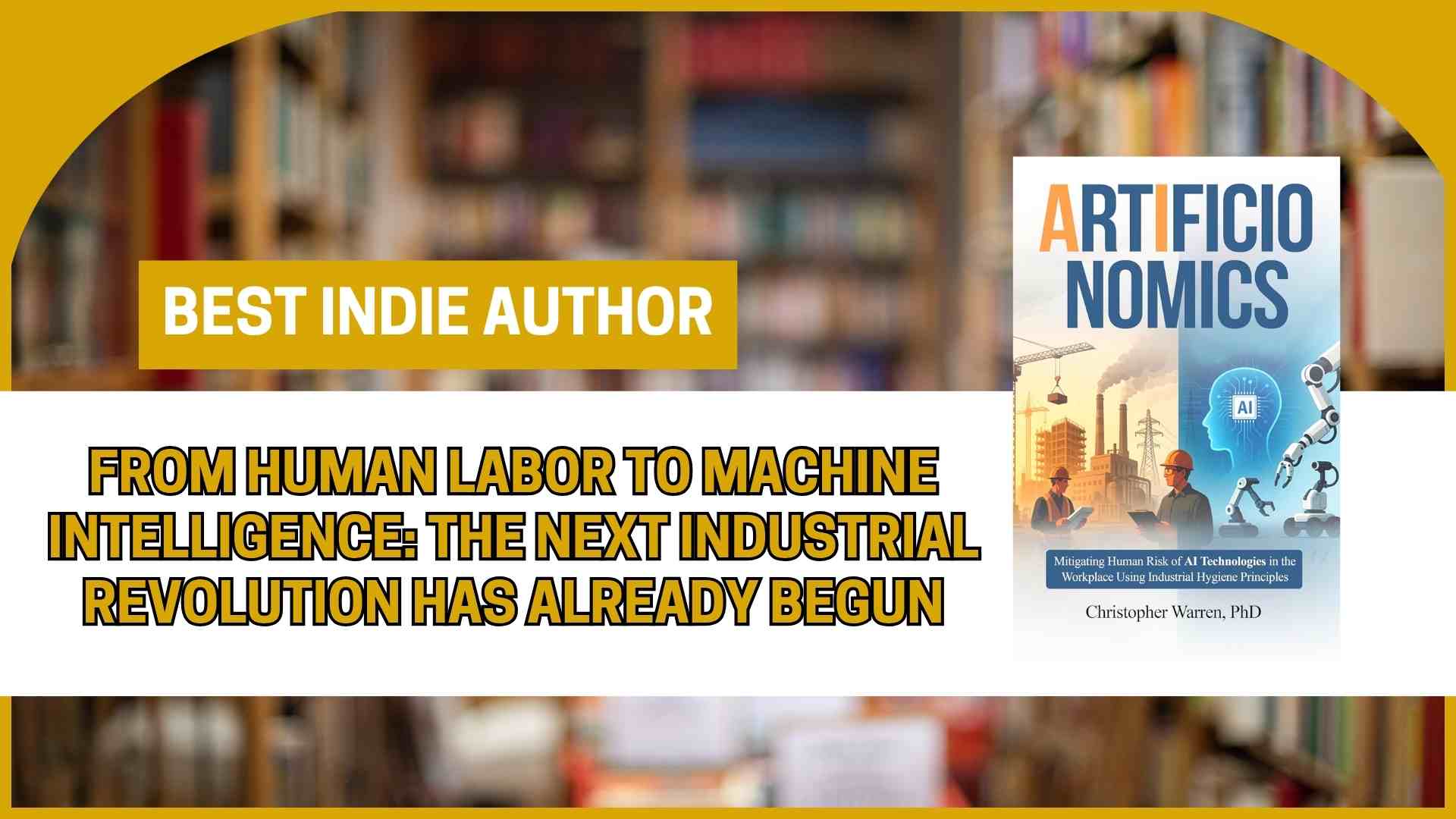
This is where the work of Christopher Warren becomes essential. In his groundbreaking book ArtificIonomics, Warren introduces a new framework for understanding and managing the human impact of AI in the workplace.
ArtificIonomics is built on the principle that safety must evolve alongside technology. If AI is transforming how work is done, then safety systems must also adapt to protect how work is experienced by humans. It extends traditional industrial hygiene beyond physical hazards to include psychological, cognitive and ethical risks introduced by intelligent systems.
The framework is structured around three core actions: identify, evaluate and control. First, organizations must identify risks that go beyond machinery and process safety, including surveillance pressure, reduced autonomy and cognitive fatigue. Second, these risks must be evaluated not only through productivity metrics but also through human-centered indicators such as trust, fairness and mental well-being. Finally, control measures must be implemented through transparent AI governance, ethical system design and workforce training that prepares employees for human-machine collaboration.
The rise of machine intelligence does not signal the end of human relevance. Instead, it signals a redefinition of human work. As machines take over repetitive, dangerous and data-heavy tasks, humans are increasingly required to provide oversight, judgment, creativity and ethical reasoning.
However, this transition must be managed carefully. Without intentional design and governance, the benefits of AI may come at the cost of human dignity and psychological well-being.
ArtificIonomics offers a timely roadmap for navigating this new industrial revolution. It challenges organizations to go beyond automation and efficiency and instead design workplaces where human beings remain protected, empowered and essential even in an era defined by machine intelligence.
Available On Amazon: https://www.amazon.com/dp/B0GFY4RL6B/