The workplace as we know it is changing faster than ever before. Artificial intelligence (AI) and robotics are no longer supporting actors in industry; they are becoming the main performers. From fully automated manufacturing lines to autonomous construction equipment, warehouses managed entirely by intelligent systems and drones leading search-and-rescue operations, machines are increasingly taking over tasks once performed by humans. This raises an urgent and fundamental question: Are we approaching a future without human workers?
This possibility is not science fiction. It is a reality already unfolding across multiple sectors. In manufacturing, AI-powered robots now assemble products with precision and speed far beyond human capability. In logistics, autonomous vehicles and drones are reshaping supply chains, improving efficiency and reducing reliance on human drivers. In construction, robotics and AI-guided machinery can operate continuously, performing tasks once reserved for human labor. Even emergency response and healthcare are beginning to rely on intelligent systems to monitor, diagnose and intervene in ways that minimize human exposure to danger.
While these advancements promise unprecedented efficiency and safety, they also pose profound risks to human identity, purpose and well-being. Jobs that once provided not only income but meaning are being displaced. The physical demands of labor may be alleviated, but a new set of cognitive, emotional and ethical challenges arises. Employees now face stress from constant AI oversight, fears of obsolescence and the psychological strain of interacting with systems that operate faster, more accurately and more autonomously than humans.
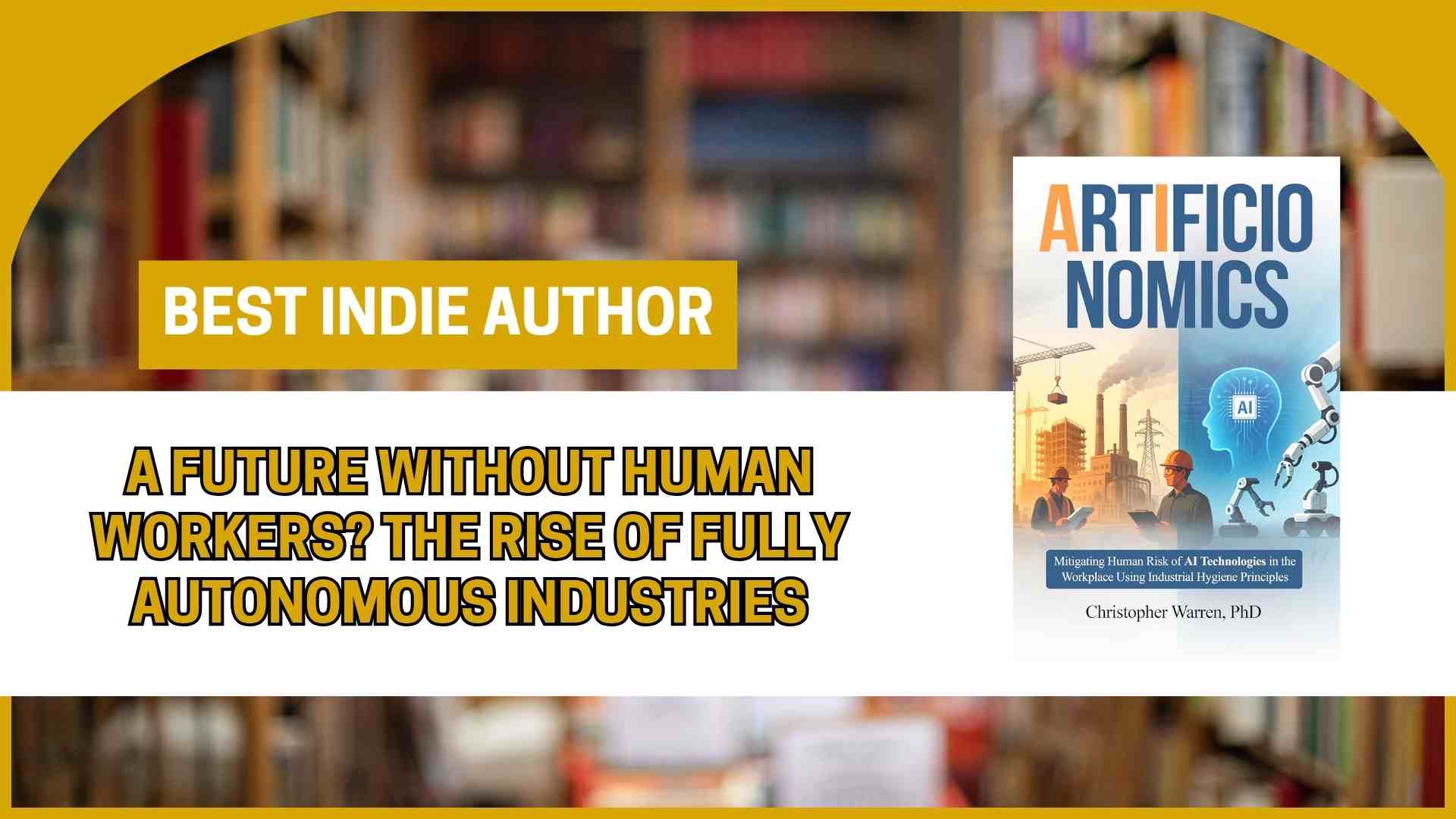
This is where Christopher Warren introduces the revolutionary concept of ArtificIonomics. This new discipline applies the principles of industrial hygiene, identifying, evaluating and controlling hazards to the complex human risks posed by AI and robotics. ArtificIonomics recognizes that workplace safety in an age of automation is no longer only about physical protection. It extends to protecting mental health, cognitive capacity, ethical integrity and human dignity.
ArtificIonomics provides a framework for organizations to proactively address the consequences of fully autonomous systems. Identification of risk includes understanding how algorithmic bias, constant surveillance and cognitive overload affect employees. Evaluation emphasizes measuring not only operational performance but also psychological safety, trust and fairness. Control strategies range from redesigning AI interfaces to implementing transparent policies, mental health resources and continuous worker training for a technologically advanced environment.
The World Economic Forum (2023) projects that by 2025, AI and automation will displace tens of millions of jobs while simultaneously creating new roles focused on human-machine collaboration. McKinsey & Company (2024) warns that without intentional safety and workforce planning, the rapid rise of autonomous industries could increase burnout, stress and social inequality. ArtificIonomics addresses these challenges by reframing automation not merely as a replacement of labor but as a system that must coexist with and empower humans.
The rise of fully autonomous industries challenges us to rethink what work means. If machines can perform physical and cognitive tasks more efficiently than humans, human roles may shift toward oversight, ethical decision-making, creativity and system design. Purpose may no longer be tied to physical output but to guiding intelligent systems responsibly, ensuring that progress does not come at the expense of human dignity.
ArtificIonomics is a roadmap for navigating this transition. It ensures that as industries embrace automation, human workers remain central not just as observers but as leaders, innovators and stewards of technology. By identifying and mitigating AI-related risks, organizations can design workplaces that harness the power of automation while preserving human identity, safety and well-being.
The future of fully autonomous industries is inevitable. What is not inevitable is the loss of human purpose. Through careful planning, ethical design and the principles of ArtificIonomics, we can ensure that humans remain at the heart of progress in the age of intelligent machines.
Available On Amazon: https://www.amazon.com/dp/B0GFY4RL6B/