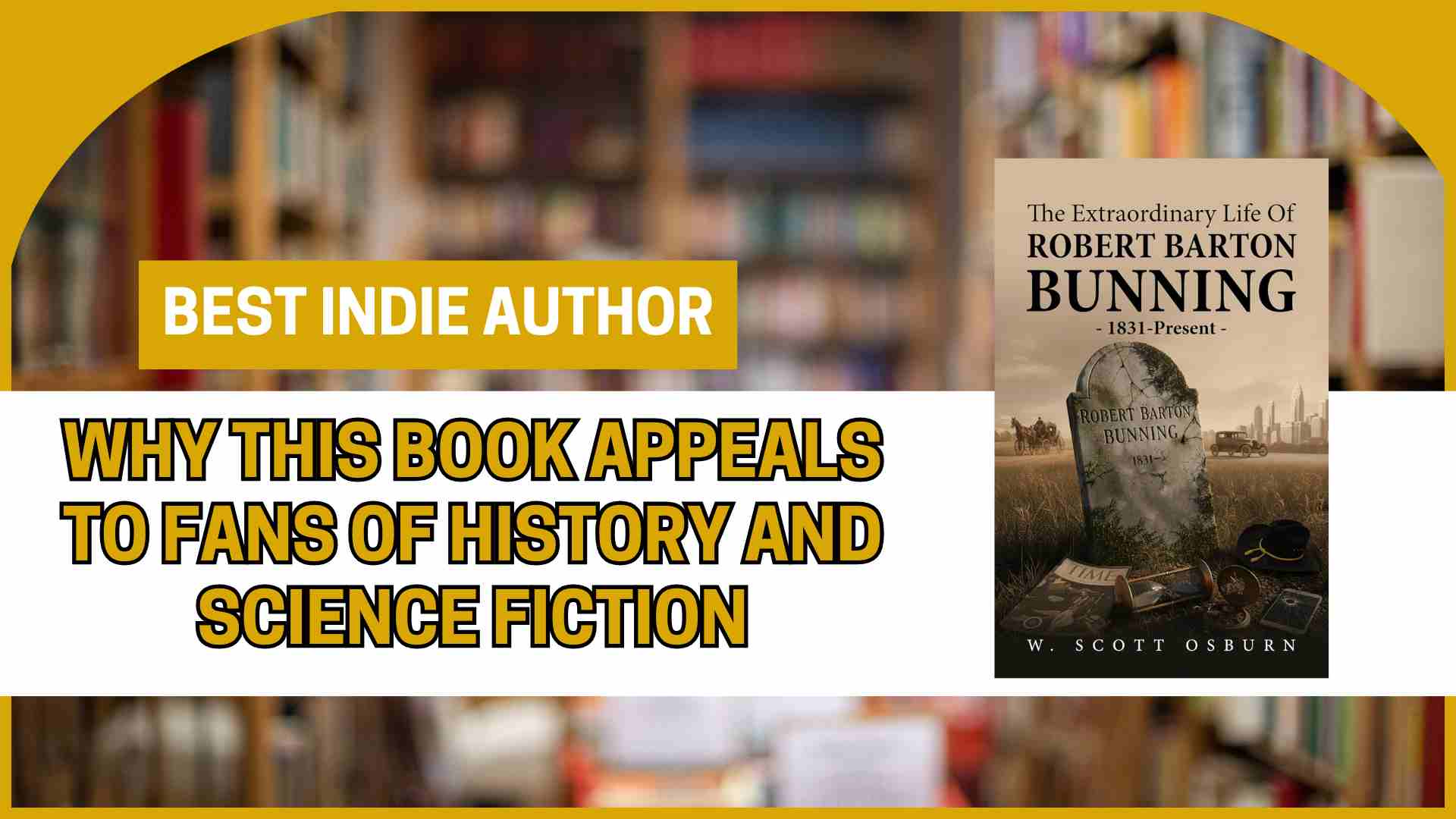
Some stories rely fully into the past, while others look ahead into imagined possibilities. Few manage to stand confidently between both. The Extraordinary Life of Robert Barton Bunning by W. Scott Osburn does exactly that, creating a rare swirl that speaks directly to readers who appreciate both historical depth and scientific curiosity.
For those drawn to history, the book offers a rich and immersive journey through pivotal moments in American life. Instead of presenting events as distant or academic, it places the reader inside them. Frontier settlements, the Civil War, westward expansion, and the rise of modern society unfold through lived experience. This approach transforms history into something immediate and personal. Readers are not simply observing events. They are walking alongside someone who has seen them unfold in real time.
The historical detail is not adornment. It is foundational. Each setting is grounded in the realities of its era, from the hardships of early settlement to the shifting energy of growing towns and industries. Real figures and recognizable events appear naturally within the narrative, adding authenticity without overwhelming the story. This balance ensures that history remains engaging rather than instructional.
At the same time, the book introduces a scientific idea that shifts everything. The central character ages at a dramatically slower rate than those around him. This single concept creates a bridge into science fiction, not through futuristic technology, but through a biological anomaly that feels both unusual and plausible. It invites readers to consider how the human body might function differently under altered conditions.
For science fiction enthusiasts, the appeal lies in this grounded approach. The story does not rely on distant galaxies or advanced machines. Instead, it explores a change within the human body itself. The focus is on biology, time, and the consequences of living far beyond normal limits. This makes the concept feel closer to reality, encouraging readers to think about how such a condition might exist.
What strengthens this blend is the way both elements support each other. The extended lifespan allows the character to move through multiple historical eras, turning a scientific idea into a narrative engine. Without the slowed aging, the historical scope would be limited. Without the historical context, the scientific concept would lack emotional weight. Together, they create a story that feels expansive yet grounded.
Another reason the book resonates with both audiences is its focus on human experience. The science may explain how the character lives longer, but the story explores what that means. Relationships evolve, identities shift, and the passage of time takes on a different meaning. These emotional layers ensure that the narrative remains relatable, even as it explores uncommon circumstances.
For readers who enjoy science fiction, this emotional realism adds depth. The story is not only about possibility, but about consequence. For those who enjoy history, the extended perspective reveals connections across time that are rarely seen within a single narrative. The character becomes a living thread that ties different eras together.
The Extraordinary Life of Robert Barton Bunning by W. Scott Osburn stands out because it does not force a choice between genres. It respects the richness of history while embracing the intrigue of scientific speculation. The result is a story that feels both familiar and unexpected, offering something meaningful to readers from both worlds.
In the end, the appeal lies in its balance. It honors the past, questions the limits of the present, and invites readers to imagine what lies beyond, all through the life of one extraordinary individual.
Book now available onhttps://www.amazon.com/dp/B0GP1QR19Y