Literature has long served as a lens through which the structures of society are examined. Among its most enduring themes are poverty, power, and inequality, forces that shape lives in visible and invisible ways. Through narrative, these realities are not reduced to statistics or abstract ideas. They are experienced through individuals, decisions, and consequences that reveal how deeply these forces are embedded in human existence.
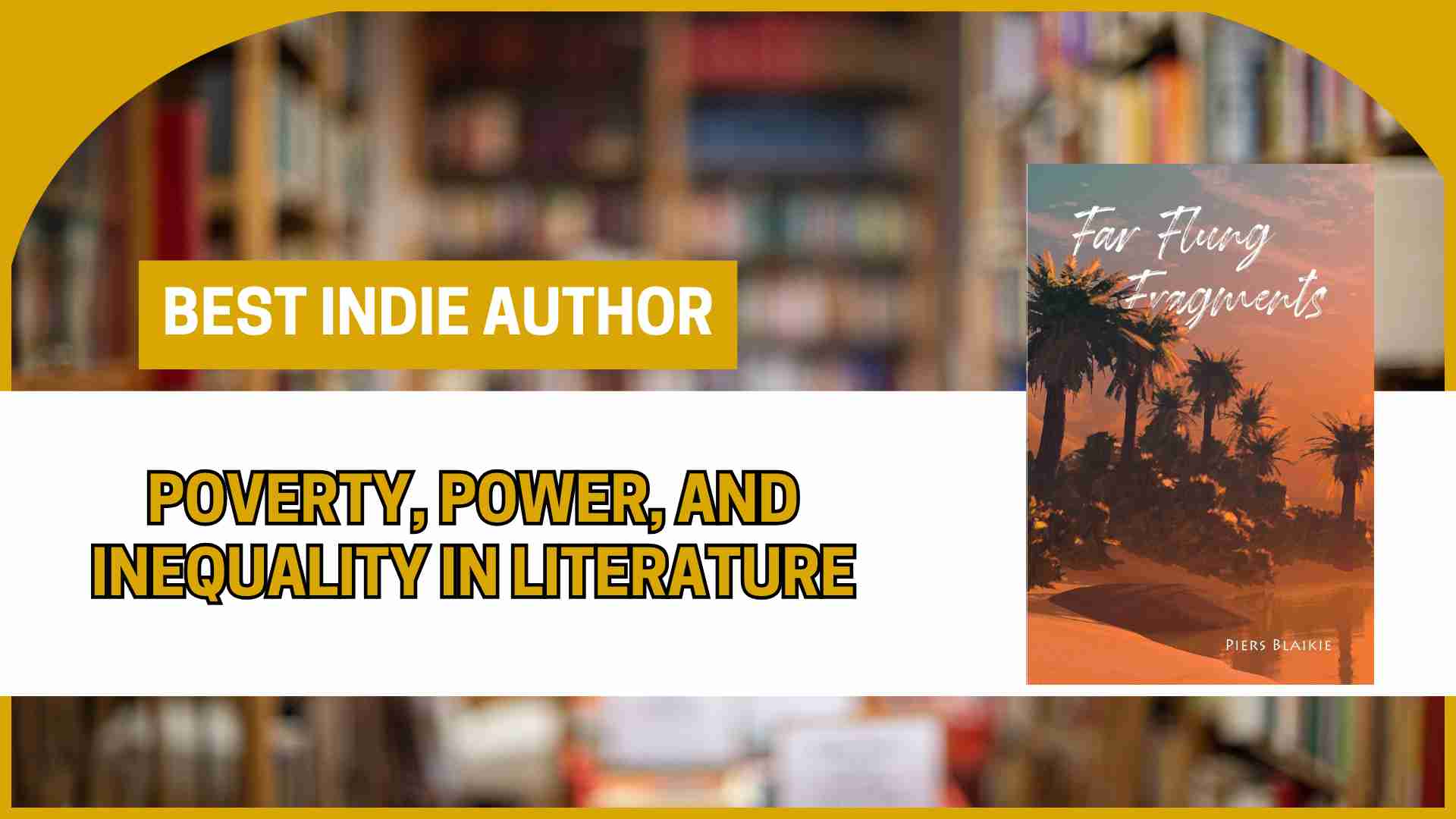
Far Flung Fragments by Piers Blaikie offers a compelling exploration of these themes across diverse settings. The collection moves through different parts of the world, yet the patterns it uncovers remain strikingly consistent. Wealth and deprivation, authority and vulnerability, privilege and marginalization all appear in various forms, reminding the reader that inequality is not confined to a single place or culture.
One of the most powerful aspects of the book is how it portrays poverty not as a distant condition but as an immediate reality. Characters are often placed in environments where survival is uncertain and choices are limited. These circumstances are not presented with exaggeration or sentimentality. Instead, they are shown with clarity, allowing the reader to understand how poverty shapes behaviour, relationships, and opportunities. It becomes evident that poverty is not simply a lack of resources, but a condition that restricts agency and narrows the path forward.
Power, in contrast, is often subtle yet pervasive. It does not always appear through overt authority or control. In many examples, it is woven deeply in systems, traditions, and economic structures that operate without direct confrontation. Characters who benefit from these systems may not fully recognize their position, while those affected by them are left to navigate their consequences. This imbalance creates tension within the narratives, highlighting how power can be exercised without acknowledgment.
The relationship between poverty and power naturally leads to inequality, a theme that runs throughout the collection. Inequality is not presented as a single issue but as a network of conditions that influence one another. Economic disparity intersects with cultural differences, historical influences, and social hierarchies. These layers create complex situations where individuals must make decisions within constraints they did not choose.
What makes Far Flung Fragments particularly effective is its refusal to simplify these dynamics. The stories do not divide characters into clear categories of right and wrong. Instead, they reveal how individuals can be both shaped by and complicit in the systems around them. This complexity reflects the reality of inequality, where responsibility is often shared and outcomes are rarely straightforward.
Another notable element is the way the collection captures moments of awareness. Characters occasionally confront the realities of the systems they are part of, leading to reflection, discomfort, or even change. These moments do not always result in resolution, but they provide insight into how awareness can challenge established perspectives. For the reader, these instances serve as an invitation to consider their own position within similar structures.
The global scope of the book reinforces the idea that poverty, power, and inequality are interconnected across borders. While the contexts may differ, the underlying patterns remain familiar. This continuity suggests that these issues are not isolated problems but part of a broader human condition that transcends geography.
For readers interested in literature that engages with real-world concerns, Far Flung Fragments by Piers Blaikie offers both depth and perspective. It presents stories that are grounded in lived experience while encouraging reflection on larger societal structures. Through its exploration of poverty, power, and inequality, the collection demonstrates how literature can illuminate the forces that shape lives and challenge the reader to look beyond the surface.
Discover this book now, available on Amazon: https://www.amazon.com/dp/1915424283/