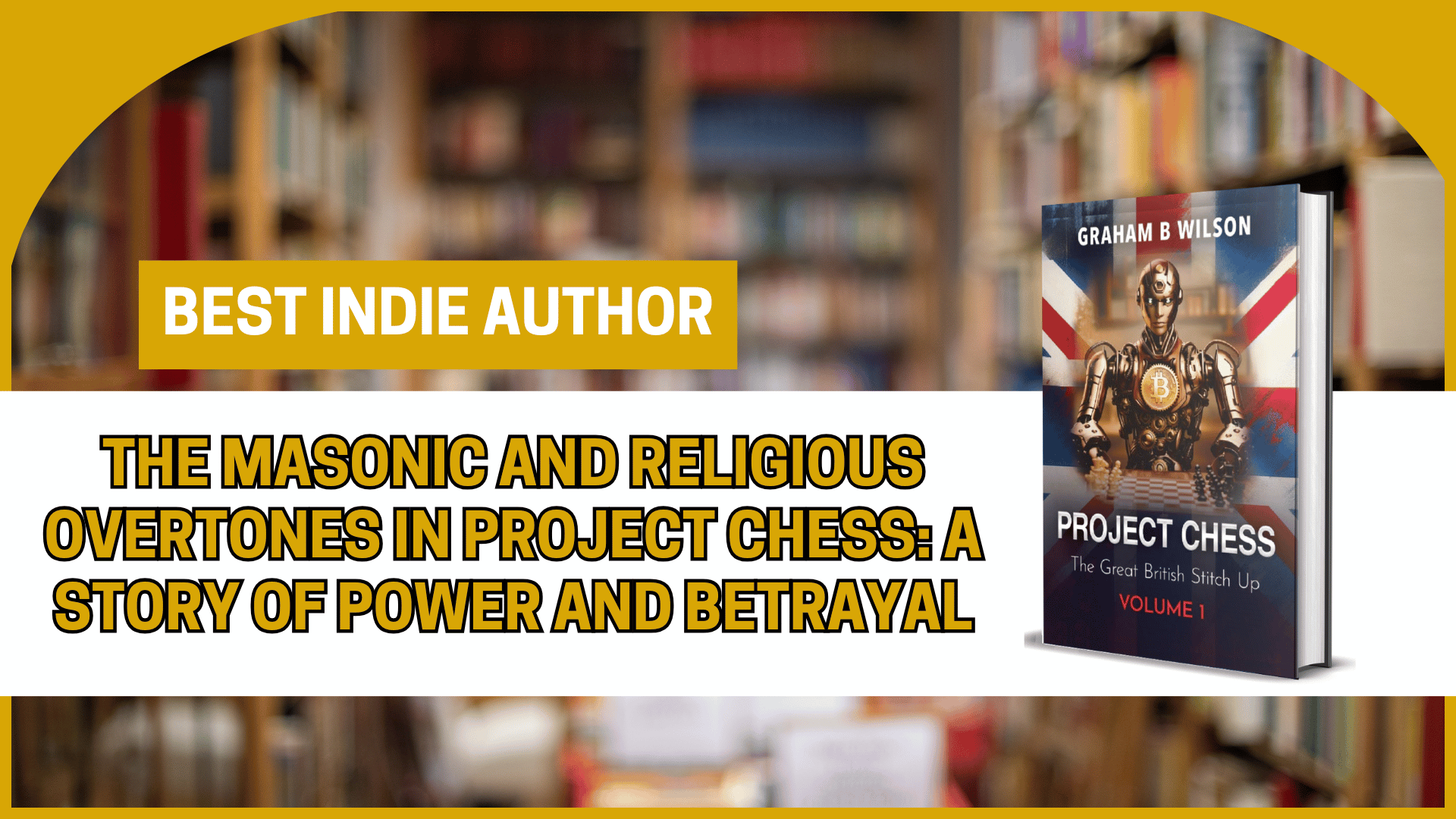
Project Chess delves deep into the undercurrents of power, manipulation, and betrayal, weaving in Masonic and religious themes that serve as both a backdrop and driving force behind the story. Through its intricate narrative, the novel explores the complex intersections of secret societies, religious symbolism, and the thirst for control over both the physical and metaphysical worlds.
From the outset, the book presents a world where Masonic influences and religious overtones are not just historical remnants but active forces shaping modern-day conflicts. The characters who are caught in this intricate web of power find themselves facing more than just political or corporate enemies they are up against forces much older and far more elusive. These forces, deeply rooted in ancient traditions and institutions, remain shrouded in secrecy, using symbols, rituals, and hidden alliances to maintain their dominance over society.
The Masonic undertones in Project Chess are evident in the secretive nature of the groups that drive the narrative forward. Much like the real-world Masons, the characters in the book find themselves bound by oaths and allegiances that are not fully understood by the general public. This is not simply about wealth or influence it’s about control over the very fabric of society and the manipulation of both truth and perception. The characters are often forced to navigate a maze of hidden agendas, with each move on the board representing not just a strategic decision but a deeper ideological battle for supremacy.
The religious symbolism in Project Chess serves as a powerful counterpoint to the Masonic themes. The novel frequently draws on biblical references, with characters symbolically taking on roles that echo stories of betrayal, sacrifice, and redemption. The most prominent of these is the conflict between good and evil, played out not just in the physical realm but in the spiritual one as well. The power struggles in the book are portrayed as battles of faith—faith in institutions, faith in divine justice, and faith in the inherent goodness of the human spirit. But just as often, these battles reveal the darker side of organized religion: the manipulation of faith for power and the betrayal of the very principles it claims to uphold.
One of the book’s central themes is the concept of betrayal, and it is within this theme that the Masonic and religious overtones are most powerfully felt. The characters grapple with the idea of loyalty not just to each other but to the systems of power that have shaped their lives. Betrayal takes on both a personal and collective meaning, as characters are torn between their allegiance to secret societies and their moral compass, often leading them to make choices that defy their religious convictions and Masonic oaths.
Project Chess challenges readers to confront the uncomfortable reality of how power, both secular and religious, has been manipulated throughout history. It asks tough questions about the cost of loyalty to these ancient institutions and the price of true freedom. The Masonic and religious overtones are not just a backdrop to the story—they are integral to understanding the complex motivations and internal struggles that define the novel’s characters.
For those intrigued by stories that intertwine history, religion, and the pursuit of power, Project Chess offers an exhilarating journey. The novel explores how the forces of control and betrayal are not confined to the past but remain ever-present, quietly influencing the course of history and the lives of those caught in the web. As the characters navigate a world shaped by both Masonic and religious power, readers will be left questioning: what price are we willing to pay for freedom in a world where betrayal runs deeper than we ever imagined? Project Chess offers no simple answers, but it certainly forces us to think critically about the systems that govern our lives.
The book is available on https://www.amazon.com/dp/B0G4VFBH6Z.