Robots are no longer limited to factory floors or science fiction. They are entering warehouses, hospitals, construction sites, security operations, emergency response teams, and critical infrastructure. They can lift, scan, monitor, assist, inspect, and respond faster than people in many situations. For employers, this creates enormous opportunity. For workers, it also creates a new kind of risk.
A workplace may be ready to buy advanced robotic tools, but that does not mean it is ready to use them safely. Readiness is not just about budget, software, or equipment. It is about people. It is about whether workers understand the machines beside them, whether safety teams have assessed new hazards, whether leaders have created clear policies, and whether human judgment remains protected.
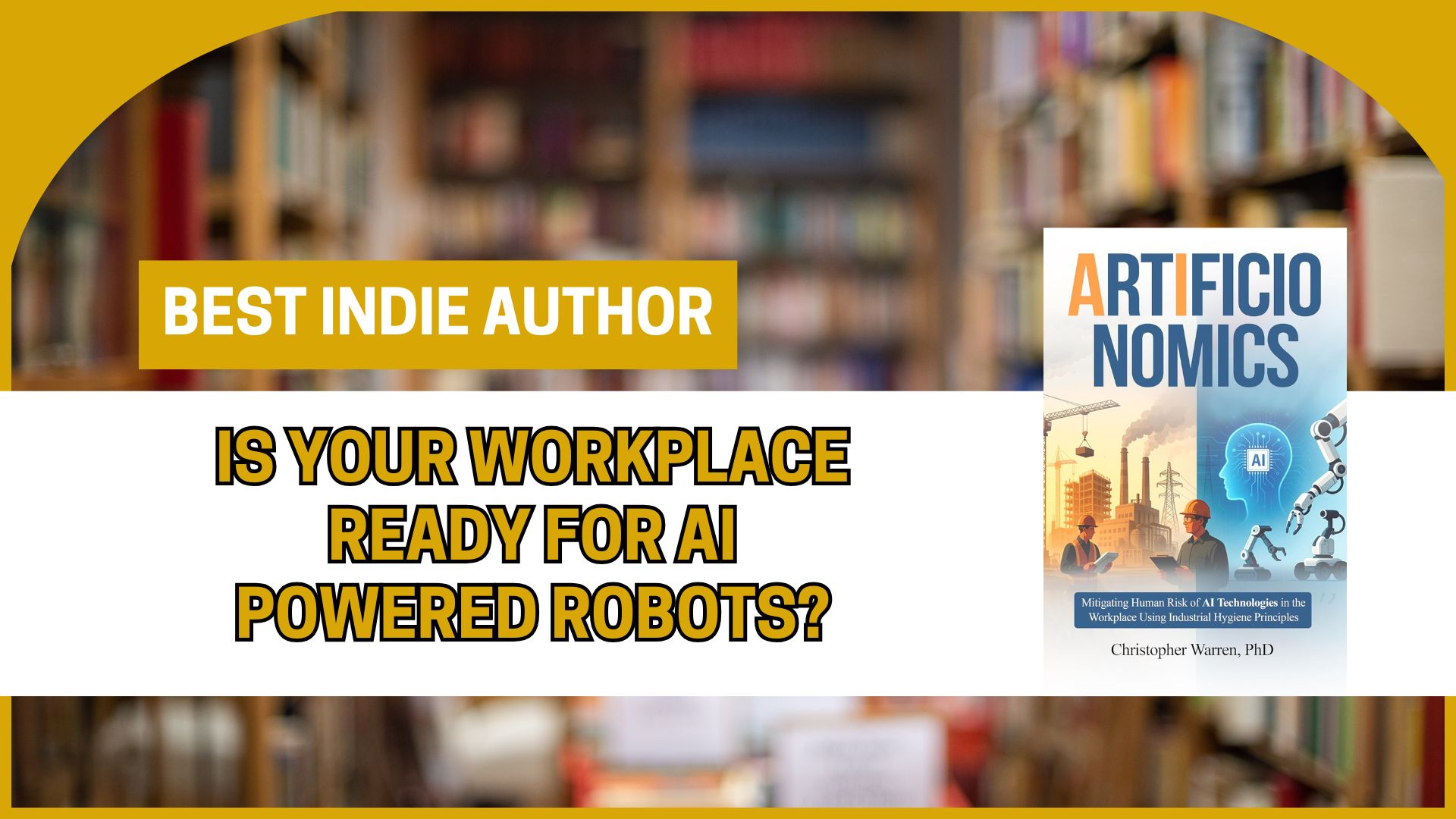
This is the urgent message at the heart of Artificionomics: Mitigating Human Risk of AI Technologies in the Workplace Using Industrial Hygiene Principles by Christopher Warren, PhD. The book explains why the next stage of workplace safety must focus on the human impact of intelligent machines and automated systems. These tools may reduce some dangers, but they can also introduce new ones, including collision hazards, overreliance on machine judgement, worker anxiety, privacy concerns, training gaps, and loss of control over daily tasks.
A robotic system that performs well in testing can behave differently in a busy workplace filled with noise, movement, changing surfaces, tired employees, and unpredictable human behaviour. A sensor may miss a person. A machine may enter the wrong space. A worker may misunderstand a signal. A supervisor may rely too heavily on automated alerts. These are not minor issues. They are modern safety concerns that demand serious planning.
Christopher Warren offers a practical framework for handling these risks before they become incidents. By adapting industrial hygiene principles, the book shows how organizations can identify, evaluate, and control hazards linked to advanced workplace technology. It encourages leaders to think beyond productivity and ask deeper questions. How will this system affect stress levels? How will employees be trained? Who has authority to stop the machine? What happens when the technology makes a mistake? How will worker feedback be included?
The value of Artificionomics is that it gives safety professionals, executives, and workplace leaders a clear path forward. It does not reject innovation. It demands responsible innovation. It reminds organizations that progress is only successful when it protects the people expected to work alongside it.
If your workplace is considering robotic systems, automation tools, or machine led monitoring, this book should be part of the conversation. Artificionomics helps leaders prepare not just for smarter workplaces, but for safer, more humane ones.
Discover the framework for protecting people in AI-driven workplaces. Read ArtificIonomics today. https://www.amazon.com/dp/B0GFY4RL6B