Long before modern medicine took shape, healing began with observation, experience, and a deep understanding of the natural world. Plants were not just part of daily life. They were tools for survival. Leaves, roots, bark, and flowers were studied, tested, and passed down through generations as remedies for pain, illness, and injury. What many now see as folklore was, in reality, an early form of practical science.
Herbal remedies worked because they were rooted in real biological properties. Willow bark, for example, contains salicin, a compound that laid the foundation for modern aspirin. Chamomile has calming effects that support sleep and reduce inflammation. Juniper berries possess antimicrobial qualities, while yarrow has long been used to help stop bleeding and promote healing. These were not random discoveries. They were the result of careful trial, error, and memory carried through families and communities.
Historical fiction that incorporates herbal knowledge often walks a fine line between realism and imagination. The most effective stories ground their healing practices in actual plant properties while weaving them into the cultural and emotional lives of the characters. This approach brings authenticity to the narrative, allowing readers to feel the weight and value of knowledge that once determined life or death.
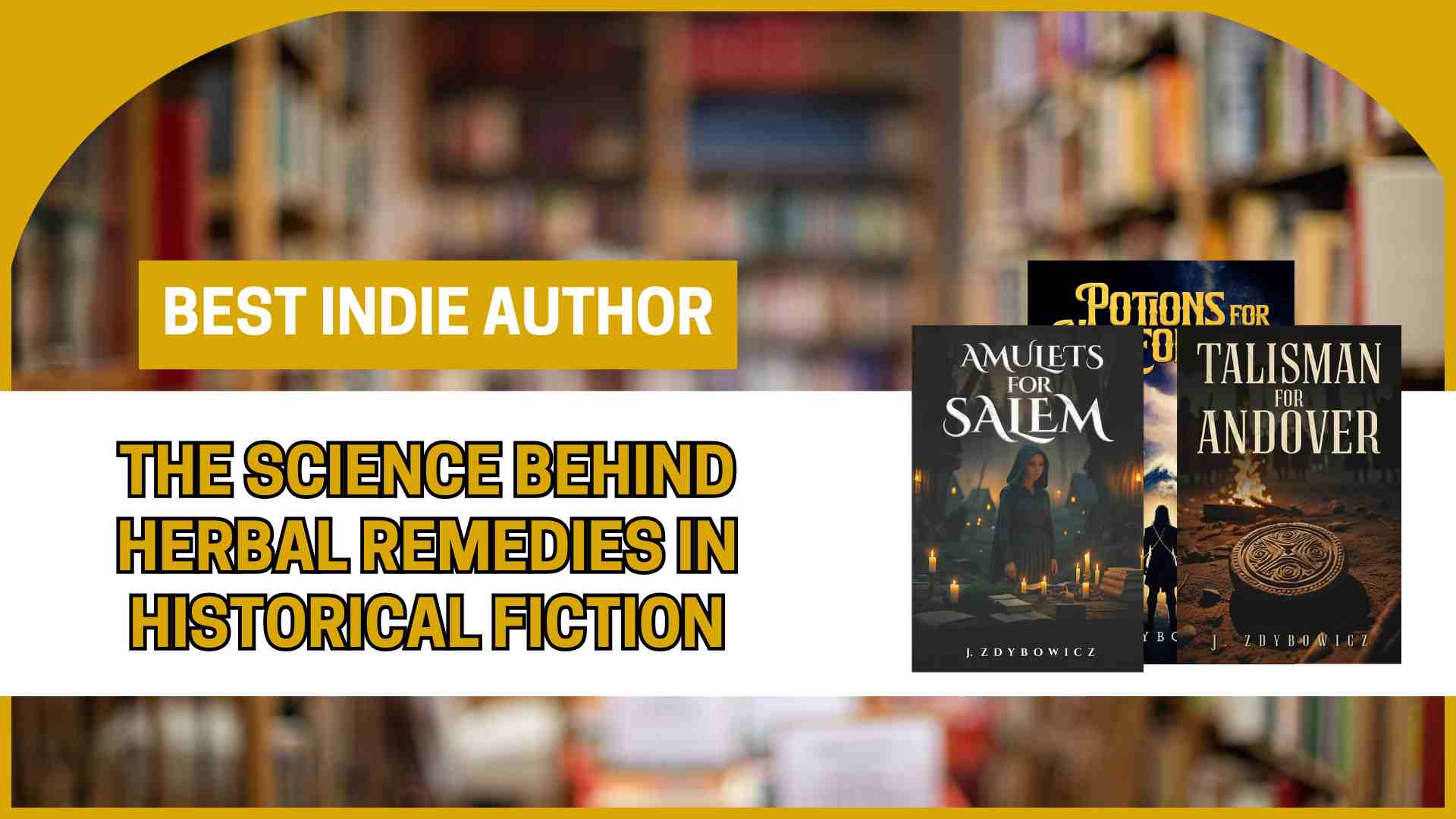
J. Zdybowicz’s Amulets for Salem, Talisman for Andover, and Potions for Norfolk stand out for how naturally they integrate this element. Herbal remedies are not treated as decorative details. They are central to the characters’ way of life. Healing is shown as a process that requires patience, preparation, and understanding. Oils must be infused over time. Ingredients must be gathered carefully. Each plant serves a purpose, and that purpose is respected.
What makes this portrayal compelling is the connection between science and secrecy. In a time where knowledge of herbs could be misunderstood, those who practiced healing had to be cautious. The same remedies that could ease pain or prevent infection could also lead to suspicion. This creates a constant tension, where science exists, but cannot always be openly practiced.
The process itself is deeply methodical. Drying herbs, infusing oils, blending ingredients, and applying treatments all reflect real techniques used throughout history. These steps reinforce the idea that healing was not mystical in the way it is often portrayed. It was deliberate, skill based, and rooted in experience. The knowledge may have been passed down informally, but it carried a level of precision that deserves recognition.
Another important aspect is the role of environment. The availability of plants depended on location, season, and climate. This meant that healers had to adapt, using what was accessible and learning how different conditions affected potency. This awareness of nature adds another layer of realism, showing that healing was not only about knowledge but also about timing and resourcefulness.
By blending these elements into its narrative, the series brings herbal science to life in a way that feels both grounded and immersive. It reminds readers that what was once dismissed as superstition often had a basis in reality, shaped by necessity and refined over time.
For those drawn to historical fiction that offers depth beyond the surface, this series provides a rich exploration of how knowledge, nature, and survival intersect. It presents healing not as magic, but as a discipline built on understanding, patience, and respect for the natural world.
Books available on Amazon :
Amulets for Salem : https://www.amazon.com/dp/1969868244
Talisman for Andover : https://www.amazon.com/dp/B0GF4738J6/
Potions for Norfolk : https://www.amazon.com/dp/B0GQ5BQ24W