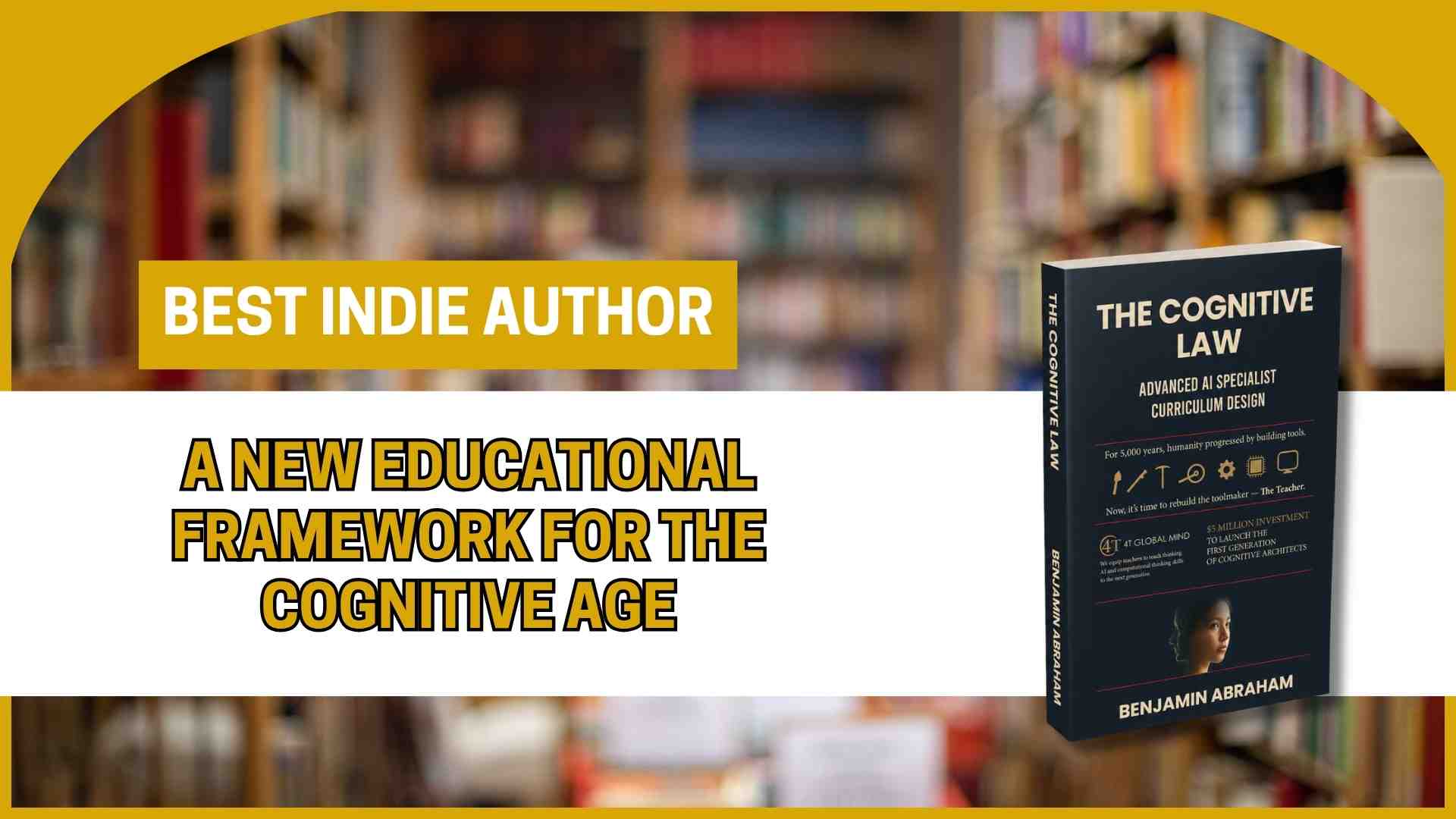
Education is standing at a defining moment. For generations, classrooms were built around memorisation, repetition, standard answers, and predictable outcomes. That model served an earlier world, but it is no longer enough. Today’s learners are entering a landscape where information is instant, systems are complex, and polished responses can appear convincing even when they lack sound reasoning. This is why The Cognitive Law by H. Benjamin Abrahams arrives as such an important and timely book.
H. Benjamin Abrahams presents a bold educational framework designed for a new era of thinking. Rather than treating learners as simple users of advanced tools, the book calls for a higher standard. Students must become disciplined thinkers who know how to set goals, question results, test assumptions, and preserve their own judgment. This shift is essential because modern education cannot be limited to finding answers. It must teach learners how to govern the process that leads to those answers.
At the centre of The Cognitive Law is a clear and memorable principle: the human is the pilot, and the system is the engine. This image gives teachers, students, and institutions a practical way to understand responsibility. The engine may provide speed and power, but direction, purpose, and final judgment must remain human. That distinction is not merely philosophical. It is the foundation for a safer and more responsible learning culture.
What makes this book especially valuable is its practical structure. H. Benjamin Abrahams does not simply warn readers about the risks of passive dependence. He offers a framework that can be taught, applied, measured, and reviewed. Through concepts such as role transparency, structured prompting, bias checks, audit trails, and the E Score, the book turns responsible thinking into a disciplined classroom practice.
For educators, The Cognitive Law provides a way to prepare students for real world complexity. It encourages lessons that reward questioning, reflection, and accountability rather than blind acceptance. It also helps teachers create learning environments where students understand not only what a tool produces, but how and why that result should be examined before it is trusted.
For students, the book offers a path toward intellectual independence. It teaches them to remain active participants in their own reasoning, not passengers carried along by convenience. This is one of the most urgent educational needs of our time.
The Cognitive Law by H. Benjamin Abrahams is more than a manual for the classroom. It is a call to rebuild education around human authority, ethical awareness, and structured thought. In the Cognitive Age, the strongest learners will not be those who simply receive answers. They will be those who know how to think, question, verify, and lead.