Inflation affects everyone. It raises the cost of groceries, housing, transportation, healthcare, and countless everyday necessities. Families feel it when budgets become tighter, businesses feel it when operating costs increase, and governments feel it when economic stability comes under pressure. Yet inflation is more than an economic challenge. Throughout American history, it has also become one of the most powerful tools in political debate.
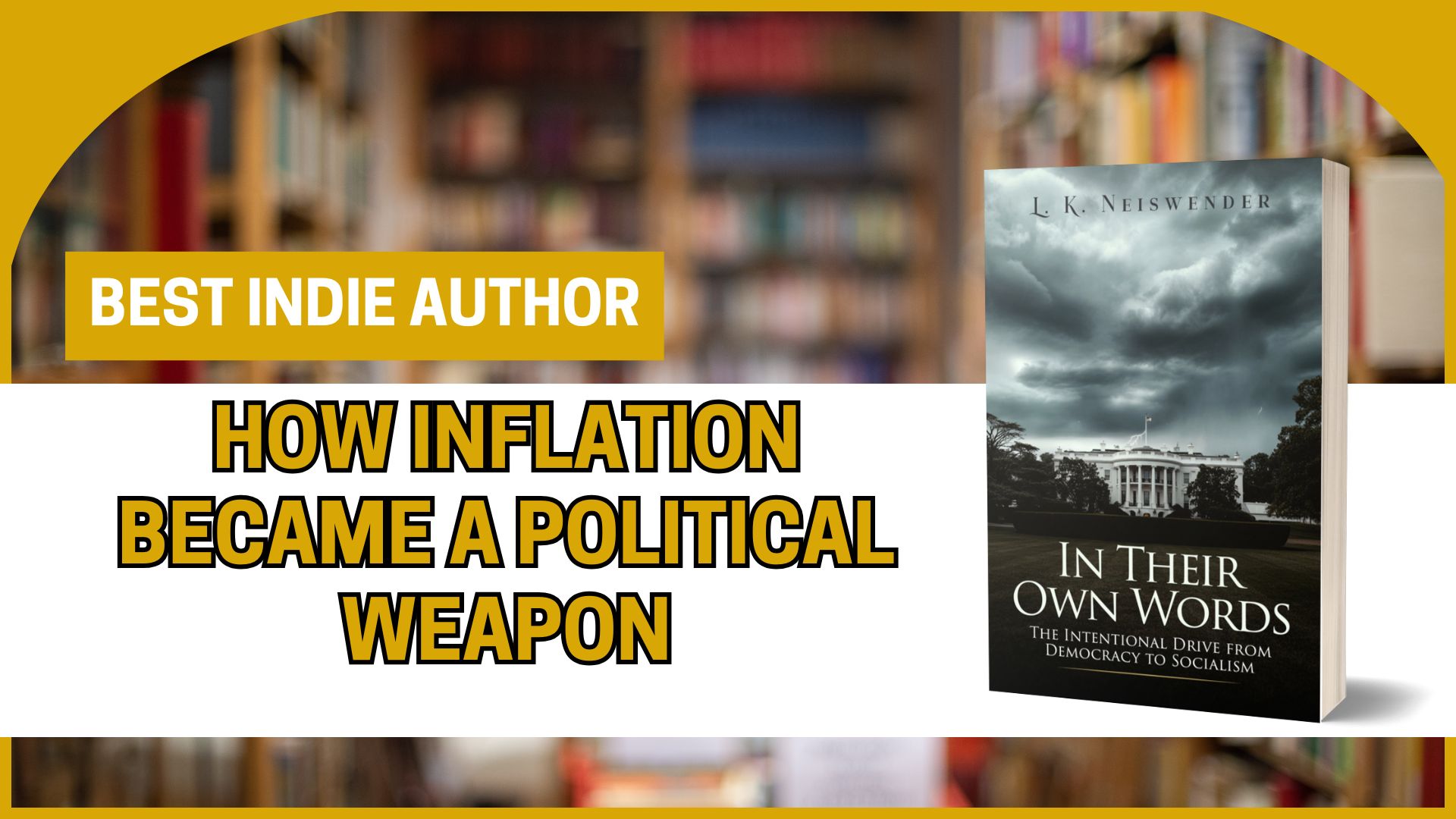
In In Their Own Words: The Intentional Drive from Democracy to Socialism, L. K. Neiswender explores how inflation repeatedly appeared in presidential party platforms as both a policy concern and a political argument. By examining official party documents from 1952 onward, the book shows that rising prices have long been used to criticize opponents, defend economic strategies, and justify competing visions of government.
Political parties have rarely viewed inflation through the same lens. One side has often argued that government investment and public programs are necessary to strengthen the economy during difficult times. The other has frequently warned that excessive federal spending, growing debt, and expanding government programs contribute directly to inflation and reduce the purchasing power of American families.
These competing views have shaped election campaigns for generations. Inflation has been linked to debates over taxation, government spending, interest rates, labor policy, energy production, and national debt. During periods of economic hardship, political parties have used inflation to persuade voters that their approach offers the better path toward financial stability.
Neiswender’s research demonstrates that these arguments are not unique to the modern era. Readers discover that concerns over rising prices, declining purchasing power, and responsible government spending appeared repeatedly in political platforms decades ago. As inflation increased, so did disagreements about its causes and the appropriate response. Some leaders emphasized expanded public investment, while others promoted balanced budgets, fiscal restraint, and stronger limits on federal spending.
One of the book’s greatest strengths is its reliance on official political platforms rather than retrospective interpretation. Instead of telling readers what political parties believed, Neiswender allows the platforms to speak for themselves. This documentary approach provides valuable historical context and allows readers to follow the evolution of economic policy across multiple administrations.
Inflation has often become more than an economic statistic. It has become a measure of political leadership, government priorities, and public confidence. Campaigns have repeatedly used rising prices to argue that current policies have failed or that new leadership is necessary. In this way, inflation has evolved into one of the most influential issues in presidential politics.
In Their Own Words: The Intentional Drive from Democracy to Socialism offers readers an opportunity to understand these recurring debates through the original documents that shaped them. L. K. Neiswender presents a detailed historical record that connects economic challenges with political decision making, helping readers see how inflation became not only an economic concern but also one of the most enduring political weapons in American history.
Available now on Amazon: https://www.amazon.com/dp/B0H2JWM6GZ