Luxury hotels are exceptionally good at measuring things.
Arrival standards can be timed. Rooms can be inspected. Service sequences can be audited. Guest feedback can be scored, benchmarked and compared. From mystery shopping to brand standards and satisfaction surveys, the industry has built sophisticated systems to determine whether teams are doing what they are supposed to do.
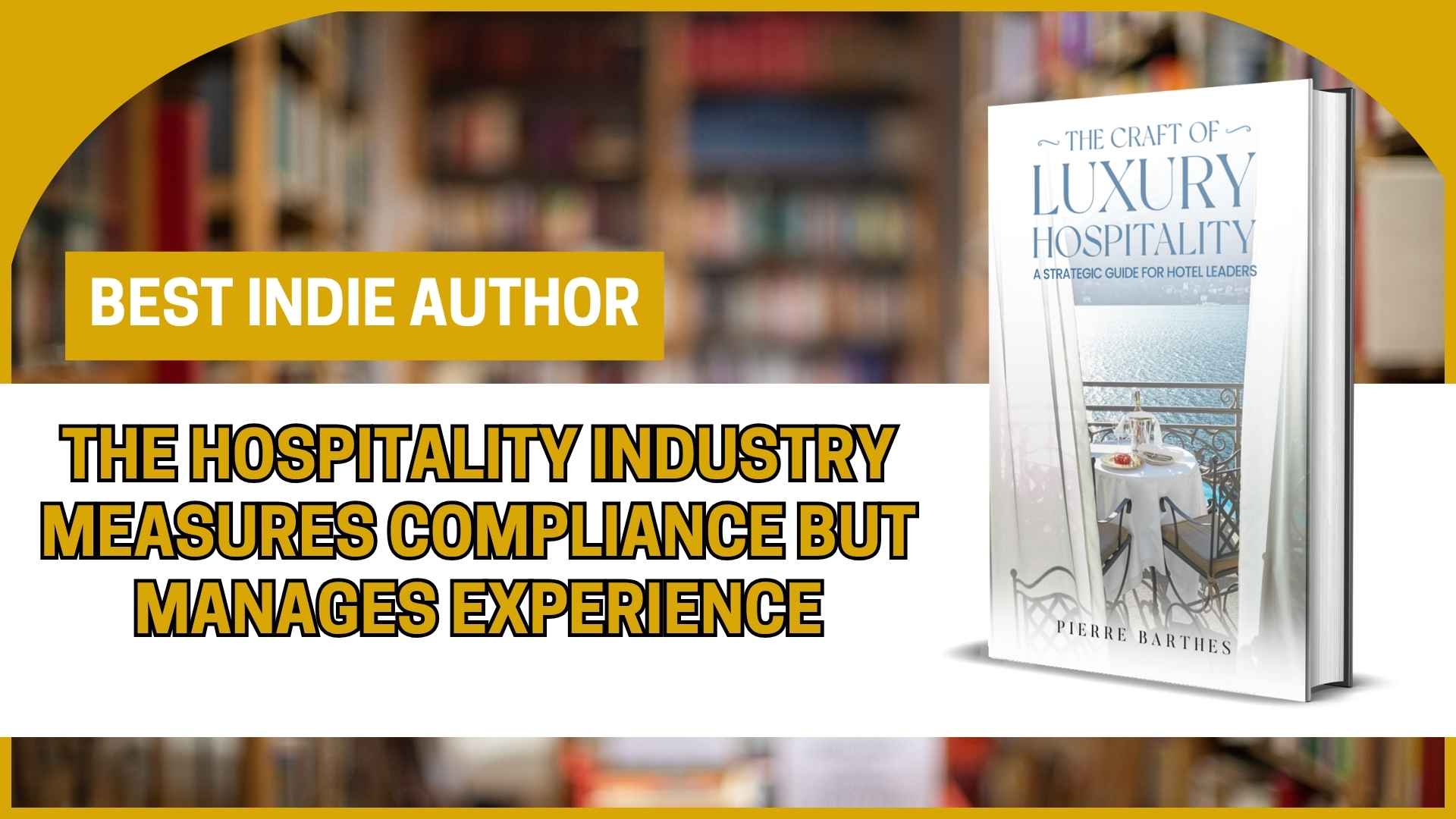
But Pierre Barthes identifies a critical tension in The Craft of Luxury Hospitality: A Strategic Guide for Hotel Leaders:
The hospitality industry measures compliance, but manages experience.
That distinction matters because a hotel can meet every technical standard and still leave a guest unmoved.
Compliance Is Necessary, but It Is Not the Experience
Standards are essential in luxury hospitality. They help ensure consistency, cleanliness, efficiency, professionalism and accountability. Barthes advocates rigorous measurement through tools such as service audits, guest-satisfaction surveys, online review analytics and structured internal quality processes.
Without standards, excellence becomes unpredictable.
Yet a checklist cannot fully capture whether a guest felt genuinely welcomed.
A receptionist might complete every required step at check-in and still appear distracted. A room attendant may execute every housekeeping standard perfectly while missing an opportunity to respond to a guest’s unspoken need. A concierge may provide accurate information without creating any real emotional connection.
The technical side of service can be measured relatively easily. The emotional side is far more complex.
And in luxury hospitality, both matter.
The Missing Half of Luxury Performance
Throughout the book, Barthes argues that emotional intelligence is what transforms correct service into memorable hospitality.
Employees need to recognize emotions, interpret context, demonstrate empathy and adapt their approach to different guests. Standards determine what should happen; emotional intelligence influences how the guest experiences it.
This idea becomes one of the book’s most distinctive concepts: the Dual Excellence Index or DEI.
The DEI brings together two dimensions of hotel performance: technical compliance and emotional intelligence, to provide a broader view of luxury excellence. Barthes’ framework argues that neither operational precision nor emotional connection is sufficient on its own. True excellence emerges when both are strong and aligned.
Consider the implications.
A hotel with outstanding technical standards but weak emotional engagement may feel polished yet impersonal.
A hotel with warm, caring employees but inconsistent operational execution may feel sincere yet unreliable.
Luxury requires both.
Turning Measurement Into Better Hospitality
For hotel leaders, the challenge is therefore not to abandon measurement but to broaden what performance means.
Guest feedback should become a strategic steering wheel, helping teams identify not only where procedures failed but where experiences failed to connect. Barthes recommends structured systems for capturing feedback, reviewing it regularly with leadership teams and using cross-departmental quality initiatives to turn insights into action.
The objective is not simply to achieve higher compliance scores.
It is to understand what those scores mean for the person on the other side of the interaction.
That is one of the central lessons of The Craft of Luxury Hospitality. Great hotel leadership requires discipline, measurement and operational consistency but it also requires empathy, judgment and humanity.
Because guests do not experience a checklist.
They experience moments.
And the hotels that learn to measure the first while mastering the second are the ones most likely to create the kind of luxury people remember long after they leave.