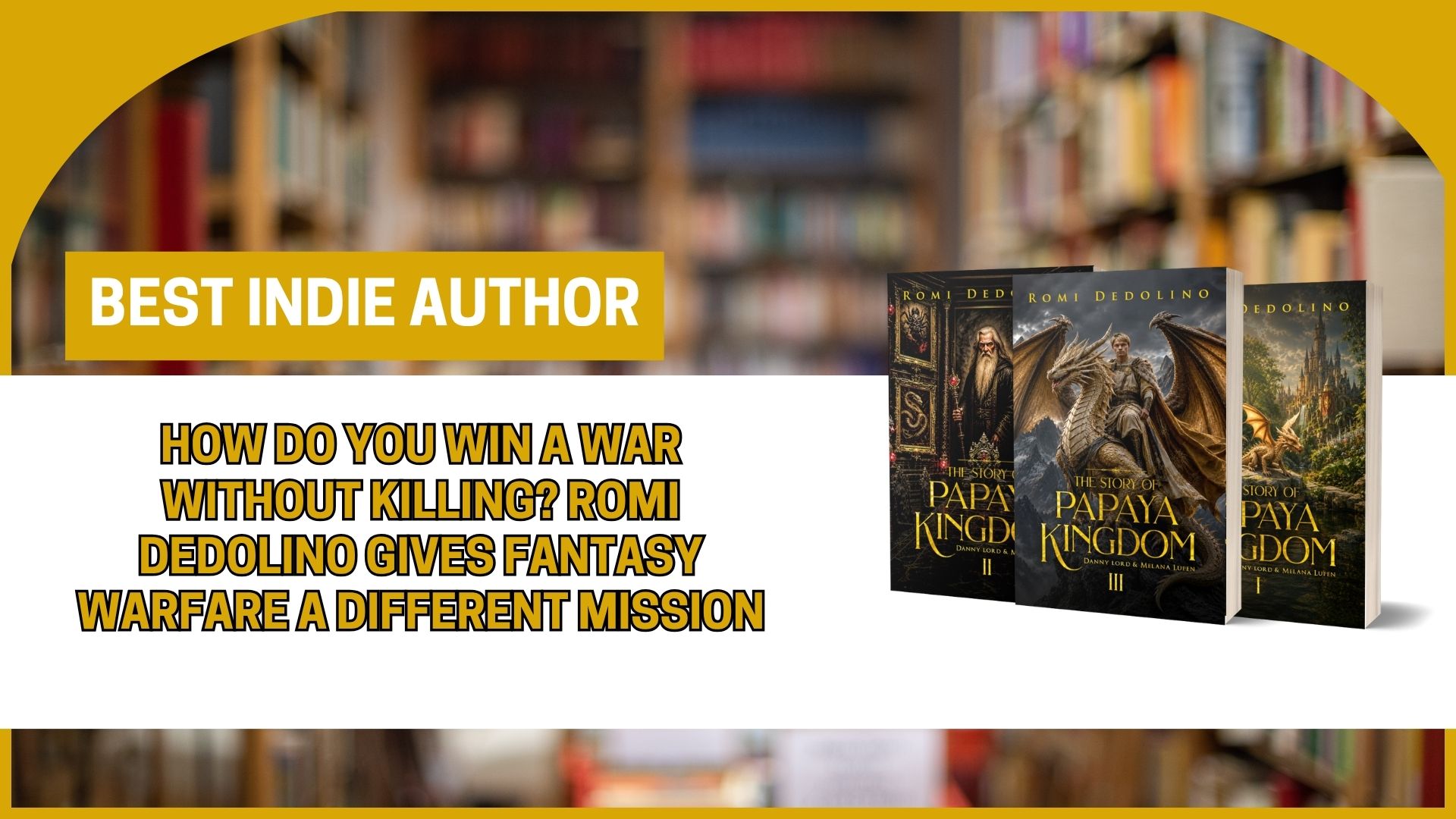
Fantasy stories often build toward war. Armies gather. Powerful enemies clash. Heroes are forced to choose between survival and destruction. But in Romi Dedolino’s The Story of Papaya Kingdom trilogy, the central conflict is shaped by a more unusual question: what if victory means saving your enemies rather than destroying them?
Across The Story of Papaya Kingdom – Book I, Book II and Book III, Dedolino develops a world filled with dragons, ancient magic, hidden kingdoms, portals, dark sorcerers and young heroes who must grow into extraordinary responsibilities. Yet the trilogy’s most distinctive idea is not simply the battle between Light and Darkness. It is the belief that people controlled by Darkness may still be worth rescuing.
That philosophy becomes increasingly important as the series progresses.
In The Story of Papaya Kingdom – Book I, readers are introduced to a world already shaped by cruelty, oppression and the misuse of power. The early history of Papaya Kingdom begins with people fleeing harsh rulers and searching for a place where they can live in peace. Their journey eventually leads to Labrador, an ancient magician whose final great act is to create a kingdom intended as a refuge from tyranny.
That origin gives the kingdom a moral foundation. Papaya is not built as a place of conquest. It is built as an alternative to it.
When Danny and Melana later become central to the story, that principle takes on new meaning. Their magical education gives them enormous power, but it also forces them to decide how that power should be used. By The Story of Papaya Kingdom – Book II, Danny has become a king and Amny Ryka’s Darkness threatens the wider world. The conflict is approaching, but the preface makes clear that the struggle is not simply about weapons. It is described as a test of “soul” and of whether those fighting for the Light can do so without becoming what they oppose.
That idea shapes the heroes’ strategy.
Instead of treating corrupted villagers and soldiers as disposable enemies, Danny and his allies work to liberate them. Melana’s healing powers become especially important because Darkness is shown as something that can be removed. Adela, once a servant of Ryka, becomes one of the clearest examples. After Melana breaks the Darkness controlling her, Adela regains her true appearance, her memories and the possibility of choosing a different path.
By The Story of Papaya Kingdom – Book III, the moral challenge becomes even sharper. War has arrived. Armies are moving. Dragons are defending Papaya Kingdom. Dark magicians, soldiers and dangerous machines are closing in. Yet Danny continues to insist that deadly force should be used only when no other option remains. His plans repeatedly focus on trapping, disarming, healing and freeing people rather than simply killing them.
The result is a different kind of fantasy warfare. Victory is measured not only by territory defended or enemies defeated, but by how many people can be brought back from Darkness.
That gives Romi Dedolino’s trilogy an interesting emotional core. The Story of Papaya Kingdom still offers dragons, magic, battles, danger and adventure, but underneath the spectacle is a question about leadership: is true strength the ability to destroy or the ability to save?
For readers looking for fantasy that combines action with compassion, moral choices, redemption and hope, the three-book Papaya Kingdom saga promises a battle for Light where winning may mean giving the enemy another chance.
Read the book on Amazon: https://www.amazon.com/stores/author/B0HNHHL271/allbooks