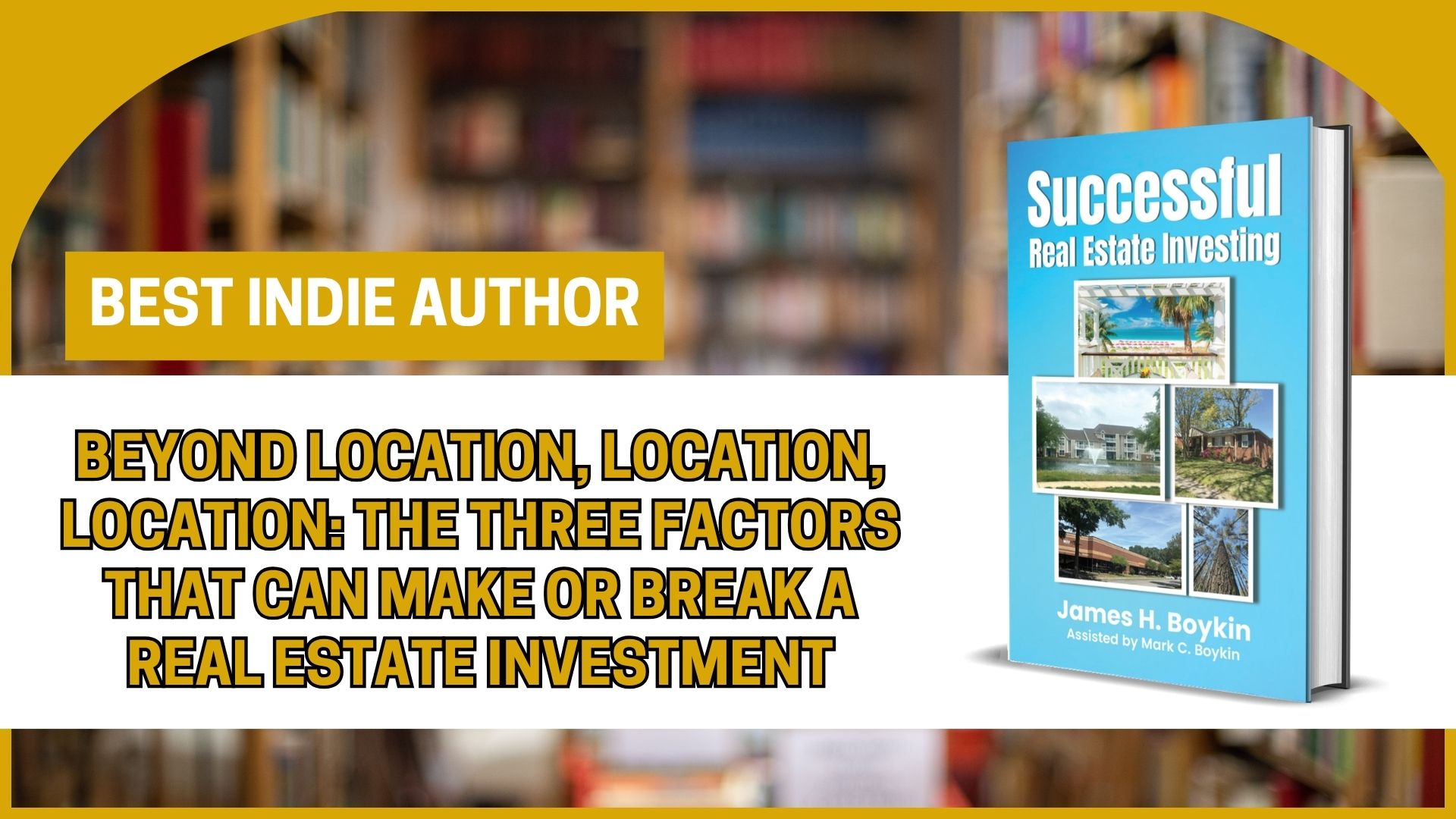
“Location, location, location” may be the best-known phrase in real estate, but James H. Boykin argues that successful investing depends on more than geography alone.
In Successful Real Estate Investing, Boykin identifies three major factors that deserve attention: location, the timing of the purchase and sale and skilled management during ownership. Together, these elements can influence whether a property becomes a strong investment or an expensive disappointment.
1. Location Still Matters But Look Deeper
A desirable location can support rental demand, resale value and long-term appreciation. But investors should examine more than whether a neighborhood simply “looks good.”
Boykin encourages readers to study which neighborhoods and areas are outperforming the wider market. He notes that development patterns can matter greatly, especially when growth follows major transportation corridors.
At the same time, some location problems cannot be repaired with renovation money. An unsafe, declining, remote or otherwise undesirable neighborhood can limit a property’s appeal regardless of how attractive the building becomes.
That is why buying a cheaper property in the wrong area can be far riskier than paying more for a well-positioned one.
2. Timing Can Shape the Entire Investment
Real estate markets move through cycles and investors are often tempted to follow the crowd.
Boykin cautions against this instinct. He explains that some of the strongest buying opportunities can appear when a property type has fallen out of favor and sellers outnumber buyers. Conversely, selling can be more advantageous when demand is strong and available supply is limited.
Of course, timing the market perfectly is unrealistic. Boykin also warns that waiting indefinitely for prices to fall can backfire because property values may rise faster than an investor’s savings.
The lesson is not to chase every trend. It is to understand current market conditions and make decisions based on facts rather than fear or excitement.
3. Management Determines What Happens After Closing
Even a well-located property purchased at a favorable time can underperform if it is poorly managed.
Good management affects rental income, occupancy, tenant relationships, property condition, operating expenses and eventually resale value. Boykin stresses the importance of ongoing maintenance, keeping properties competitive and reducing unnecessary tenant turnover.
In his discussion of maximizing sale profit, he explains that careful upkeep and skillful management can strengthen the rent roll, improve tenant relations, extend the life of building equipment and contribute to a stronger future sale.
For apartment investors, he also raises the question of whether self-management is truly the best option. An inexperienced owner may struggle with tenant screening, repairs, advertising, legal requirements and day-to-day problems that a professional property manager handles routinely.
Successful Investing Requires the Full Picture
A great location is valuable, but it cannot compensate for every mistake. Buying at the wrong time, overpaying or managing a property poorly can erode even a promising investment.
Successful Real Estate Investing by James H. Boykin helps readers look at real estate more strategically by examining not just where to buy, but when to act and how to manage what they own.
Because in successful real estate investing, location may open the door but timing and management help determine what happens next.
Discover more practical investment guidance in Successful Real Estate Investing by James H. Boykin.
Read the book on Amazon: https://a.co/d/0gjvN7zf