The Declaration of Independence is often remembered as the document that announced America’s separation from Great Britain. Yet its importance reaches far beyond independence itself.
It also describes what America was supposed to become.
The Declaration states that people possess rights to Equality, Life, Liberty, and the Pursuit of Happiness. It also makes clear that government exists to secure those rights and that political authority must come from the consent of the governed.
Seen in that light, the Declaration is more than a historical statement. It is a mission statement for the nation.
A mission statement defines purpose. It establishes principles and provides a standard by which actions can be judged. The Declaration does exactly that. It gives Americans a set of ideals against which government, laws, institutions, and national priorities can be measured.
The difficulty is that declaring a principle is not the same as fulfilling it.
What does equality require in practice? What responsibilities arise from the right to life? How should liberty be protected when one person’s actions threaten the rights of another? What conditions allow people to pursue happiness in a meaningful way?
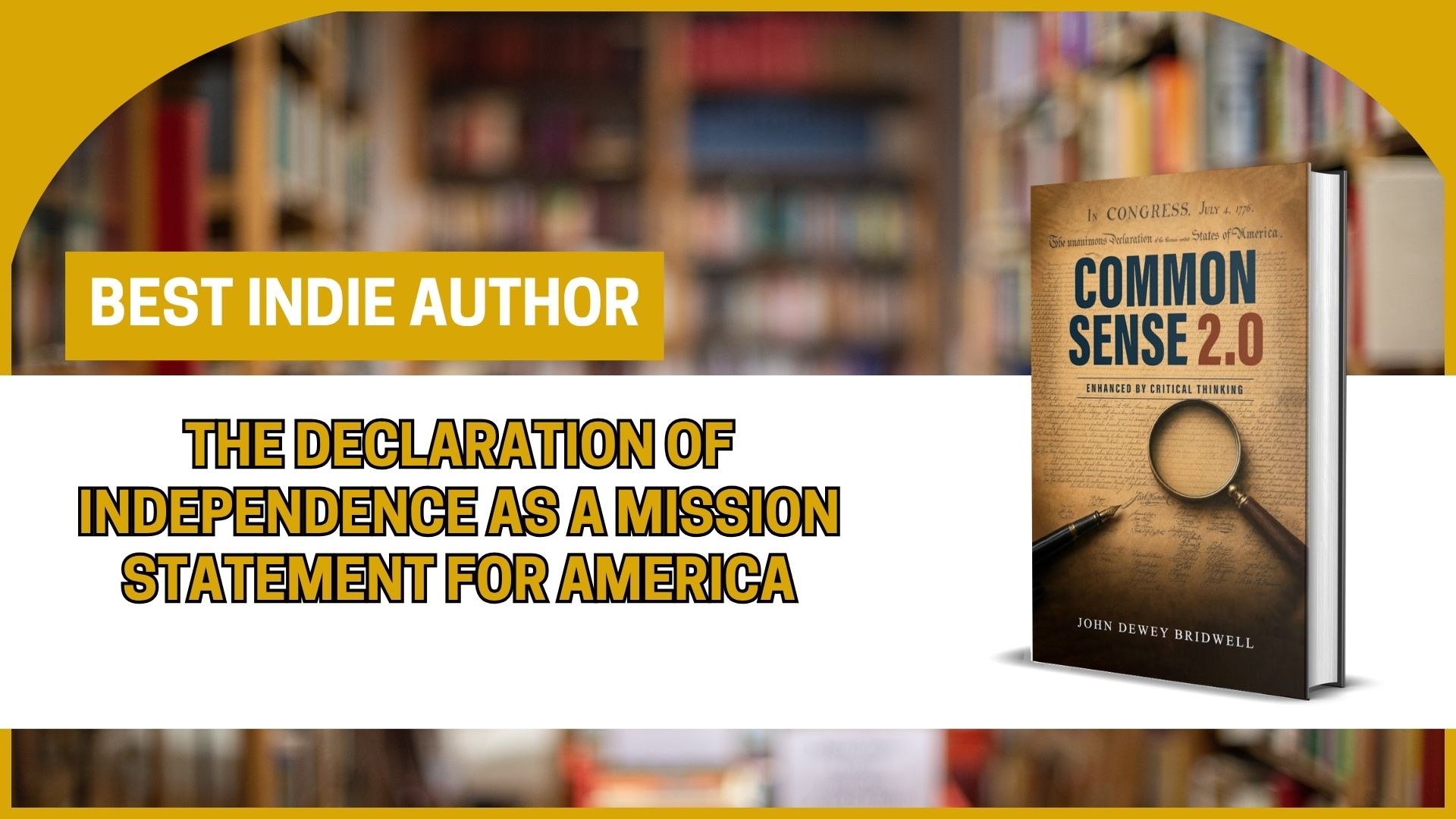
These questions are central to Common Sense 2.0.
The book argues that America completed one great task in 1776 by becoming independent, but that the second task remains unfinished. The country must continue working toward a government that protects the rights stated in the Declaration and operates according to genuine democratic consent.
That requires more than patriotic language.
It requires examining whether American institutions actually serve the people. It requires asking whether the Constitution provides an adequate foundation for modern rights. It requires serious attention to voting, health care, education, economic inequality, justice, environmental responsibility, and the structure of government itself.
Common Sense 2.0 develops these ideas into what it calls the American Democratic Mission. The concept begins with the founding principles of the Declaration and then considers what those principles demand from a modern nation.
The result is not simply a discussion of history. It is an argument about responsibility.
If the Declaration truly expresses America’s purpose, then every generation has an obligation to ask whether the country is moving closer to that purpose or farther away from it.
That question is especially important at a time when Americans disagree sharply about rights, government, democracy, and the future of the nation.
Common Sense 2.0 invites readers to return to the founding promise, examine it carefully, and consider what it would mean to take that promise seriously today.
Read the book on Amazon: https://a.co/d/092tTEho