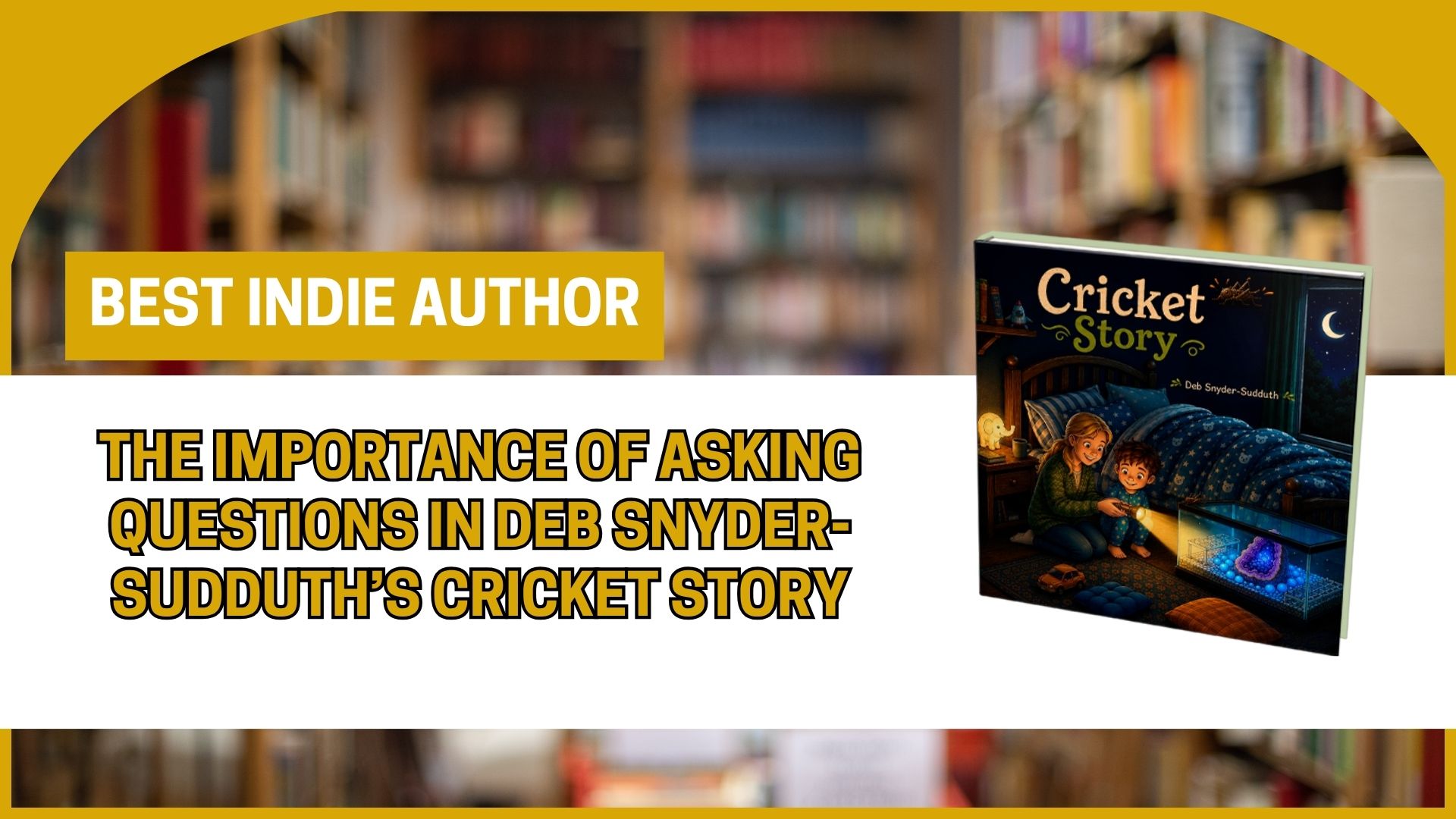
Children learn about the world by asking questions. Why does something happen? How does it work? Where does it live? What does it need? These simple questions can turn confusion into understanding and an ordinary moment into a memorable discovery. In Cricket Story, author Deb Snyder-Sudduth uses Dean’s experience with a noisy cricket to show young readers how curiosity can change the way they see nature.
At the beginning of the story, Dean is not curious at all. He is tired, frustrated and unable to sleep because a cricket is chirping somewhere in his bedroom. He wants the sound to stop, but neither he nor his mother can find the hidden visitor. The situation could have ended with continued annoyance. Instead, Dean’s mother encourages him to learn more about the creature making the noise.
That decision introduces one of the book’s most meaningful ideas: when something seems strange or irritating, asking questions can help us understand it.
As Dean reads about crickets, new questions begin to emerge. How do crickets chirp? Why do they make that sound? What do they eat? How do they grow? The answers reveal that the chirping is not random. Male crickets create their songs by rubbing parts of their wings together and their behavior plays a role in their natural lives. Dean also discovers that people in ancient China once appreciated crickets for their music and kept them nearby at night.
These facts do more than educate him. They transform his feelings. The sound that once seemed unbearable becomes interesting and eventually comforting. By asking questions, Dean replaces frustration with fascination.
His curiosity soon leads to action. Dean decides that he would like to find a cricket, name him Jake and create a safe habitat for him. This goal raises even more questions. What kind of container should he use? How much soil does a cricket need? What should go inside the habitat? What food and moisture will keep Jake healthy?
Dean searches for answers and carefully gathers soil, moss, stones, shelter materials, food and a damp sponge. He measures, arranges and adjusts the habitat until it is ready. Through this process, the story shows children that asking questions is not only about gaining knowledge. It also supports planning, problem-solving and responsible decision-making.
The most important question comes later, when Dean must consider what is truly best for Jake. Dean enjoys hearing the cricket’s song and has grown attached to him, but he learns that Jake belongs in the natural world. Should he keep the cricket because he loves him or release him so he can live freely?
This emotional moment encourages young readers to think beyond what they want. With his mother’s guidance, Dean records Jake’s chirping, takes photographs and then releases him into the garden. The answer is difficult, but it teaches him that care sometimes requires letting go.
Through Dean’s journey, Cricket Story celebrates curiosity as a path to knowledge, empathy and growth. Deb Snyder-Sudduth reminds children that asking thoughtful questions can help them understand unfamiliar creatures, make responsible choices and discover wonder in the smallest parts of the natural world.
Read the book on Amazon: https://a.co/d/0cjy2FFF