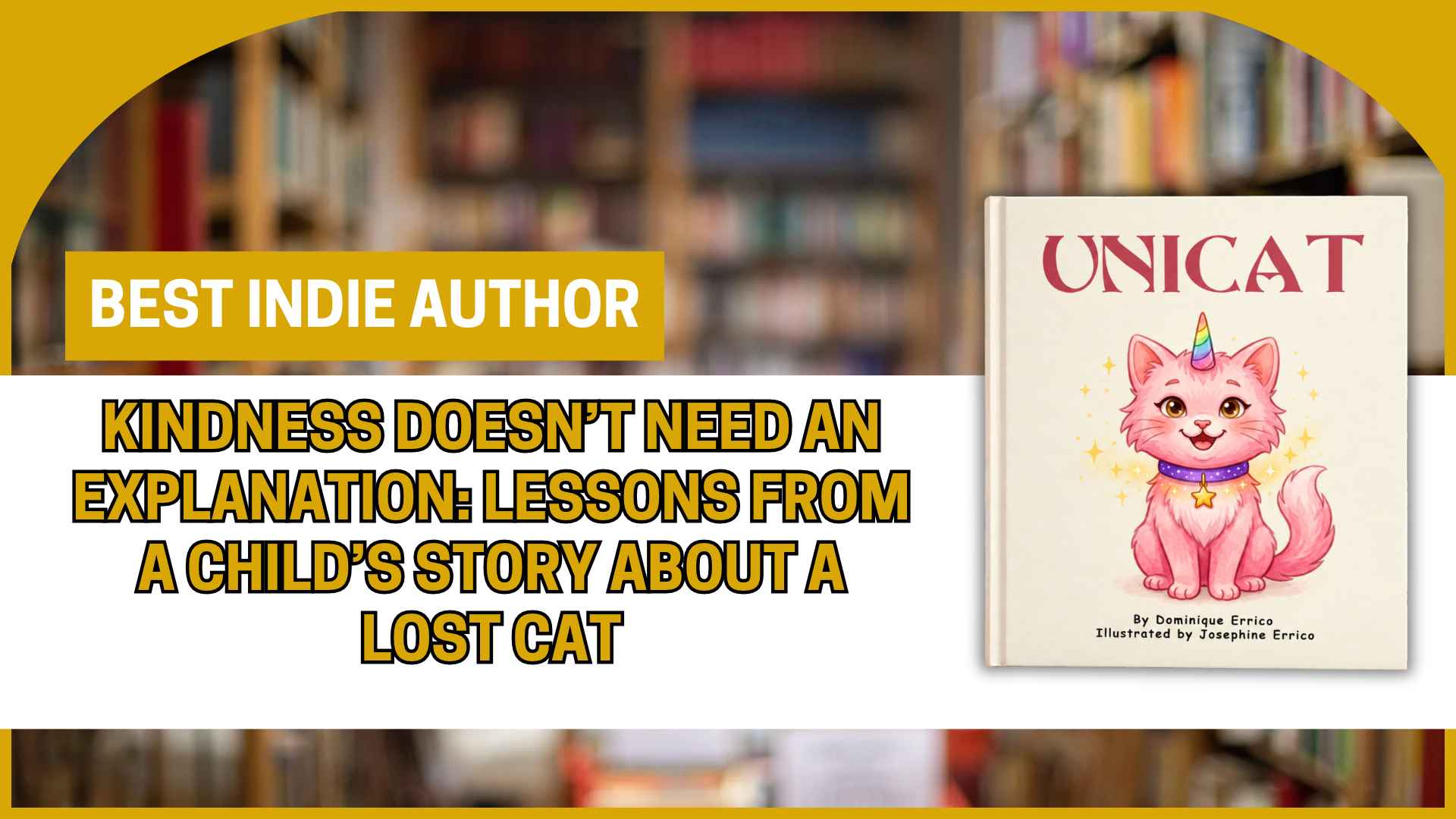
When a stranger looks lost, how many of us wait for the full story before we offer help?
We like to understand before we act. Who is this person, how did they end up here, and is it somehow their own doing? These questions feel responsible, but they can quietly become reasons to hesitate. Unicat, a children’s story by Dominique Errico, turns that habit upside down in a few short pages.
A CAT WHO CAN’T EXPLAIN HERSELF
Jess, a calico cat, touches something sparkling in a cave and feels a tingling under her fur. The diamond has changed her, though she doesn’t yet know it. Scared, she tries to go home, takes the wrong way, and ends up in a town she doesn’t recognize. She can’t say what happened or where she is. She only knows that she is frightened and wants Jessica.
Many of us have been in that position, or sat across from someone in it: a person who is upset, disoriented, or changed, and who cannot yet put it into words.
THE DOG WHO HELPED ANYWAY
Rufus, a dog, tells her they are in Gnome town and asks if she is lost. He also notices she looks different and wonders aloud what kind of cat has a horn. It is an honest question, and Jess has no answer, because she is as baffled as he is.
Dominique Errico doesn’t make Rufus wait for that mystery to be solved. Jess tells him she got scared, walked the wrong way, and wants to find her home. Rufus says to follow him and that he thinks he can help. The horn stays unexplained until Jess sees her reflection on the way.
Rufus responded to the need Jess named, not to the puzzle around it. That is a practical kind of kindness. A colleague who is struggling, a child who is upset but can’t say why: usually the need in front of us is clear enough to act on, even when the explanation isn’t.
A WELCOME WITH NO QUESTIONS ATTACHED
At the door, Jessica is calling for her cat, and Jess calls back happily. Jessica spins her around and says how much she missed her. In the closing scene of Unicat, nothing in her welcome asks Jess to account for the horn. She simply tells her that even with it, she is perfect to her.
Love that arrives before understanding tells someone they were wanted, not merely that they were tolerated. The story’s dedication wishes for a world where forgiveness softens hearts and “kindness lights the way,” and the ending shows what that looks like in practice.
HELP FIRST, UNDERSTAND LATER
There is room for curiosity, and Rufus shows it. But curiosity works best as an invitation, not a toll someone must pay before receiving help. Questions can follow the help, or sit beside it.
Unicat’s young author, Dominique Errico, was eight when she wrote it, hoping to share a message of acceptance and kindness. Adults may find it just as useful as children do.
The next time someone arrives lost or changed, try asking one question before any others: what do they need right now? The explanation can come later, or not at all.