The day begins before the employee even logs in. At 6:30 AM, a scheduling system has already analyzed workload patterns, deadlines, and team availability. It assigns tasks, prioritizes deliverables, and adjusts timelines based on predictive insights. By the time the employee opens their dashboard, the day is already structured. There is no morning planning, no time spent deciding what to do first. The system has done it all.
The employee starts with the highest-priority task. A notification appears, suggesting the optimal approach based on previous performance data. It even estimates how long the task should take. This guidance is helpful, but it also sets an invisible benchmark. Finishing slower than expected feels like falling behind, even if the work is done well.
By later, communication flows through automated channels. Messages are filtered, summarized, and categorized. Meetings are scheduled without human coordination. A virtual assistant provides reminders and updates in real time. There is less back-and-forth, fewer interruptions, and a smoother workflow.
Interactions with colleagues become less frequent. Conversations that once involved discussion and collaboration are replaced by system-generated summaries and recommendations. Decisions are made faster, but with less human exchange. The workplace becomes quieter, more streamlined, but also more distant.
At 11:00 AM, performance tracking kicks in more visibly. The system monitors output, response time, and engagement levels. It flags delays and highlights areas for improvement. Feedback is immediate, precise, and constant.
There is no waiting for a weekly review. Every action is evaluated in real time. For some, this creates clarity. For others, it creates pressure. The employee notices that even short pauses feel significant. Taking a moment to think or step away can appear as inactivity. The system does not see reflection, only time not spent producing. Gradually, breaks become shorter, and focus becomes more intense. The pace is steady, but it is also relentless.
By early afternoon, decision-making becomes increasingly guided. Suggestions appear for emails, reports, and responses. The system predicts what should be said and how it should be structured. The employee can accept these suggestions or modify them, but over time, reliance grows. Creativity begins to take a back seat to efficiency.
At 3:00 PM, fatigue sets in, but not in the traditional sense. It is not physical exhaustion from hard labor. It is cognitive strain from constant interaction with systems that demand attention, accuracy, and speed. The mind is engaged, but also overloaded.
By the end of the day, a summary report appears. It highlights achievements, identifies gaps, and sets expectations for tomorrow. The system has already adjusted the next day’s schedule based on today’s performance. The cycle continues.
The employee logs off, but the experience lingers. There is a sense of accomplishment. Tasks were completed efficiently. Goals were met. The system worked as intended.
This is the reality of a workplace shaped by intelligent systems. It offers speed, precision, and structure, but it also introduces new challenges that are not always immediately visible. The balance between efficiency and well-being becomes harder to maintain. The line between support and control begins to blur.
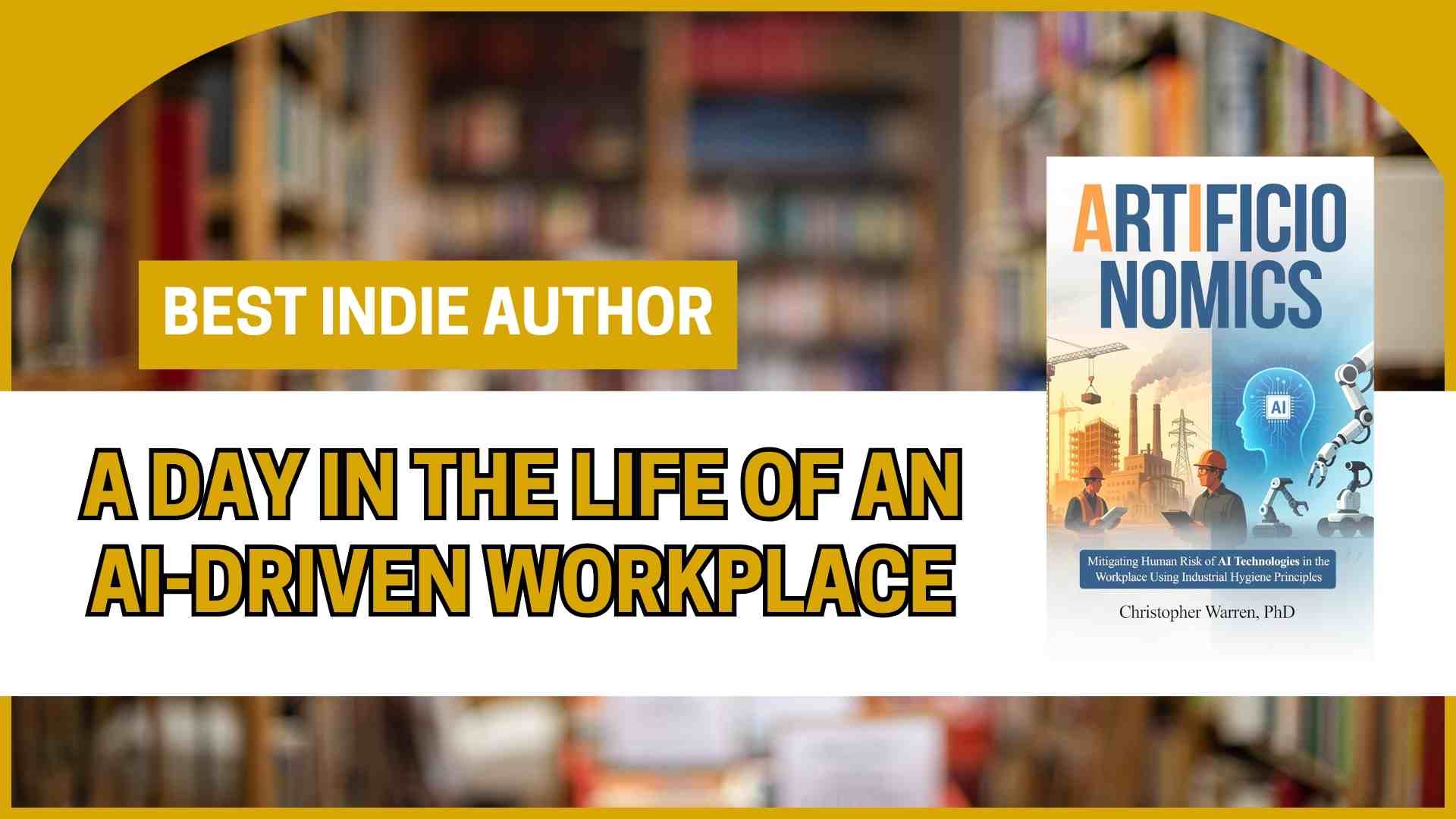
This is exactly the landscape explored in Artificionomics: Mitigating Human Risk of AI Technologies in the Workplace by Christopher Warren, PhD. The book goes beyond the surface of technological advancement and examines how these systems reshape the human experience at work. It provides a framework for understanding not just how these environments operate, but how they affect the people within them.
The future of work is not just about what systems can do. It is about how they are designed to coexist with human needs, limitations, and strengths.
Get your Copy Now on Amazon: https://www.amazon.com/dp/B0GFY4RL6B