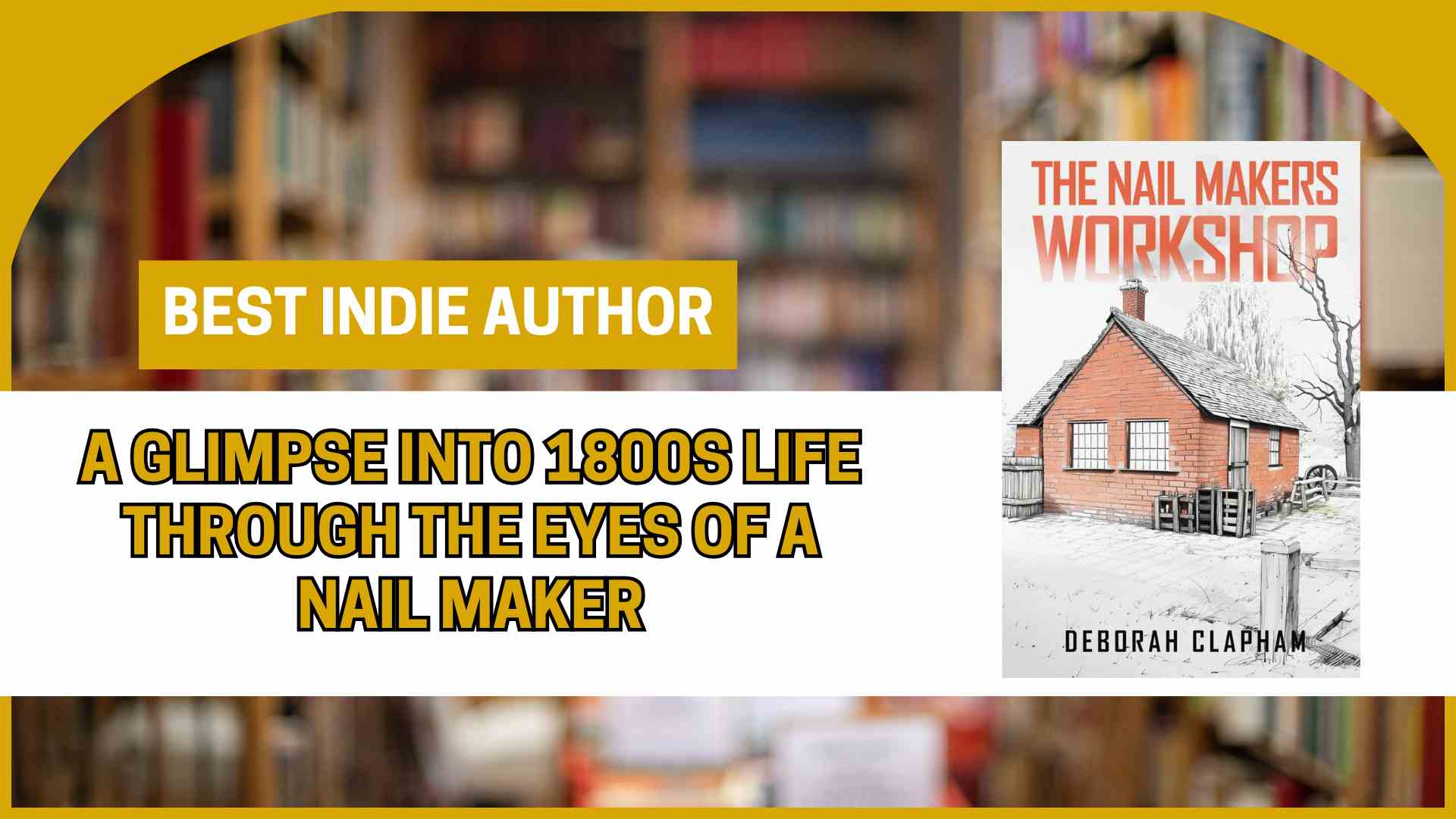
Emily’s Adventures: The Nail Makers Workshop by Debbie Clapham offers readers a rare window into the everyday life of a 1800s nail maker’s family. Set in a time when industrialization was beginning to change the landscape of work, this story captures not only the mechanics of nail making but also the emotional depth of those who lived by it. Through Emily’s young, inquisitive eyes, the book invites us into a world where family, hard work, and perseverance were the cornerstones of survival.
The story unfolds in a small workshop where Emily’s father, brother, and mother toil long hours making nails. The sheer physicality of the work is felt in every detail from the clang of the hammer to the soot that coats their skin at the end of each day. The family’s world is one of constant labor, where every task, no matter how small, is essential to keeping their livelihood intact. Yet, Clapham’s portrayal doesn’t glorify the hardships; instead, she brings out the deep human emotions behind each gesture, each sacrifice, and each moment of connection.
What makes Emily’s Adventures stand out is its grounded, authentic representation of life in the 1800s. Clapham’s attention to historical detail enriches the narrative, offering a snapshot of a time when industrial workshops were places of both creation and struggle. The workshop itself, where coal fires burn hot to heat metal rods and where the nail maker’s tools are worn with use, is brought to life with vivid descriptions. Through Emily’s eyes, readers gain insight not just into the trade but into the intimate, family-centered dynamics of the nail maker’s life. Women and children played crucial roles in this world, as evidenced by Emily’s own involvement in helping her family, though not in the same capacity as her father.
While much of the book centers around the technicalities of the craft, it is the human stories that linger long after the book is closed. The economic struggles of the nail maker’s family are particularly poignant, as they are often paid in tokens rather than money, forcing them to buy subpar goods in a cycle of dependence. These struggles are not romanticized but shown in all their complexity, providing a real, raw look at what it meant to work for a living in a time of growing industrialization. Clapham allows the readers to see both the beauty and the hardships of the era without losing sight of the very human lives at its core.
At the heart of Emily’s Adventures is the universal theme of family. Emily’s observations of her father, Tom, and her mother working side by side illustrate the tight-knit relationships that hold the family together. Despite the physical toll of their labor, there is warmth in the way they support one another. Emily’s quiet reflections on her family’s sacrifices, and her yearning to learn more about the world beyond the workshop, provide a delicate counterpoint to the harshness of their daily existence. Through her, we understand not just the details of nail-making but the emotional resilience that defines a family surviving through difficult times.
Through Emily’s story, Clapham paints a vivid, heartfelt picture of life in the 1800s. It’s a time when families like hers built their lives with their hands, their hearts, and their spirits. Emily’s Adventures: The Nail Makers Workshop is not only an intimate look at a bygone craft, but a powerful reminder of the strength and endurance of ordinary people. It’s a story of hard work, love, and the unyielding drive to survive, offering readers a lasting glimpse into a world that shaped the modern era.
Explore this book, available on Amazon: https://www.amazon.co.uk/dp/B0G63Y8Q6B/