Stories about pet loss often begin with heartbreak, but the most meaningful ones do not end there. They remind us that grief can coexist with gratitude, that painful memories can slowly become comforting ones and that love may continue long after a beloved animal is gone.
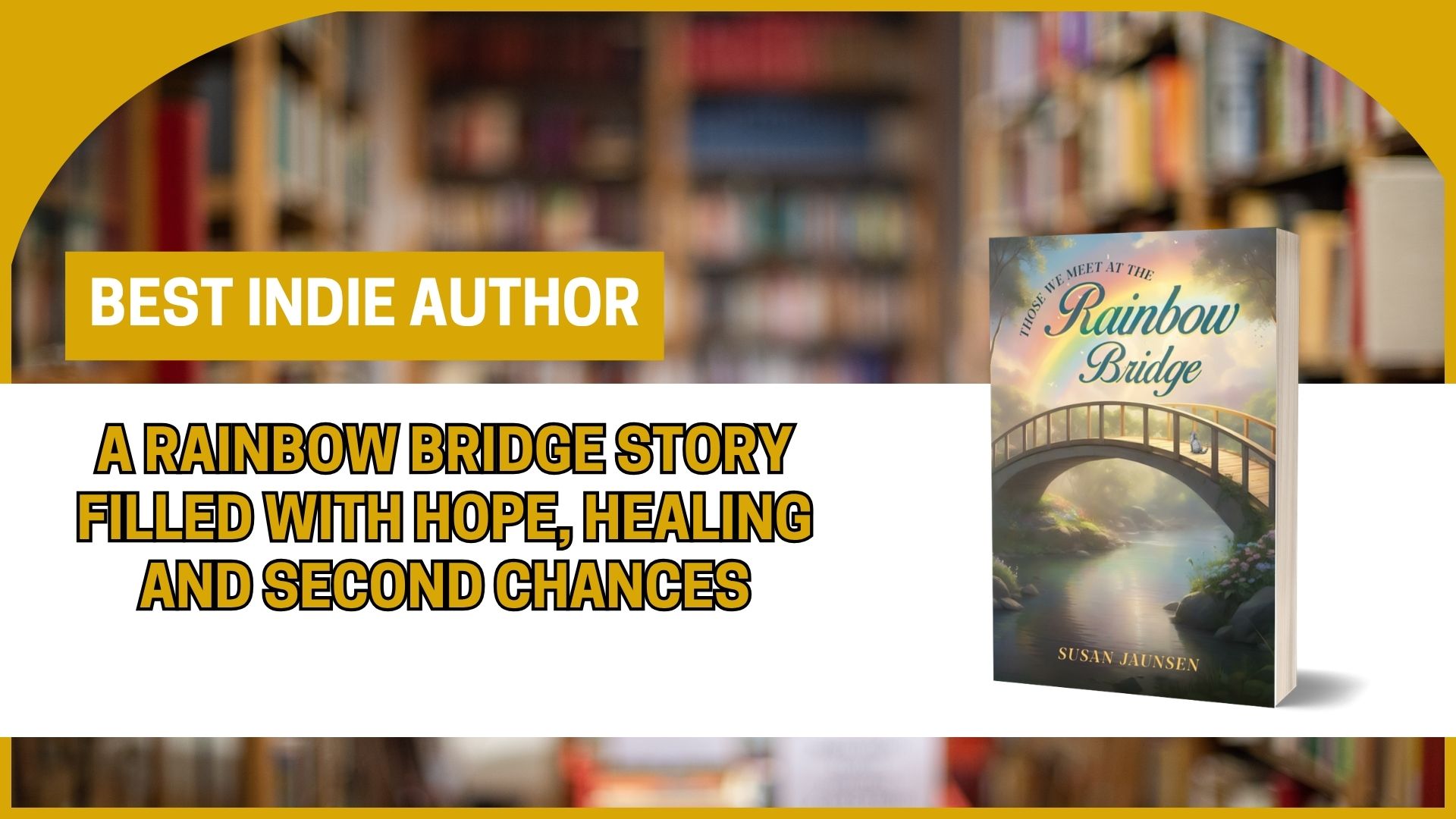
Susan Jaunsen’s Those We Meet at the Rainbow Bridge is one such story. Blending personal memories, animal rescue experiences, poetry, spiritual reflection and imagined reunions, the book explores what happens when compassion meets loss and when hope refuses to disappear.
The Rainbow Bridge is presented as a peaceful place where animals are restored to health and freed from the pain they experienced in life. Yet Jaunsen’s vision is not only about what comes after death. It is also about the second chances animals receive while they are still here.
Beatrice and Bonnie, two Netherland Dwarf rabbits, are among the book’s most memorable examples. Left outside in an unsuitable glass enclosure during heavy rain, they are cold, wet and vulnerable. Jaunsen steps in, brings them to safety, learns about their care and helps them reach a loving home. Their rescue demonstrates how quickly a life can change when one person refuses to look away.
Clarence, a neglected cockatoo, represents another kind of second chance. Confined in a dark laundry room without proper stimulation or companionship, he has suffered physically and emotionally. Jaunsen speaks up for him and imagines a hopeful future in which he receives specialized care, forms friendships with other birds and learns to trust again. His story suggests that even deeply wounded animals can begin to heal when they are treated with patience and dignity.
The book also introduces readers to feral and abandoned cats, including Siam, Smokey, Mischief, Little Boy, Chloe, Shadow and Oliver. Their journeys involve humane trapping, veterinary treatment, safe relocation, adoption and the slow work of building trust. Some find permanent homes, while others receive food, shelter and protection within managed outdoor colonies.
These stories show that healing does not always happen instantly. It may begin with a meal, a safe room, a medical appointment or a gentle hand offered repeatedly until fear begins to fade.
At the emotional center of the book is Willow, Jaunsen’s beloved grey-and-white cat. Willow is her closest animal companion, offering comfort during difficult moments and becoming part of the rhythm of her everyday life. When he dies, the grief is profound.
Later, after a serious car accident, Jaunsen journeys to the Rainbow Bridge. She reunites with many animals she once loved and helped, but Willow is missing. The question “Where is Willow?” leads to the book’s deepest exploration of attachment, release and spiritual connection.
Willow’s story ultimately offers another kind of second chance not a return to the past, but a new understanding of love. Jaunsen comes to believe that he remained close until she was ready to let him move forward.
Those We Meet at the Rainbow Bridge acknowledges the pain of goodbye while offering readers something gentler to hold onto. It suggests that healing does not mean forgetting and that release does not mean love has ended.
Filled with rescued animals, restored trust and enduring bonds, Susan Jaunsen’s book reminds us that every act of compassion creates hope and that some connections may be strong enough to carry us beyond a lifetime.