
Long before a woman could simply enroll in medical school, earn a degree and hang a sign outside her office, healing often depended on something much less formal: experience, observation, inherited knowledge and courage.
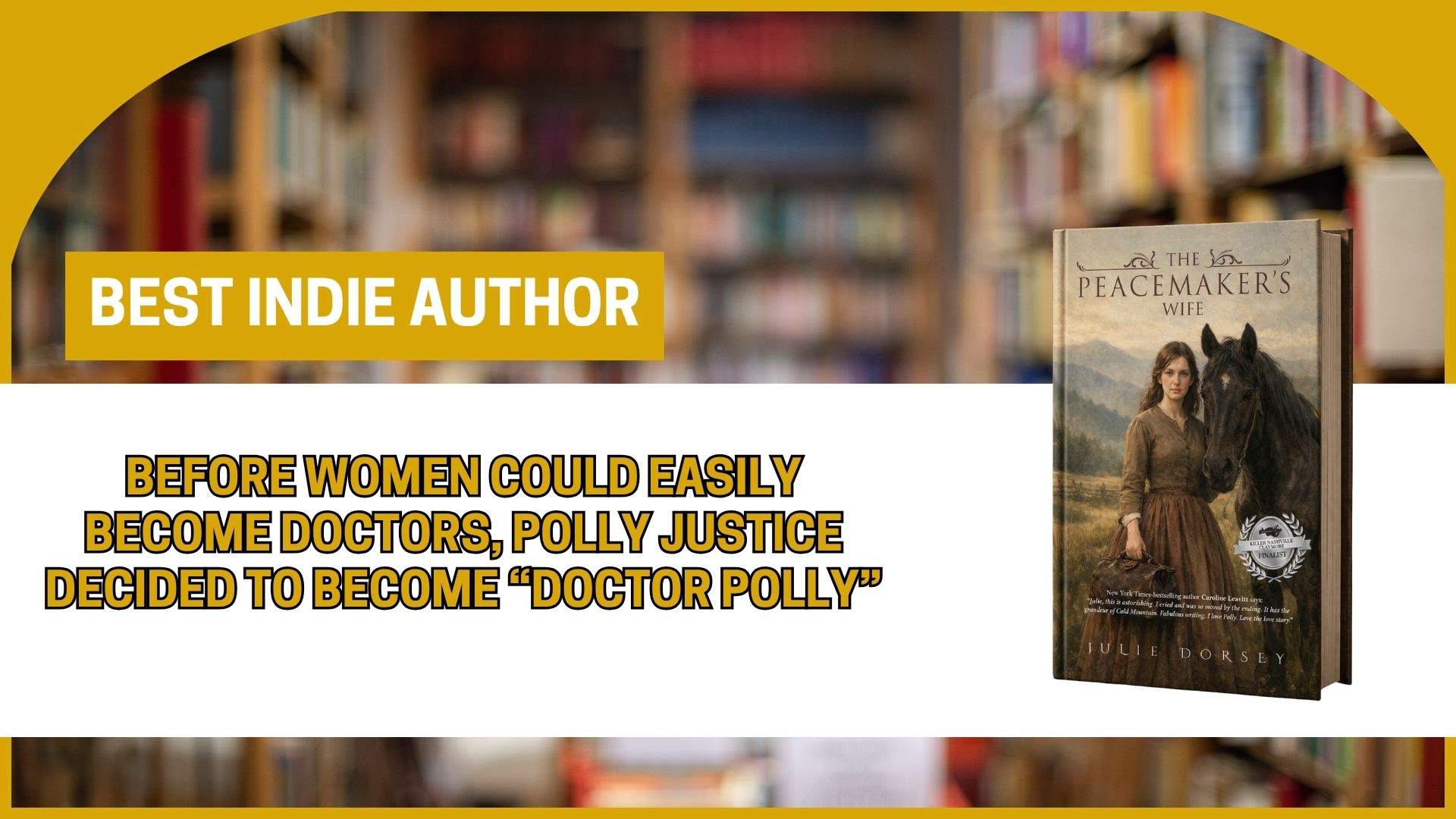
That is the world Polly Justice enters in Julie Dorsey’s historical novel The Peacemaker’s Wife.
Polly is not born into a profession. She claims one.
Her determination to become a healer grows from tragedy. As a girl, she helps during the birth of her twin sisters, Leah and Lucindy. When Lucindy dies, Polly carries the guilt for years, convinced that ignorance cost the baby her life.
Instead of turning away from childbirth, Polly makes a powerful decision: she will learn.
She studies reading and writing. She works through medical books. She seeks out Nan Clark, the experienced “granny woman” of Blue Ridge and learns the practical knowledge that keeps families alive in a place where trained physicians are not always nearby or affordable.
Nan teaches her about herbs, roots, salves, tinctures, wounds, sickness and childbirth. Polly watches carefully, asks questions and practices whenever she can.
But even as she learns, Polly knows she wants something more than simply assisting another healer.
She wants an identity of her own.
She decides she will be called “Doctor Polly.”
For a young woman living in nineteenth-century North Carolina, that choice carries weight.
Polly is already expected to be a wife first. Her husband, John Justice, is admired throughout Blue Ridge because of his ability to settle disputes. His reputation earns him the nickname “The Peacemaker,” and as his standing grows, Polly is increasingly expected to fit neatly into the role of the peacemaker’s wife.
She refuses.
John wants her to stay home, care for the children and put his responsibilities ahead of her own. Polly sees things differently. She believes healing people and delivering babies is not a hobby she can abandon whenever marriage becomes inconvenient.
It is her calling.
As the novel unfolds, that calling becomes real work.
Polly treats cuts, fevers, broken bones, stomach complaints and other ailments. She helps women through difficult births. She learns to make decisions quickly, knowing that there may be no one else to turn to if something goes wrong.
Slowly, the people around her begin to trust her.
And with that trust comes responsibility.
Julie Dorsey makes Polly compelling because she does not portray her as effortlessly heroic. Polly is frightened at times. She doubts herself. She remembers Lucindy. She worries about making mistakes.
But she keeps going.
That persistence becomes even more powerful because her medical work unfolds alongside a troubled marriage, forbidden love, mysterious deaths and the upheaval of the Civil War. Polly is not learning in a peaceful world. She is learning while surviving it.
That is what makes “Doctor Polly” such a memorable figure.
She is not waiting for society to hand her permission.
She is deciding, through study, work and courage, that she has something valuable to give.
In The Peacemaker’s Wife, Julie Dorsey turns Polly Justice’s journey into more than a story about medicine. It becomes a story about a woman refusing to let the limits of her time determine the limits of her life.
Before the world was ready to make room for women like her, Polly was already becoming Doctor Polly.


