For decades, Chinua Achebe’s novels have been read through a familiar lens. Critics have often approached his work as a sociological record, a window into precolonial African life, customs, and cultural structures. While this perspective has value, it does not go far enough. It captures the surface but misses the deeper current running beneath. Achebe’s narratives are not only about society. They are about the human condition, the sacred, and the search for meaning.
To read Achebe solely as a cultural observer is to overlook the profound questions embedded in his storytelling. His work wrestles with identity, destiny, moral responsibility, and the relationship between the human and the divine. These are not merely social concerns. They belong to a wider field that touches on theology and philosophical reflection.
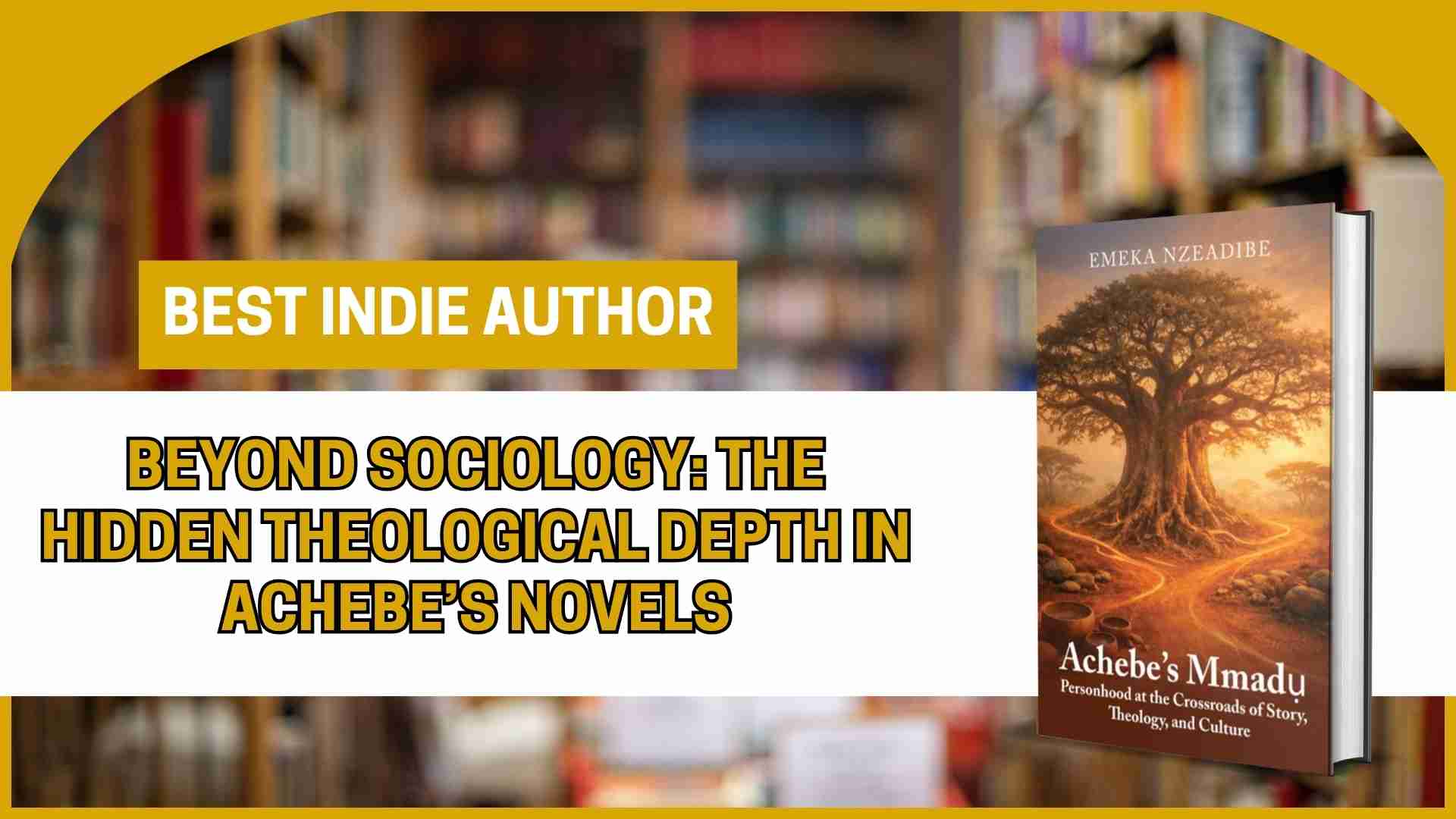
This deeper dimension is brought into focus in Achebe’s Mmadụ: Personhood at the Crossroads of Story, Theology, and Culture by Emeka Nzeadibe. The book reveals that Achebe’s literary world carries a layered understanding of existence, one where human life is inseparable from spiritual reality. His characters do not simply act within a social system. They move within a framework shaped by unseen forces, moral order, and a sense of transcendence.
Achebe’s storytelling presents a world where the visible and invisible intersect. Human actions are not confined to immediate consequences. They are connected to a larger order that includes spiritual influence and moral balance. Decisions carry weight beyond the present moment, affecting not only the individual but also the harmony of the wider world.
This is where the theological depth becomes clear. Achebe explores what it means to be human in relation to something greater than the self. His narratives raise questions about purpose, accountability, and the limits of human control. Characters are often caught between personal desire and a broader structure of meaning that shapes their fate. Their struggles reflect a deeper tension between human agency and a guiding force that cannot be ignored.
The concept of the human person in Achebe’s work is also far from simple. It is not reduced to physical existence or social identity. It includes an inner dimension that connects the individual to a larger reality. This understanding moves beyond material explanations and enters a space where life is seen as both tangible and spiritual.
What makes this perspective powerful is its balance. Achebe does not present a world of rigid determinism. Human beings are not passive figures controlled entirely by external forces. They act, choose, and shape their lives. Yet, their choices unfold within a structure that demands awareness and responsibility. This interplay creates a rich and complex vision of existence that cannot be explained through sociology alone.
The limitation of a purely sociological reading becomes evident when one considers the role of meaning in Achebe’s narratives. His stories are not only about how people live but about why they live the way they do. They explore values, beliefs, and the underlying assumptions that give life direction. Without engaging this deeper layer, the full significance of his work remains incomplete.
Achebe’s Mmadụ: Personhood at the Crossroads of Story, Theology, and Culture invites readers to move beyond surface interpretation and engage with this deeper dimension. It shows that Achebe’s work contributes to a broader conversation about humanity, one that includes theology, philosophy, and cultural reflection. The book positions his novels not just as literary achievements but as sources of insight into the nature of the human person.
In a time when discussions about identity often remain confined to social categories, this perspective offers something more expansive. It reminds readers that understanding humanity requires looking beyond external structures and into the deeper questions that shape existence.
Achebe’s novels do not simply describe a world. They reveal a vision of life where meaning, responsibility, and the search for purpose are central. To recognize this is to see his work in a new light, one that extends far beyond sociology and into the heart of what it means to be human.
For More Details: https://www.librarything.com/profile/EmekaNzeadibe