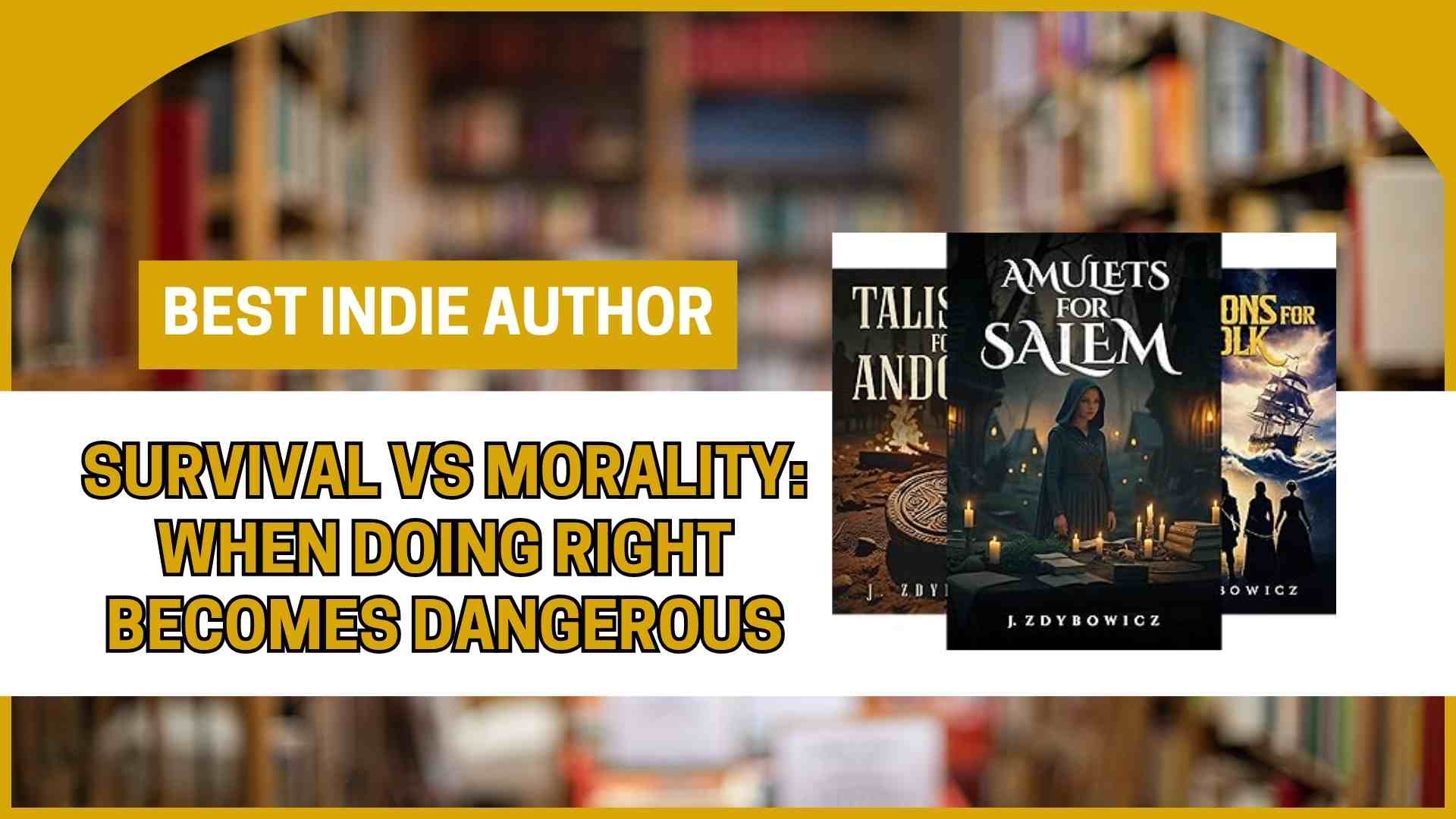
There are times in history where survival and morality stand on opposite sides of the same choice. In such moments, doing what is right is not appreciated. It is punished. Fear governs communities, truth becomes irrelevant, and silence often feels safer than courage. This tension lies at the heart of J. Zdybowicz’s Salem-inspired series, where every decision carries consequences that can mean life or death.
In a world shaped by suspicion, survival depends on blending in. Speaking too boldly, knowing too much, or standing apart in any way can draw attention. The safest path is to maintain silence, to avoid conflict, and to let events unfold without interference. Yet morality does not allow such distance. When innocent lives are threatened, the question becomes unavoidable. Is survival enough if it comes at the cost of doing nothing?
The series places its characters directly inside this conflict. They have already seen what happens when fear takes control. They have seen accusations built on whispering, justice replaced by hysteria, and communities driven by the need to blame rather than understand. These experiences shape their instincts. Survival has taught them caution. It has taught them to hide, to observe, and to move carefully within a world that turns quickly against those who stand out.
But morality introduces a different kind of pressure. It challenges the idea of self-preservation. When another life is at risk, silence becomes a choice rather than a necessity. The characters are forced to confront a difficult truth. Avoiding danger may keep them alive, but it also allows that danger to continue unchecked. This realization creates a shift in perspective. Survival is no longer the only goal.
In such settings morality becomes active rather than passive. It demands action, even when that action carries consequences. The characters begin to accept that doing what is right may cost them the very safety they have tried to maintain. This acceptance does not come easily. It is shaped by doubt, fear, and the weight of past experience. Yet it is precisely this struggle that gives their choices meaning.
Another layer of this conflict lies in perception. In the world of the series, doing good is not always recognized as such. Acts of healing, protection, or intervention can be misinterpreted as something dangerous. Intentions are irrelevant in the face of fear. What matters is how actions are perceived by others. This creates a powerful tension where morality and misunderstanding collide.
The result is a story that challenges the reader to consider their own response in such a situation. Would survival take priority? Or would the need to act outweigh the risk? The series does not offer easy answers. Instead, it presents a world where both choices carry consequences, and where the line between right and safe is constantly shifting.
J. Zdybowicz’s Salem-inspired series stands out because it does not treat morality as a simple virtue. It presents it as a burden, one that requires courage not just to hold, but to act upon. In a setting where fear dictates behavior, choosing to do what is right becomes the most dangerous decision of all.
For readers, this creates a story that is both gripping and thought provoking. It is not just about survival or heroism. It is about the cost of each, and the moment when a person must decide which matters more.
Head to Amazon to purchase your copy: https://www.amazon.com/dp/B0FTCTZXN7