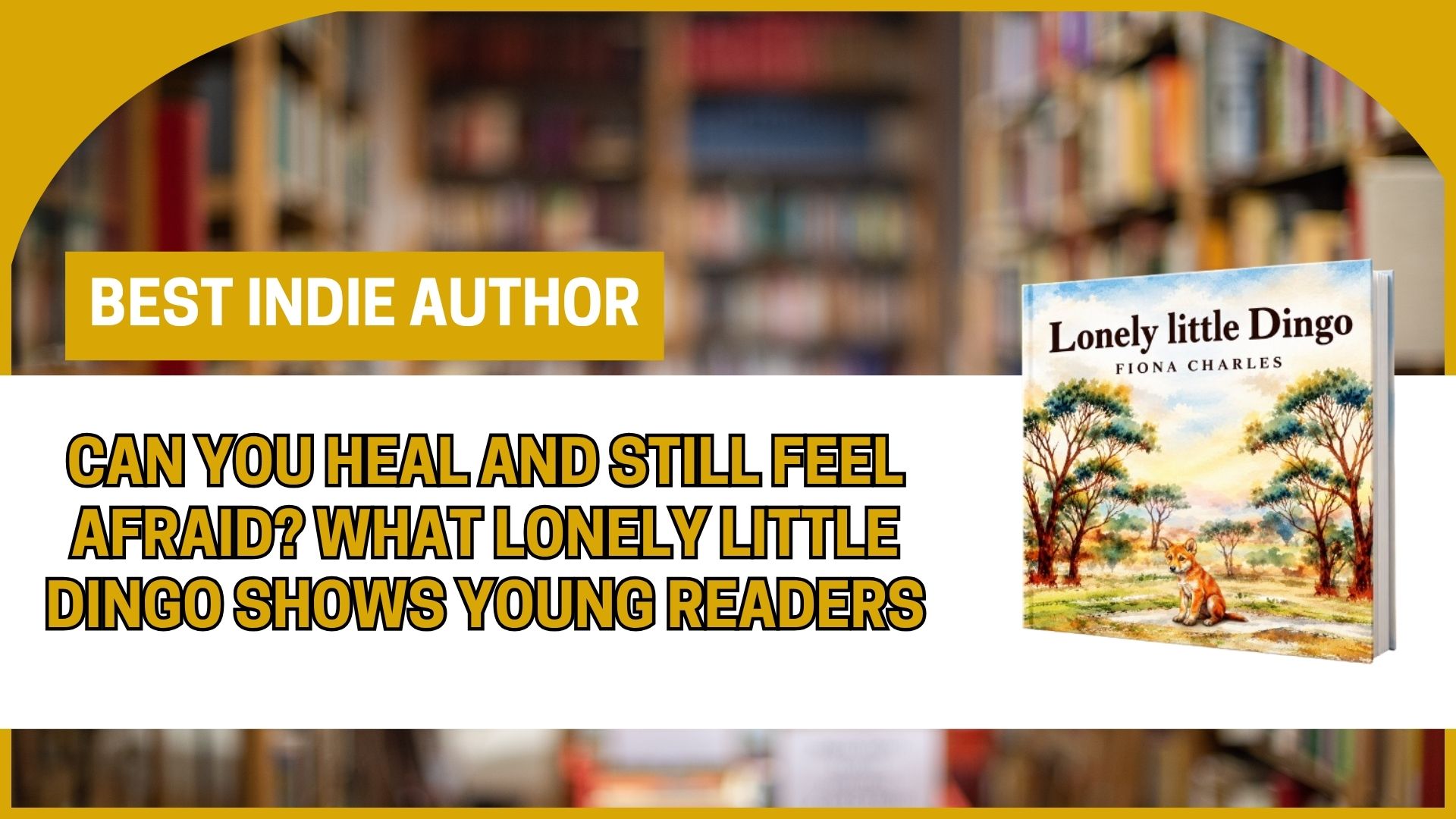
Healing is often described as if it happens in a straight line. Something painful occurs, help arrives and everything becomes better. But emotions do not always work that way. Fiona Charles’s Lonely Little Dingo gives young readers a gentler, more realistic message: it is possible to be healing and still feel afraid.
Little Dingo’s story begins in a crowded den beneath the Southern Cross. From his earliest days, he is surrounded by uncertainty. He hears growling, experiences snapping and biting, feels hunger and struggles to understand who will care for him.
As he grows older, he begins exploring beyond the den. Outside, the atmosphere feels calmer and each small journey gives him more confidence. For the first time, Little Dingo begins to experience a world that is not defined entirely by chaos.
Then another frightening experience changes his path. A trap catches his hind leg, leaving him in sharp pain and unable to run or move. Hungry, weak and exhausted, Little Dingo eventually falls asleep while waiting for his fate.
Rescue comes when unfamiliar hands carry him to a warm, clean place. His new surroundings provide food, care and the chance for his injured body to recover. With a full belly and clean coat, Little Dingo grows stronger. But emotionally, things are far more complicated.
He does not suddenly become trusting simply because he is safe.
Little Dingo greets his carers with hissing and bared teeth. He tears apart his bed, strikes at the cage and remains constantly cautious.
For young readers, this is an important part of the story. Fear does not necessarily disappear the moment circumstances improve. Someone can be receiving help and still feel nervous. They can be physically safe and still remember what frightened them before.
Charles makes that point even clearer when Little Dingo remembers the disorder of his original den. The biting and growling replay in his mind, bringing sadness and anger back with them. At the same time, he still longs to see his fractured family again.
These mixed emotions make Little Dingo especially relatable. Children may not share his exact experiences, but many will understand what it means to feel nervous after something upsetting, to miss something complicated or to need time before trusting a new situation.
That is one of the strengths of Lonely Little Dingo. It does not tell young readers that bravery means never being scared. Instead, it suggests that courage can exist alongside fear.
The book’s ending reinforces that idea. Little Dingo is released and left to face an uncertain future. Beneath the familiar Southern Cross, he does not know exactly what lies ahead. Even so, he walks forward, with hope as his companion.
For parents, caregivers and educators, Lonely Little Dingo can open meaningful conversations about fear, recovery, trust and resilience. It reminds children that healing may take time and that feeling afraid does not mean they are not making progress.
Sometimes moving forward while still carrying fear is one of the bravest things anyone can do.
Lonely Little Dingo by Fiona Charles is available now on Amazon: https://www.amazon.com/dp/B0HLYCX8X3