The difference between panic and productivity in an emergency department is very slim indeed. One minute all seems normal, and within a matter of seconds, it’s a matter of life and death, and suddenly there is an urgency that takes hold of you. Everything becomes important and relevant. When the body undergoes such changes, the nurse must have control over what goes on in his or her own head.
It may seem strange to discuss the way the body responds during an emergency situation. However, it is necessary to understand that the physiological processes going on will be completely overwhelming if not kept under control. The heart races, blood pressure rises, and the body releases a rush of adrenaline , and these are normal responses to a stressful event.
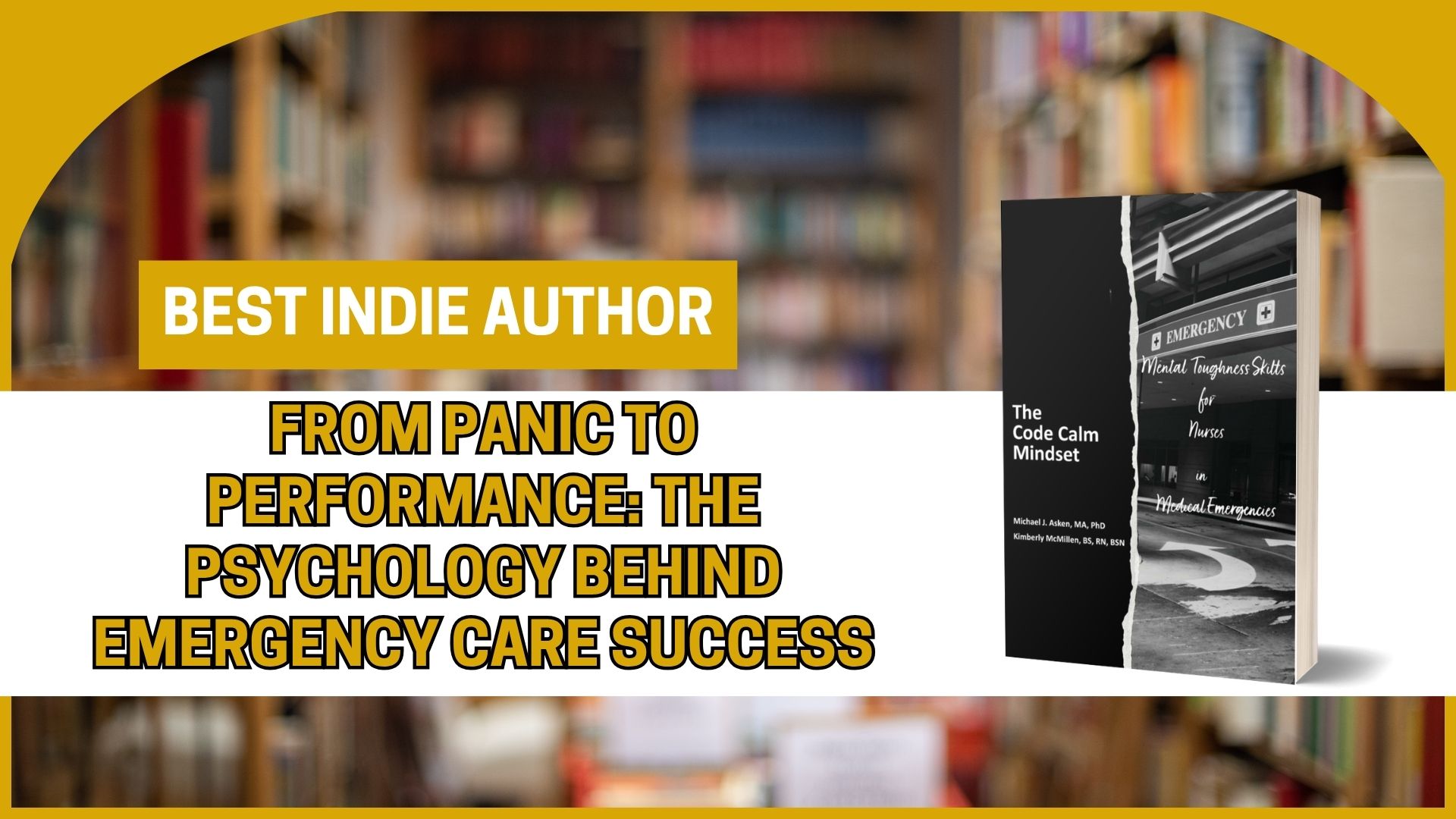
The Code Calm Mindset by Michael J. Asken and Kimberly McMillen looks at this transition. The book shows that in emergencies, it is not only about knowing what should be done; it is also about mental preparedness to take appropriate actions. It turns out that the ability to switch from hesitation to action relies on the capability to control one’s thoughts and emotions in an optimal way.
For instance, a nurse entering a code will be able to apply all knowledge and skills because of proper training. However, she or he might still doubt him or herself . For example, the nurse could think, “What if I fail to act properly?” or “What if I lose consciousness?” This is completely natural. The question is how well one will be able to overcome those doubts. As explained in The Code Calm Mindset a strong mind is necessary to be successful in such situations.
There is a deeply human side to this process. Behind every calm response is a person who feels the weight of responsibility. Nurses are not immune to stress; they experience it intensely. They remember past situations, carry emotional burdens, and strive to meet the expectations of patients, families, and colleagues. Michael J. Asken and Kimberly McMillen emphasize that mental toughness is not about eliminating these feelings but learning how to manage them effectively.
It is important to understand that the change from a state of panic to performance comes through training. Through psychological interventions, which are quite simple, a major transformation takes place. Controlling one’s breathing, engaging in self-talk to dispel doubts, and replacing them with self-confidence, and rehearsing actions mentally prepares a professional to deal with critical situations. All these methods result in establishing a certain degree of control, making it possible to act rationally.
The significance of this process is that the resulting transformation affects patient care. During an emergency, time is of the essence, but clarity of thinking can save lives. However, the importance of this transformation does not lie only in its effects. It involves empathy because being composed means not only executing procedures effectively; it also implies reassuring scared patients or anxious family members.
The Code Calm Mindset by Michael J. Asken and Kimberly McMillen highlights that true success in emergency care is not just about technical excellence. It is about performing under pressure when everything feels uncertain. It is about turning fear into focus and chaos into controlled action.
In the end, every healthcare professional will face moments where panic tries to take over. But with the right mindset, those moments can be transformed. From panic to performance is not just a shift; it is a skill. And in emergency care, it is one of the most powerful skills of all.
Available on Amazon : https://www.amazon.com/dp/B0CQF13ZRH/