
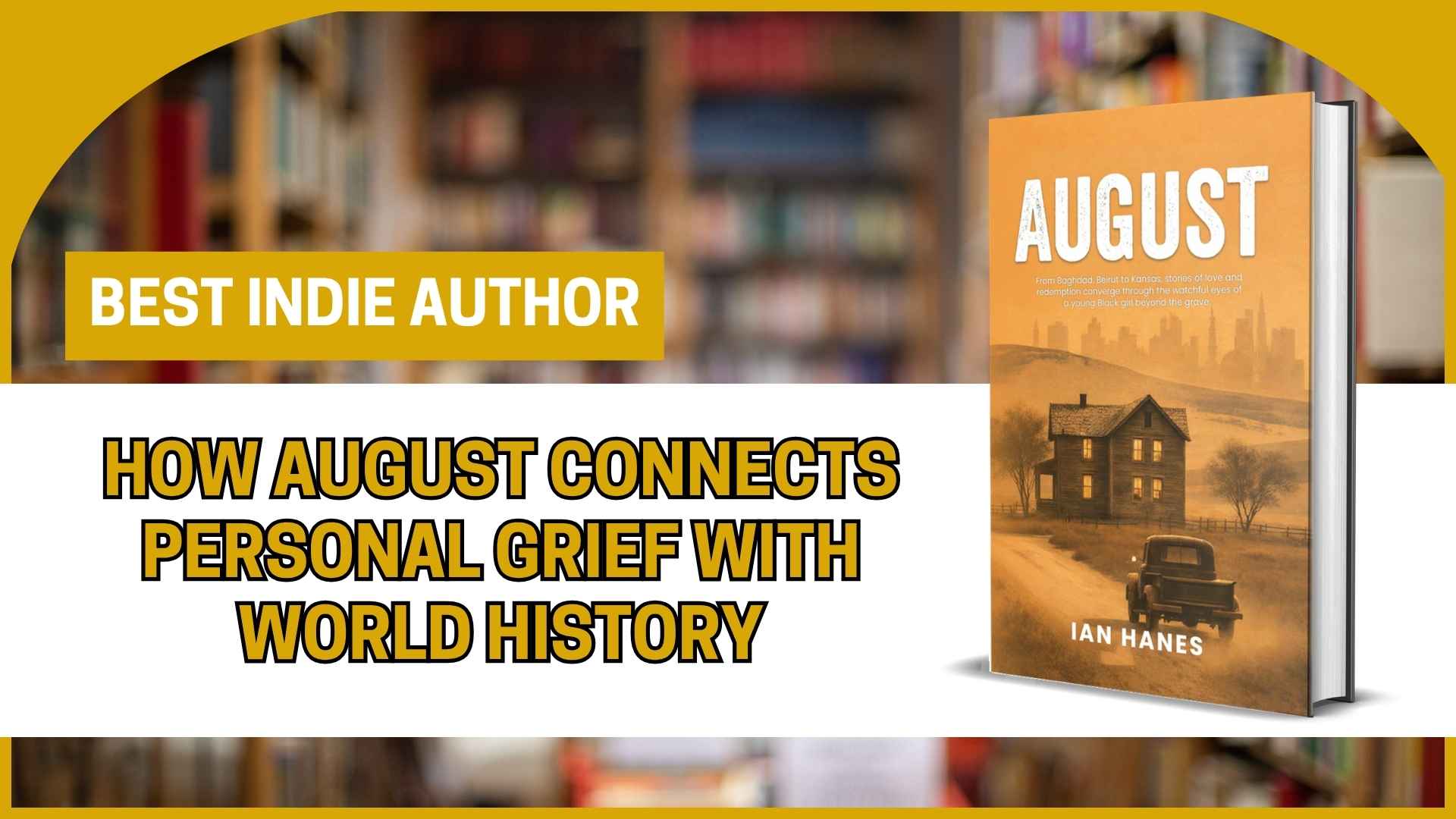
History is often told through wars, elections, disasters, and the decisions of powerful people. Grief is usually treated as something private, carried quietly within families. In August: We Carry What We Bury, Ian Hanes brings those two forms of memory together.
At the centre of the novel is August Harper, a farmer from Lebanon, Kansas, whose life is permanently altered by the death of Rose, the girl he loved as a teenager. Her loss shapes the opportunities he refuses, the place he chooses to remain, and the silence he carries into adulthood.
Yet Rose’s death does not exist apart from history.
Their relationship develops during the 1970s, when racial prejudice still determines where people may sit, whom they may love, and how safely they can move through a small community. Rose dreams of becoming a civil rights lawyer, but the world around her refuses to recognise the full value of her life. Her personal tragedy reflects a wider history of inequality, erasure, and justice denied.
From rural Kansas, the novel moves across countries and generations. Baghdad appears through the childhood of Layla, whose family is broken by political fear and forced disappearance. Her escape from Iraq connects one child’s terror with dictatorship, war, and migration.
Beirut carries another form of grief. The city holds memories of ancient trade, civil conflict, displacement, and repeated destruction. When the port explosion tears through homes and businesses, national failure becomes personal loss. Families do not experience history as a distant event. They experience it through shattered windows, missing loved ones, ruined livelihoods, and streets that no longer look familiar.
The COVID 19 pandemic further expands the novel’s reach. Illness enters hospitals, farms, cafés, and homes. Political decisions become matters of survival. Public statistics are restored to human scale through individual fear, loneliness, courage, and sacrifice.
By placing August’s private sorrow beside these events, the novel shows that history is not separate from ordinary life. It enters classrooms, marriages, family farms, medical wards, border crossings, and burial grounds.
People carry world events in deeply personal ways. They remember where they were when a city exploded, when a government fell, when a loved one disappeared, or when illness changed daily life.
August is a novel about what remains after those moments. It follows people who continue working, loving, raising children, and seeking justice while carrying losses that history books may reduce to a sentence.
Through Kansas, Baghdad, Beirut, and beyond, Ian Hanes reveals that world history is ultimately made from individual lives, and every great event leaves someone grieving in its wake.


