
A child who leaves home because of danger rarely leaves it behind.
The language, streets, family traditions, and familiar routines may disappear, but they continue to influence the person that child becomes. Safety may arrive in a new country, yet belonging often takes much longer.
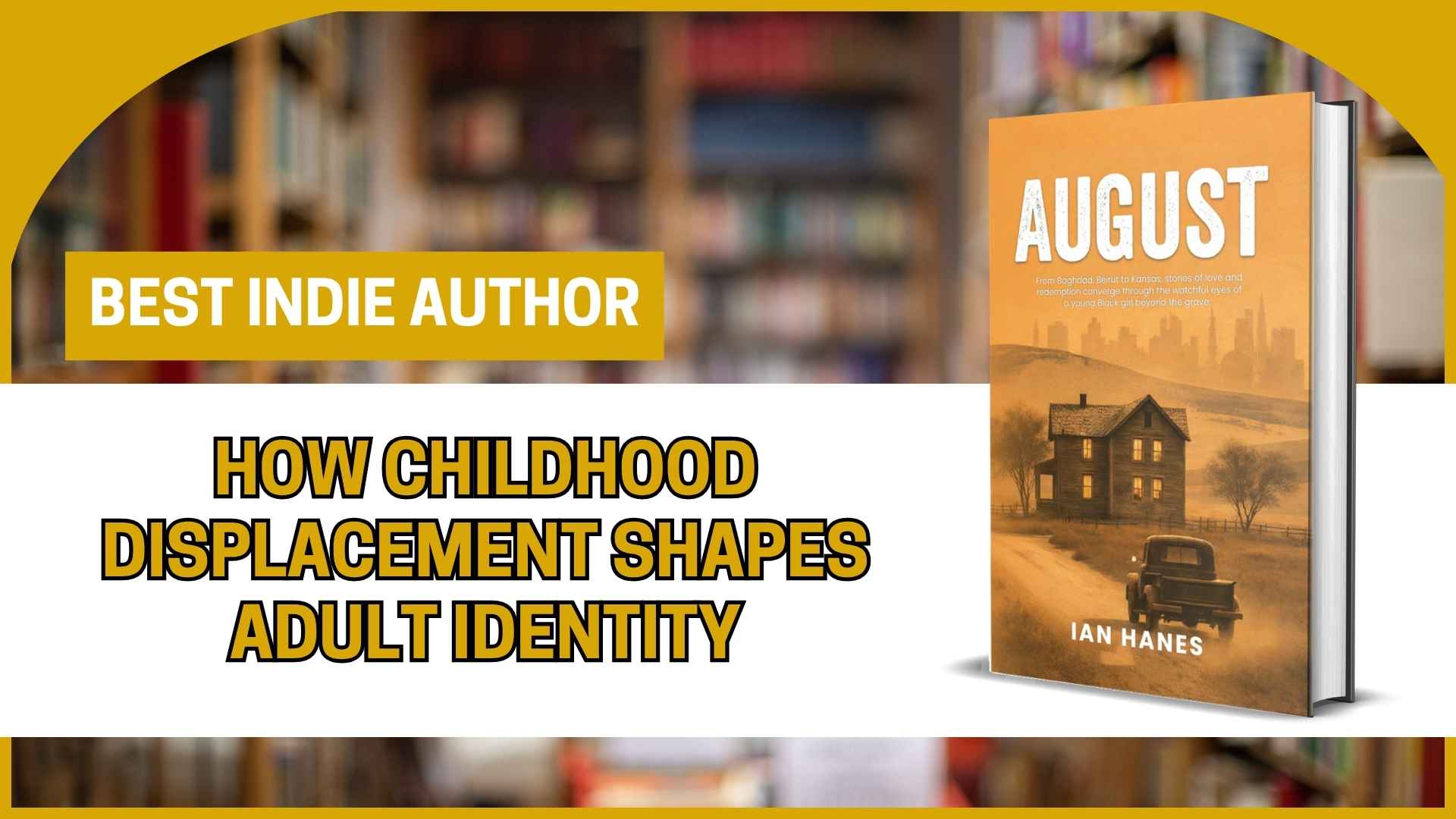
In August: We Carry What We Bury, Ian Hanes explores this truth through Layla Haddad, whose early years are shaped by war, fear, and forced migration. Born in Baghdad, she loses the ordinary childhood every young person deserves. Political violence, uncertainty, and the disappearance of her father force her mother to make an impossible choice. Together they escape Iraq and begin again in Lebanon.
Although Beirut offers refuge, it cannot erase memory.
Layla grows up between two worlds. Iraq remains the place of her earliest memories, her father’s absence, and the life that was taken from her. Beirut becomes the city where she studies, works, falls in love, and creates a family. Rather than replacing one home with another, she learns to carry both.
This divided identity shapes every part of her character. She values stability because she has known uncertainty. She welcomes strangers because she remembers what it felt like to arrive with nothing. She builds Café Layali into more than a business. It becomes a place where people are greeted warmly, listened to, and treated with dignity. For Layla, creating a sense of home for others is a way of healing something within herself.
Her childhood also teaches resilience. She understands that security cannot be taken for granted and that ordinary moments, sharing coffee, preparing food, laughing with neighbours, deserve appreciation because they were once impossible.
Yet displacement leaves invisible scars. Even after years in Beirut, Layla carries questions about identity, family, and belonging. She knows that legal documents may change, addresses may change, and borders may change, but memory does not. The past travels with those who have been forced to leave it behind.
This experience is shared by millions around the world. Children displaced by war, persecution, or political unrest often become adults who value peace deeply while carrying memories that others cannot easily understand. Their strength is real, but so is the weight they continue to bear.
In August, Layla’s journey stands beside stories from Kansas, Baghdad, and beyond, showing that identity is shaped not only by where we are born, but also by the places that welcome us when we have nowhere else to go.
It is a moving reminder that home is not always the place where life begins. Sometimes it is the place where hope is patiently rebuilt.


