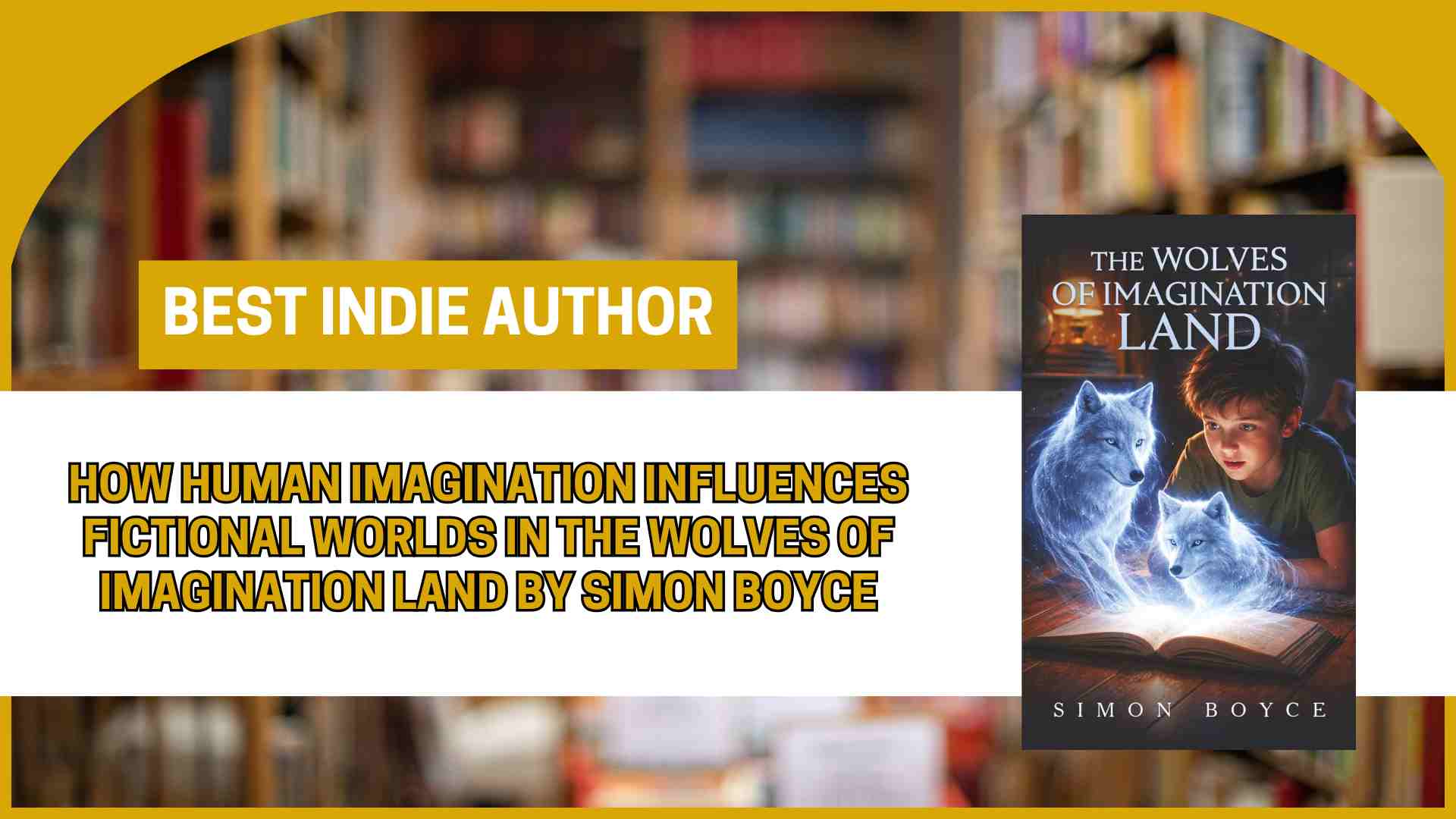
Fictional worlds often feel complete, as if they exist independently of the reader. Mountains stand, rivers flow, and characters live their lives whether we are watching or not. Yet behind every world lies a single force that brings it into being and keeps it evolving: human imagination. In The Wolves of Imagination Land by Simon Boyce, this idea is not hidden beneath the surface. It is the foundation of the entire narrative.
The story presents a world that is directly shaped by thought. Every dream, every idea, and every story imagined by humans contributes to its structure. This creates a setting that is constantly changing, not fixed or predictable. It grows, shifts, and adapts depending on what is being imagined. The result is a world that feels both magical and deeply connected to reality.
What makes this concept compelling is how it influences not only the environment but also the characters within it. The wolves, for example, are affected by the way they are portrayed in human stories. When certain ideas are repeated often enough, they begin to carry weight. Expectations form. Roles are assigned. These influences shape how others see them and, at times, how they see themselves.
This dynamic introduces a powerful layer to the narrative. It suggests that imagination does not simply create worlds. It also defines the rules within them. When those rules are based on limited or repeated ideas, the world reflects that limitation. When new ideas are introduced, the world begins to change. This process is gradual but meaningful, showing that even small shifts in thought can lead to significant transformation.
The presence of a human storyteller within the book reinforces this connection. As he writes, the world responds. New paths appear. situations evolve. relationships develop. This relationship between creator and creation is not presented as control, but as influence. The world is not dictated line by line. It is guided by imagination, shaped by intention, and expanded through curiosity.
This approach invites readers to consider their own role in storytelling. Every story consumed or shared contributes to a larger pattern. When certain narratives are repeated without question, they become familiar and accepted. When those narratives are challenged, space is created for something new. This is where imagination becomes a force for change rather than repetition.
Another strength of this concept lies in its balance. The story does not rely on complexity to communicate its ideas. It presents them clearly through action and consequence. Readers see the effects of imagination rather than being told about them. This makes the experience more engaging and easier to connect with, especially for younger audiences.
At its core, the book offers a reminder that fictional worlds are not separate from human thought. They are extensions of it. They reflect what is imagined, questioned, and believed. When imagination is limited, the world becomes narrow. When it is open and curious, the world expands.
The Wolves of Imagination Land by Simon Boyce captures this idea with clarity and purpose. It shows that imagination is not just the beginning of a story. It is the force that continues to shape it, proving that even the smallest idea can grow into something far greater than expected.
Get Your Copy On Amazon Today: https://www.amazon.com/dp/1972989685/