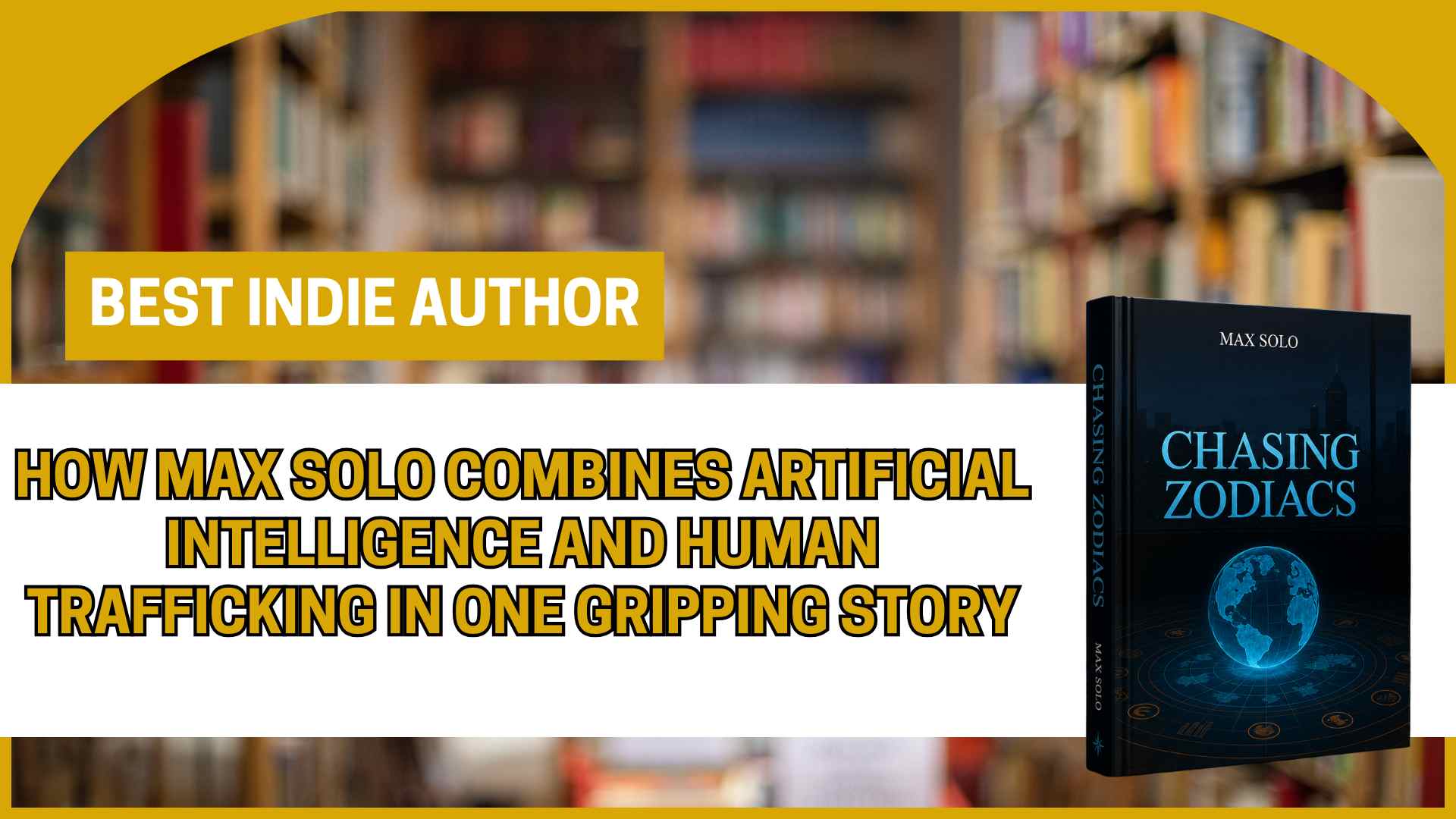
Artificial intelligence is often discussed as a force that could improve healthcare, transform industries, increase productivity and make everyday life more convenient. Human trafficking, by contrast, represents one of humanity’s darkest and most persistent crimes. In CHASING ZODIACS: To Repair the Soul of Humanity, author Max Solo brings these two subjects together in a complex international thriller that explores what can happen when technological progress falls into the hands of people driven by greed, power and control.
The novel follows Max, an investigator whose background includes psychology, robotics and artificial intelligence. After surviving a brutal attempted murder, Max begins recovering in isolation while compiling a secret report on the Zodiac Programme. The assignment soon becomes much more than a professional investigation. It forces Max to confront an international criminal organisation, hidden political relationships, personal trauma and unsettling questions about identity.
The Zodiac Programme is not an ordinary criminal network. Its operations reach into legitimate businesses, international markets, government influence, organised exploitation and advanced technology. The people behind it understand that robotics and artificial intelligence are changing the global economy. Instead of asking how these developments could improve human life, they view technology as another way to preserve revenue and strengthen their power.
This is where the story’s central conflict becomes especially compelling. The organisation has profited from slavery and human trafficking, but automation is changing the demand for traditional labour. As robotics expands across manufacturing, agriculture, healthcare, transport, retail and other industries, the Zodiac Programme begins exploring how artificial intelligence can support new commercial opportunities. The novel describes a world in which profit repeatedly overwhelms ethics, allowing powerful corporations and governments to exploit technological change for their own benefit.
Through conference presentations and secret discussions, readers encounter ideas involving algorithms, supervised learning, reinforcement learning, robotics, workforce displacement and the economic impact of automation. AI systems are shown operating across areas such as cancer detection, fraud prevention, patient care, construction, online shopping and parcel delivery. Yet these legitimate applications exist beside far more disturbing plans, creating a sharp contrast between innovation that serves humanity and innovation that enables exploitation.
Human trafficking remains the emotional and moral centre of the novel. Early in the book, readers are reminded that modern slavery may exist much closer to ordinary communities than people realise. The full horror of the criminal network later becomes visible through an online auction where vulnerable people, including children, are categorised and sold as merchandise. These scenes reveal the human suffering hidden behind the organisation’s financial language, polished conferences and technological ambitions.
By connecting AI with human trafficking, Max Solo creates more than a futuristic conspiracy plot. The novel asks whether technology is truly neutral when its development is controlled by those with money and influence. It also questions whether innovation can be called progress when dignity, freedom and human life are treated as expendable.
With its international locations, coded clues, secret meetings, political corruption, shifting alliances and deeply personal revelations, CHASING ZODIACS: To Repair the Soul of Humanity delivers the suspense readers expect from a crime thriller. At the same time, it challenges them to consider who benefits from technological advancement and who may suffer when intelligence advances faster than compassion.